Latest posts
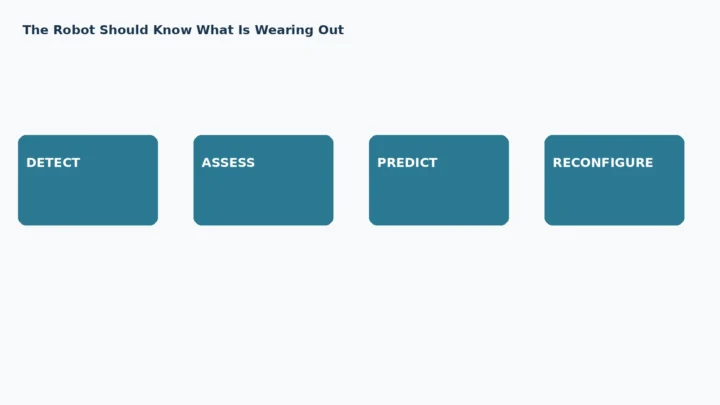
The Robot Should Know What Is Wearing Out
Health-aware humanoids estimate component degradation, redistribute mechanical load, and deliberately reduce capability before weakened joints or sensors become dangerous failures.
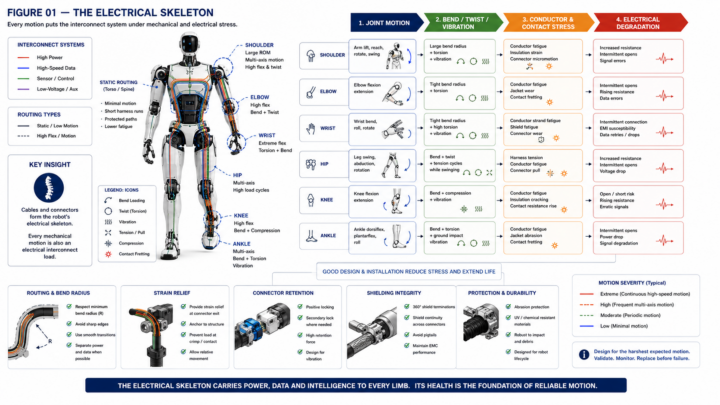
The Robot Has an Electrical Skeleton
Humanoid cables and connectors must remain trustworthy through repeated bending, twisting, vibration and wear across millions of demanding body movements.
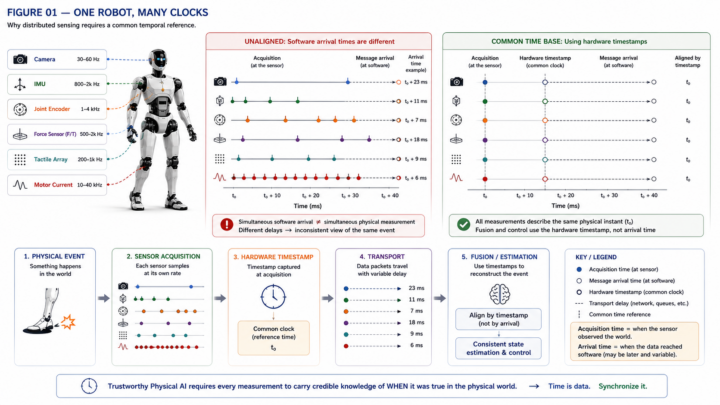
The Robot Needs a Common Clock
Humanoid control needs synchronized timestamps so distributed sensors, actuators, estimators and safety logic describe the same physical moment reliably together.
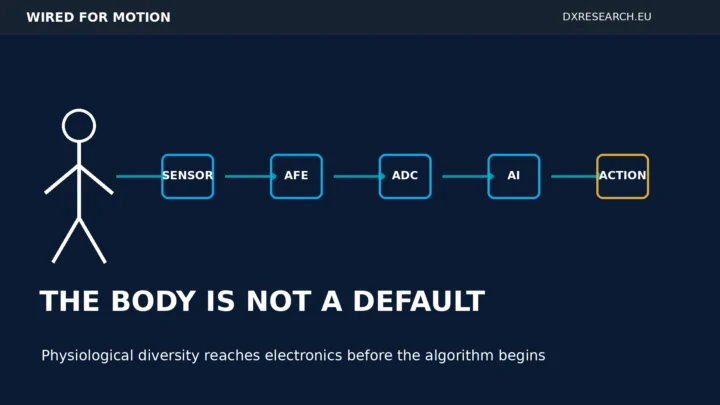
The Body Is Not a Default
Human-facing Physical AI needs sensing architectures validated across physiological diversity, with adaptive calibration, context awareness, signal quality and explicit confidence.
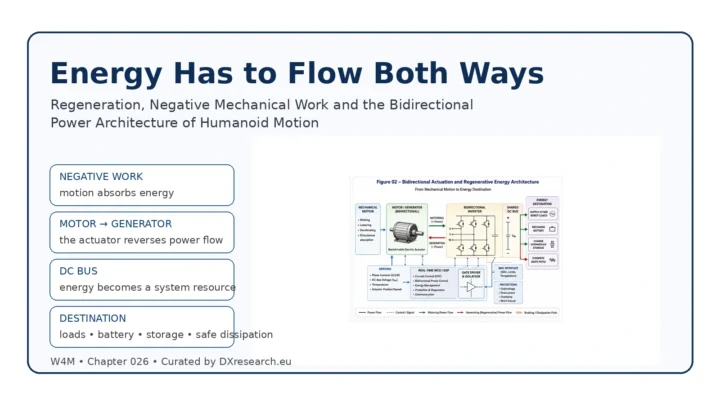
Energy Has to Flow Both Ways
Humanoid efficiency depends on capturing, routing and absorbing negative mechanical work through coordinated bidirectional actuation, power electronics and energy control.
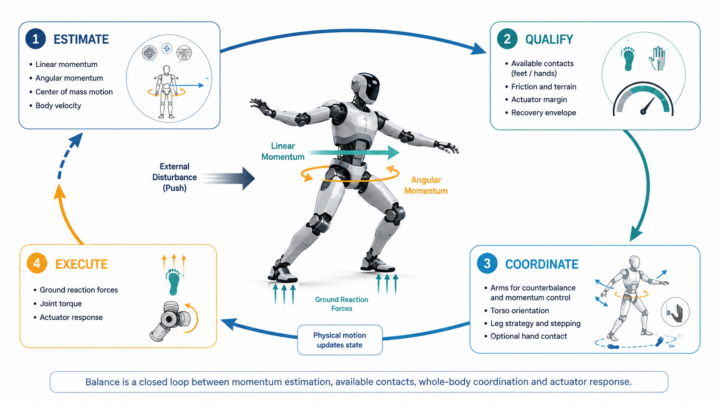
Balance Is Momentum Management
Humanoid balance depends on managing whole-body momentum through sensing, contact forces, coordinated limbs and fast control before disturbances become falls.
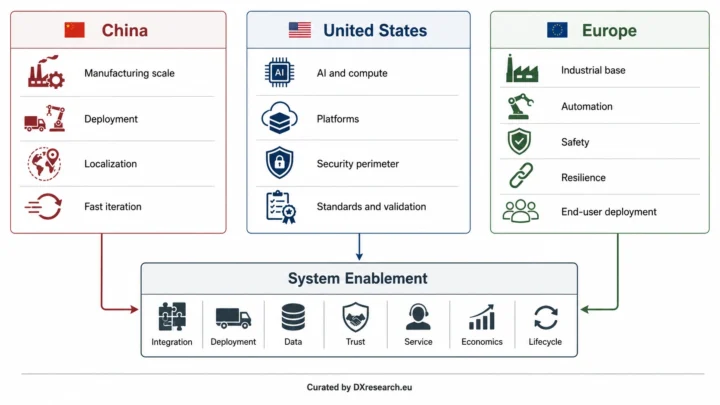
Physical AI Is Becoming a Three-System Market
China, the United States and Europe are building distinct Physical AI markets, making system enablement the emerging route to scale.
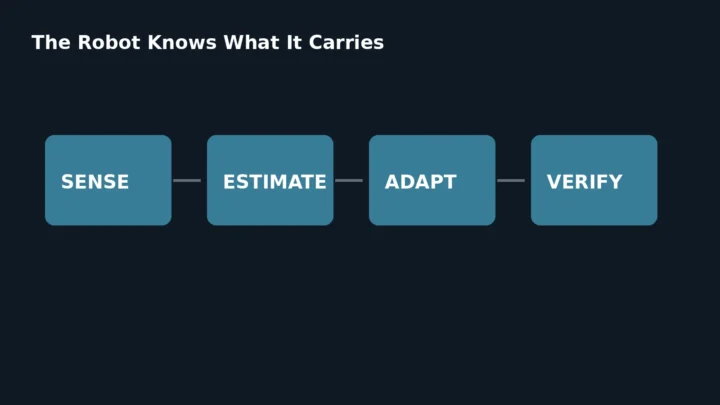
The Robot Knows What It Carries
Payload awareness lets humanoids estimate mass, center of gravity and external forces so motion remains stable, efficient, responsive and safe.
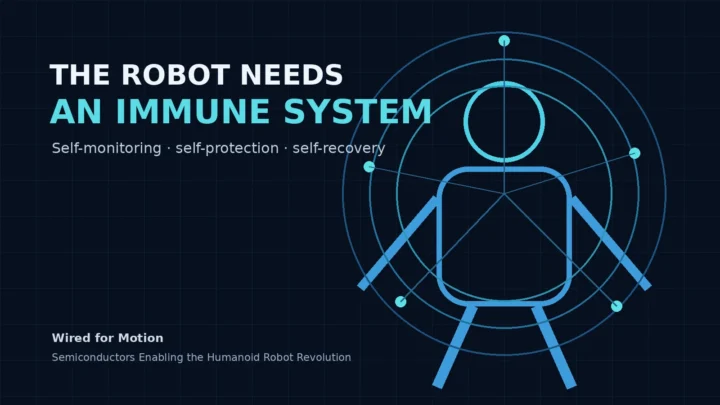
The Robot Needs an Immune System
Robots need distributed trust mechanisms that detect abnormalities, contain faults, preserve safe capability, recover securely, and learn across operational fleets.
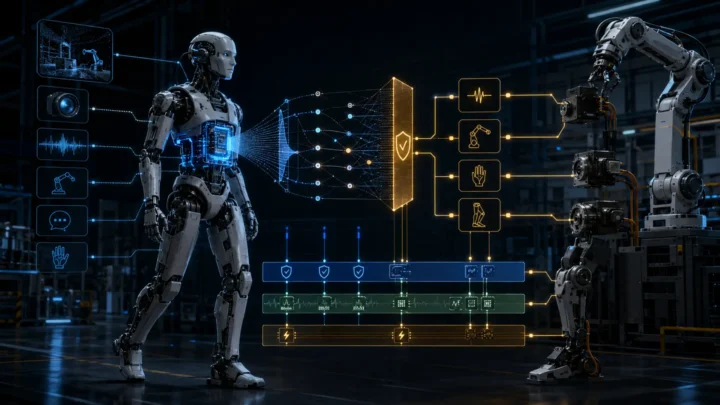
Commit Before Act
Humanoid intelligence becomes dependable when probabilistic AI proposals become bounded, time-valid, confidence-aware commitments executed and verified by deterministic physical-control architectures.
The Memory Wall Has Legs
Memory bandwidth, locality and data movement will constrain whole-body robot intelligence before nominal accelerator throughput reaches its advertised computational limits.
The Robot Has a Passport
Hardware-rooted identity, attestation and lifecycle evidence will determine whether humanoid robots earn trust, authorization, serviceability and market access at scale.