Latest posts
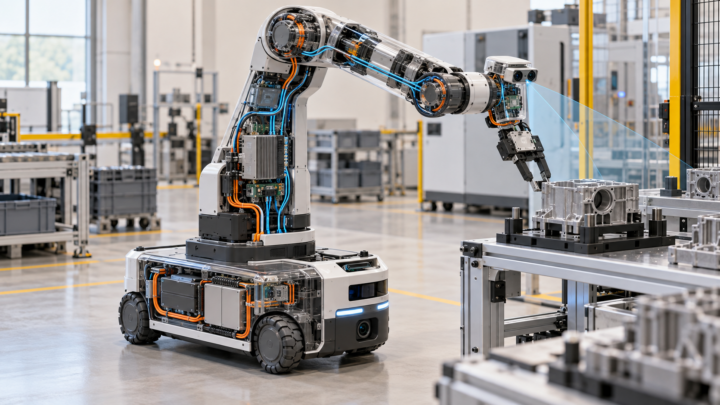
Physical AI: When Intelligence Gains a Body
Physical AI connects perception, world models, decisions and controlled action in a continuous physical loop. This engineering primer distinguishes it from automation, robotics and embodied AI, then explains how embodiment reshapes architecture, safety and value. A practical taxonomy and seven-question framework translate an emerging label into precise working language.
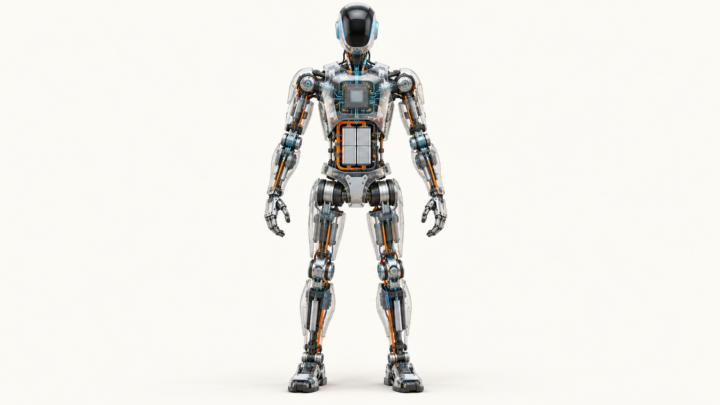
Where Humanoid Value Meets Scarcity
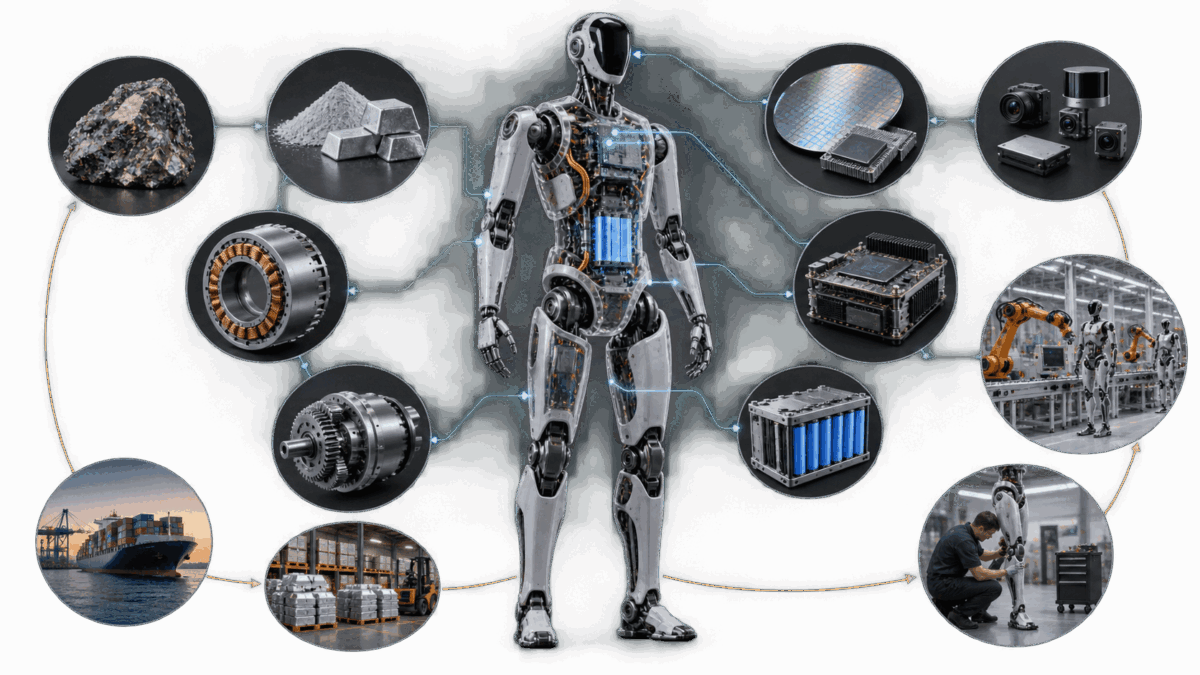
Humanoid robots are advancing quickly, yet their path to scale depends on a supply chain whose readiness varies sharply by subsystem. Actuation represents the largest hardware value pool, while precision motion, force sensing and system integration carry the highest bottleneck risk. The emerging opportunity is to industrialize complete, dependable functions
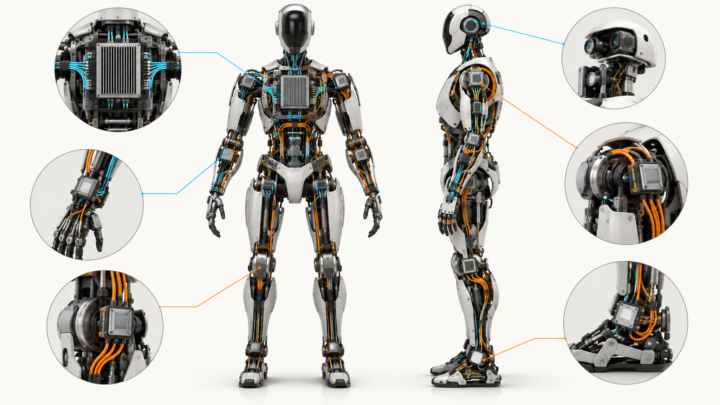
Zephyr or not?
Humanoid robots need a common embedded platform beneath central AI compute. This revised analysis examines where Zephyr can standardize distributed controllers, where certified or minimal alternatives remain stronger, and which deterministic networking, timing, safety, cybersecurity, power-management, observability and lifecycle capabilities next-generation humanoid systems will increasingly require.
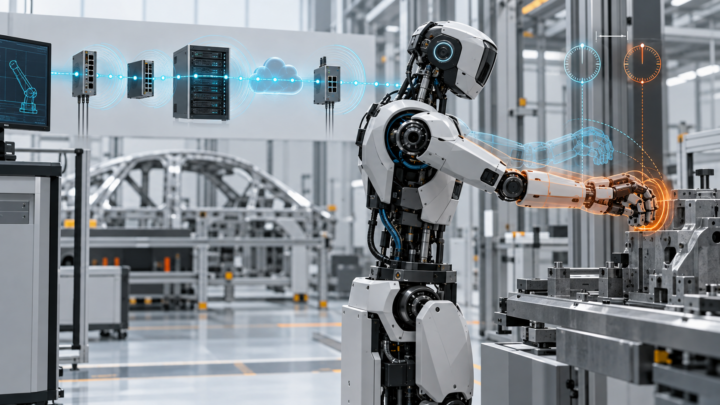
The Network Is Part of the Robot’s Dynamics
A robot does not experience a network as bandwidth. It experiences delayed evidence, stale commands and uncertain timing. Treating communication state as part of the controlled system creates a stronger contract: keep critical loops local, expose uncertainty, degrade deliberately and validate physical outcomes under held-out impairments.
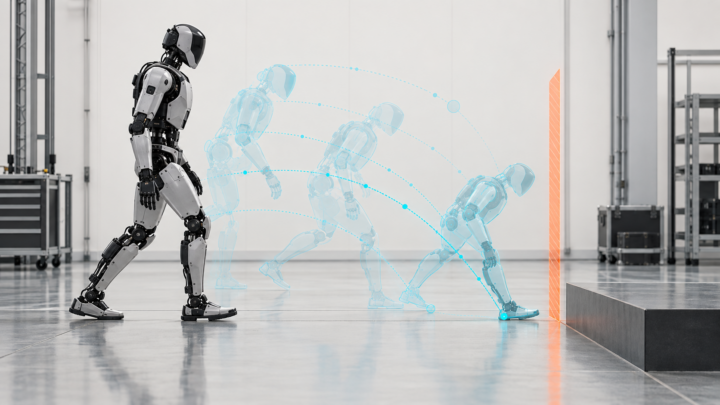
Think Ahead, Act Safely
Humanoid robots cannot wait for perfect certainty before moving. They must predict plausible physical futures, compare them and commit only actions that remain within bounded control and safety constraints. A layered architecture separates probabilistic reasoning from deterministic execution and continuous sensor verification, allowing intelligence to think broadly without granting it
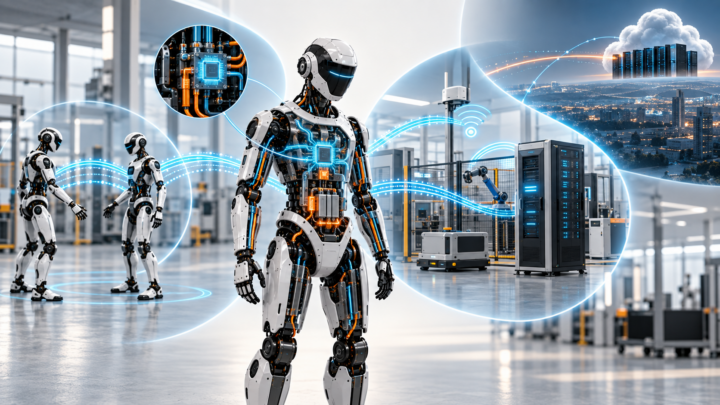
A Robot Does Not Have One Network
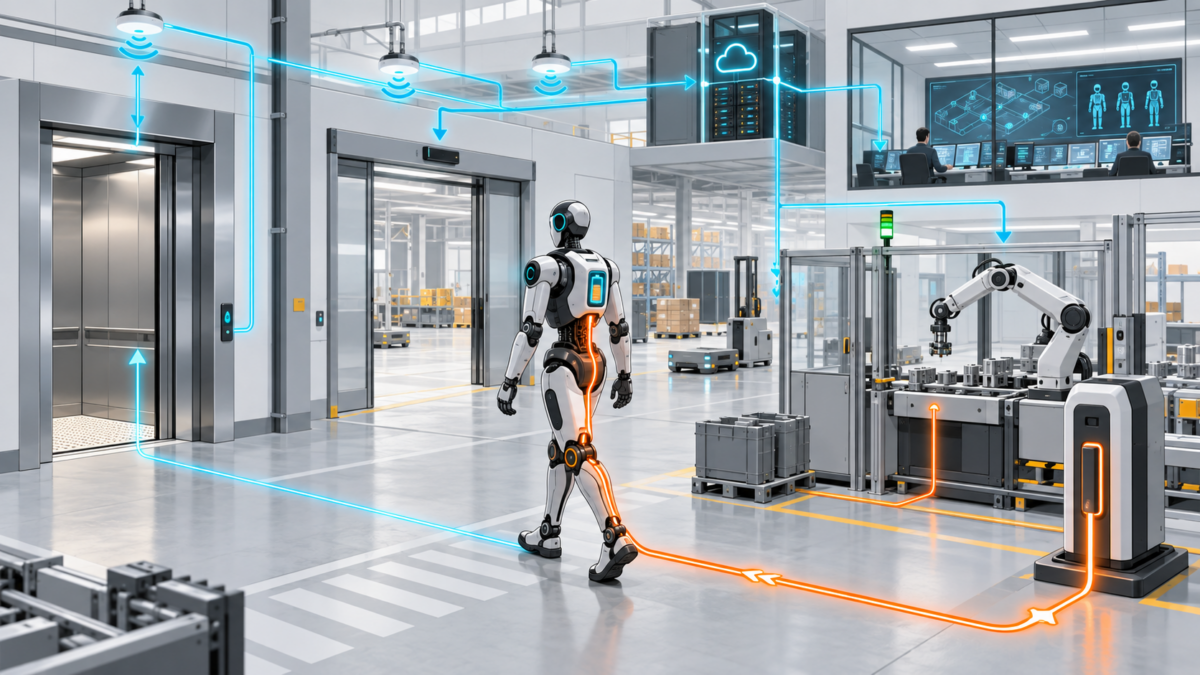
A humanoid may look like one machine, yet it participates in four distinct connectivity worlds: its own body, nearby robots, local infrastructure and remote services. Treating them as one network hides critical differences. Dependable Physical AI begins by defining what each link may control—and what happens when it disappears.
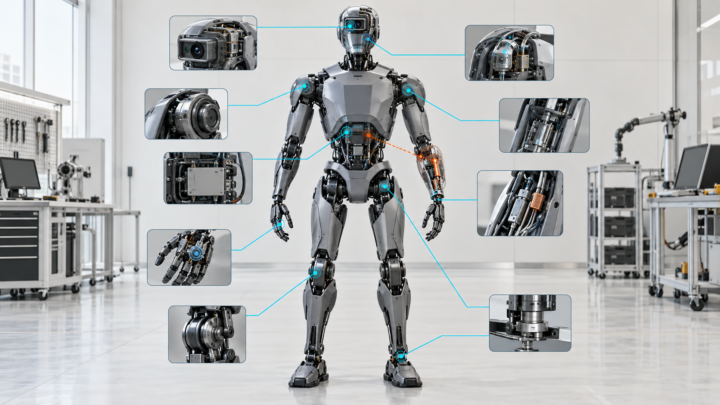
A Robot Is a Calibration Graph
Humanoid intelligence depends on a web of geometric, dynamic, temporal and thermal calibration relationships. Managing that web as a traceable graph can expose drift, protect learning data, accelerate service and prevent physically inconsistent robot configurations from remaining hidden inside apparently healthy electronics.
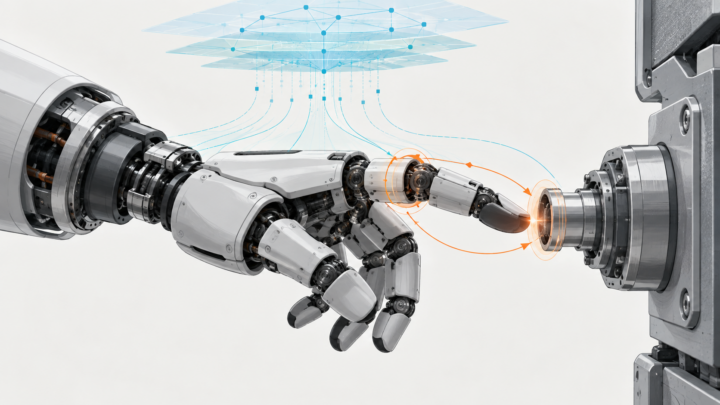
Intelligence Needs a Reflex
Contact turns a plausible robot plan into a time-critical physical negotiation. Three recent research directions point toward a split-timescale architecture: semantic policies propose actions, while local sensing, dynamics and control correct them before failure propagates. The decisive engineering question is no longer model size, but where physical authority changes hands.
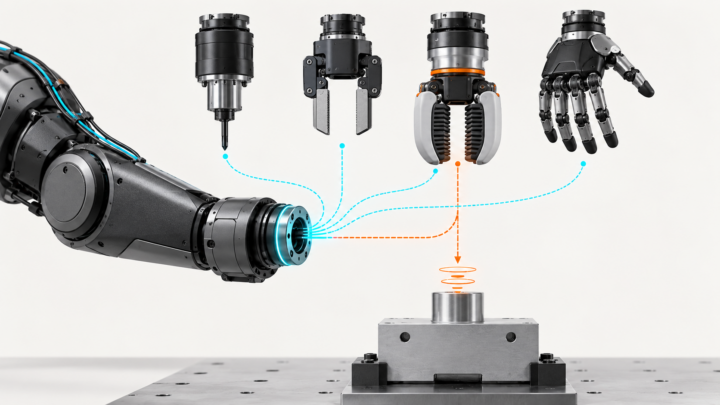
The Hand Is a Business Decision
Robot manipulation succeeds when mechanics, sensing, control and the task are designed as one system. Specialized tools and simple grippers usually win on payload, precision and uptime; adaptive and dexterous hands earn their complexity only when object and task variety create enough operational value to justify it.
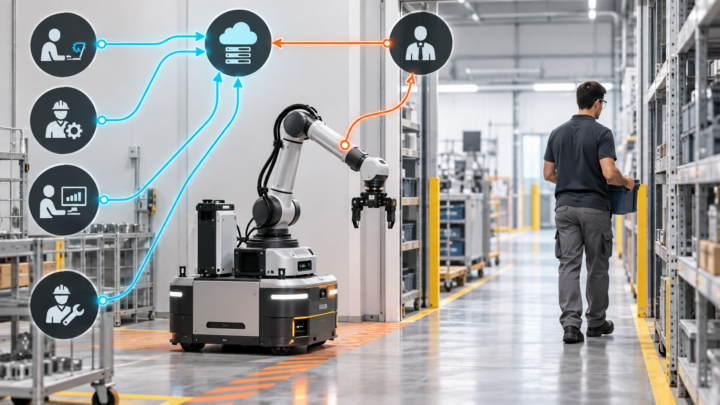
The Robot Acts. Responsibility Does Not.
A robot’s action may emerge from software, integration choices, operating conditions and human decisions made by different organisations. Responsibility therefore cannot sit in one emergency-stop button or one job title. It must be engineered as a lifecycle system of bounded authority, verified configuration, evidence, escalation and controlled change.
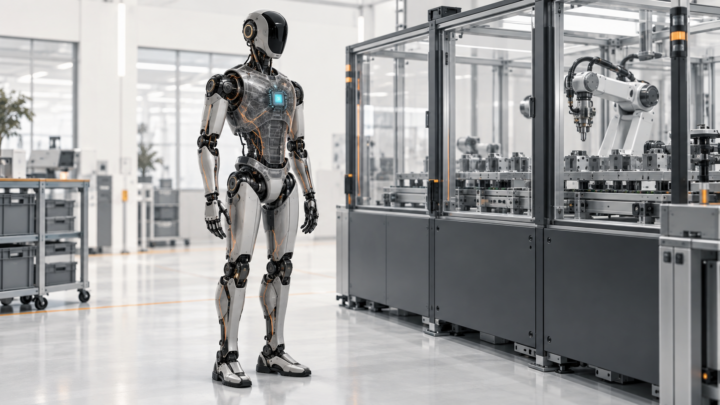
Always Ready?
Humanoid robots need coordinated power states that reduce mission energy without compromising awareness, stability or safe recovery. A five-state architecture aligns motion, perception, compute, communication and safety with explicit readiness contracts, wake sources and retained-state rules. The decisive metric is not sleep current, but energy consumed per productive mission hour.
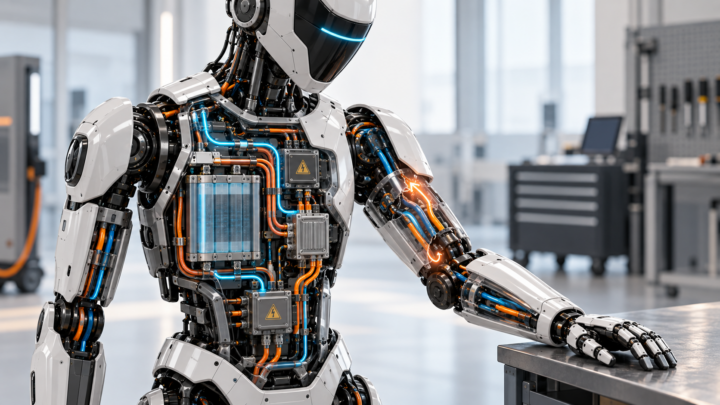
The Robot Must Know When Electricity Escapes
A humanoid can appear electrically healthy while insulation quietly deteriorates. As batteries, inverters, motors, chargers and moving harnesses share a touchable conductive body, insulation becomes a runtime system property. Continuous monitoring, contextual diagnostics and controlled responses can turn an invisible electrical weakness into actionable health information before it becomes a