Latest posts
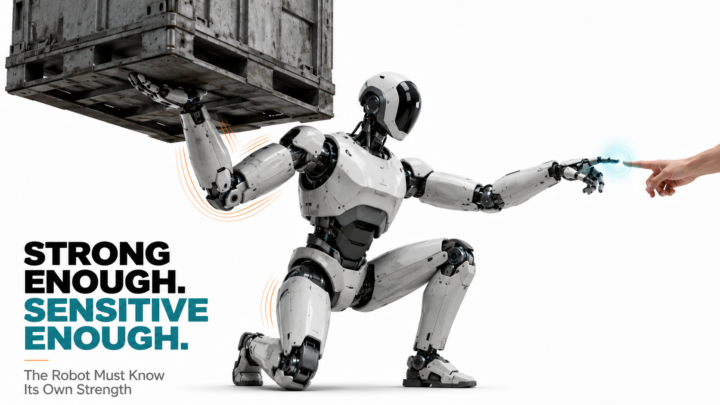
Strength
Force and torque awareness turns humanoid actuation into measurable physical intelligence, enabling safer contact, better dexterity, diagnostics, learning, and control.
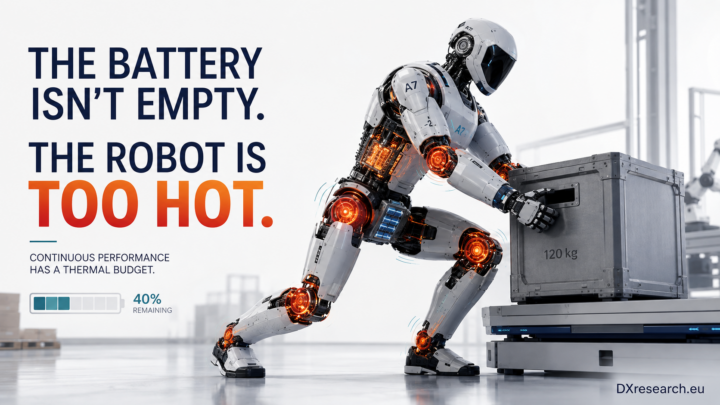
Thermal Management Economic
Thermal efficiency, semiconductor losses, and cooling architecture determine sustained humanoid performance, reliability, maintainability, and fleet economics beyond battery capacity alone.
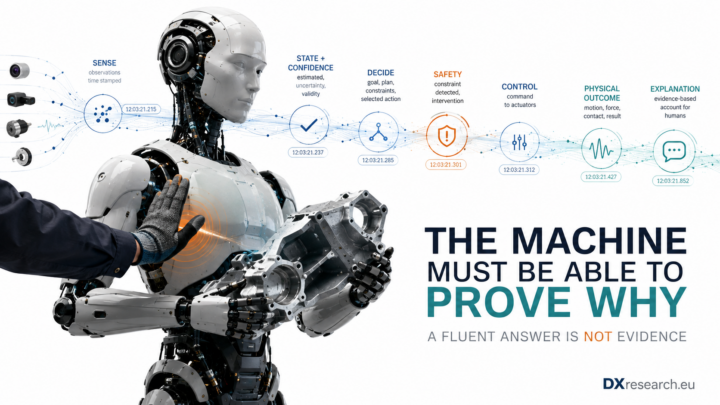
The Machine That Must Explain Itself
Trustworthy robots must explain physical actions with synchronized evidence, causal provenance, uncertainty, safety context and verifiable outcome records for humans.
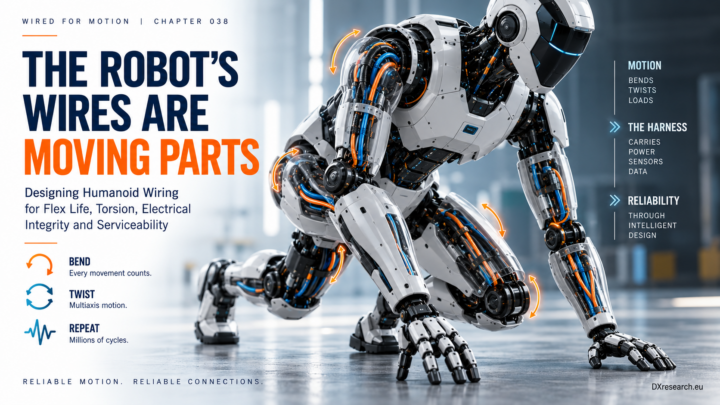
Wires Are Moving Parts
Humanoid wiring moves with every joint, making flex life, torsion, routing, connectors, electrical integrity, diagnostics, and serviceability fundamental reliability requirements.
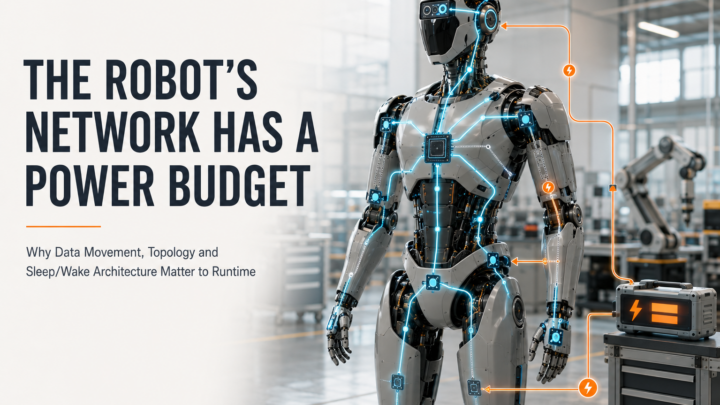
Network Power Budget
Humanoid communication consumes persistent energy; topology, bandwidth, active interfaces, and selective sleep states therefore belong inside the robot runtime budget.
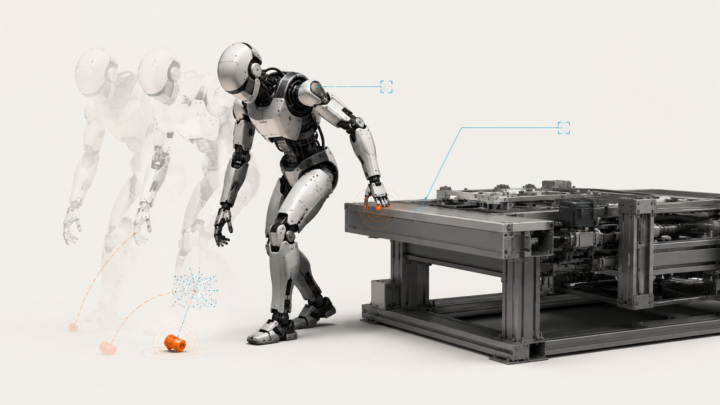
Black Box: Physical AI Must Preserve the Evidence
When a robot drops an object or makes unexpected contact, ordinary logs may leave the decisive sequence unresolved. Physical AI needs protected event memory linking requests, commands and measured response. A deliberately engineered recorder can preserve evidence through failure, expose uncertainty and support accountability without turning the workplace into permanent

Black Box: Physical AI Must Preserve the Evidence
Robots need protected event evidence linking decisions, commands and physical outcomes, enabling trustworthy reconstruction after failures without permanent workplace surveillance.
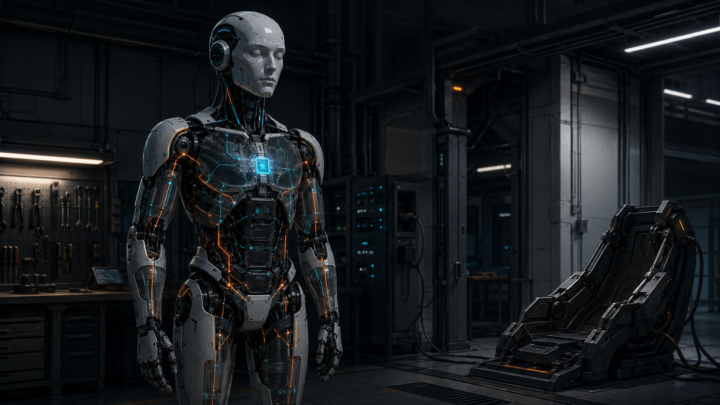
The Robot Should Know When to Sleep
Humanoid efficiency is not only a motion problem. Industrial robots may spend large portions of a mission waiting, monitoring or docked. A robot-wide hierarchy of power states can cut nonproductive energy, but only if wake latency, mechanical safety and retained-state validity are engineered together.
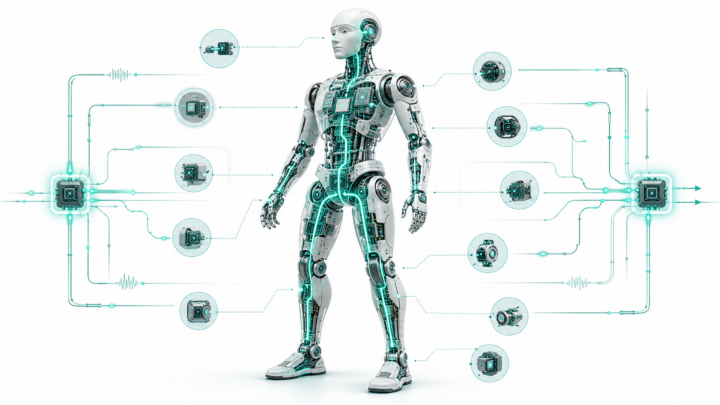
Every Bit Has a Power Cost
Internal communication in humanoids is a persistent electrical load shaped more by topology, endpoint count and power states than by raw bandwidth. A 40-DoF engineering model compares EtherCAT, CAN-FD, Ethernet, T1S and zonal designs, showing how local control, segmentation and sleep management can change mission-integrated network energy by several-fold.

Always ready?
Humanoid robots need coordinated power states that cut mission energy while preserving awareness, safe wake-up, readiness, and trustworthy retained state.
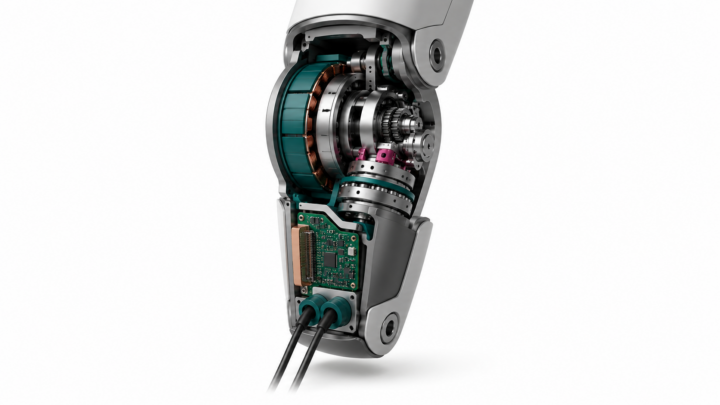
The Joint Is the System
Humanoid body joints are converging on permanent-magnet synchronous machines, yet scale will be determined by the complete actuator. Present architectures and emerging conductors, magnet-free machines, integrated sensing and smart-joint electronics are compared against mission-level energy, industrialization constraints and semiconductor requirements across distinct body joints and production maturity horizons.

THE ROBOT IS ONLY THE BEGINNING
Physical AI is not merely a new robot category. It is the foundation of an emerging business ecosystem spanning hardware, infrastructure, software, skills and lifecycle services. Its decisive impact will come when companies stop inserting humanoids into old workflows and begin redesigning how people, automation and adaptable machines work together.