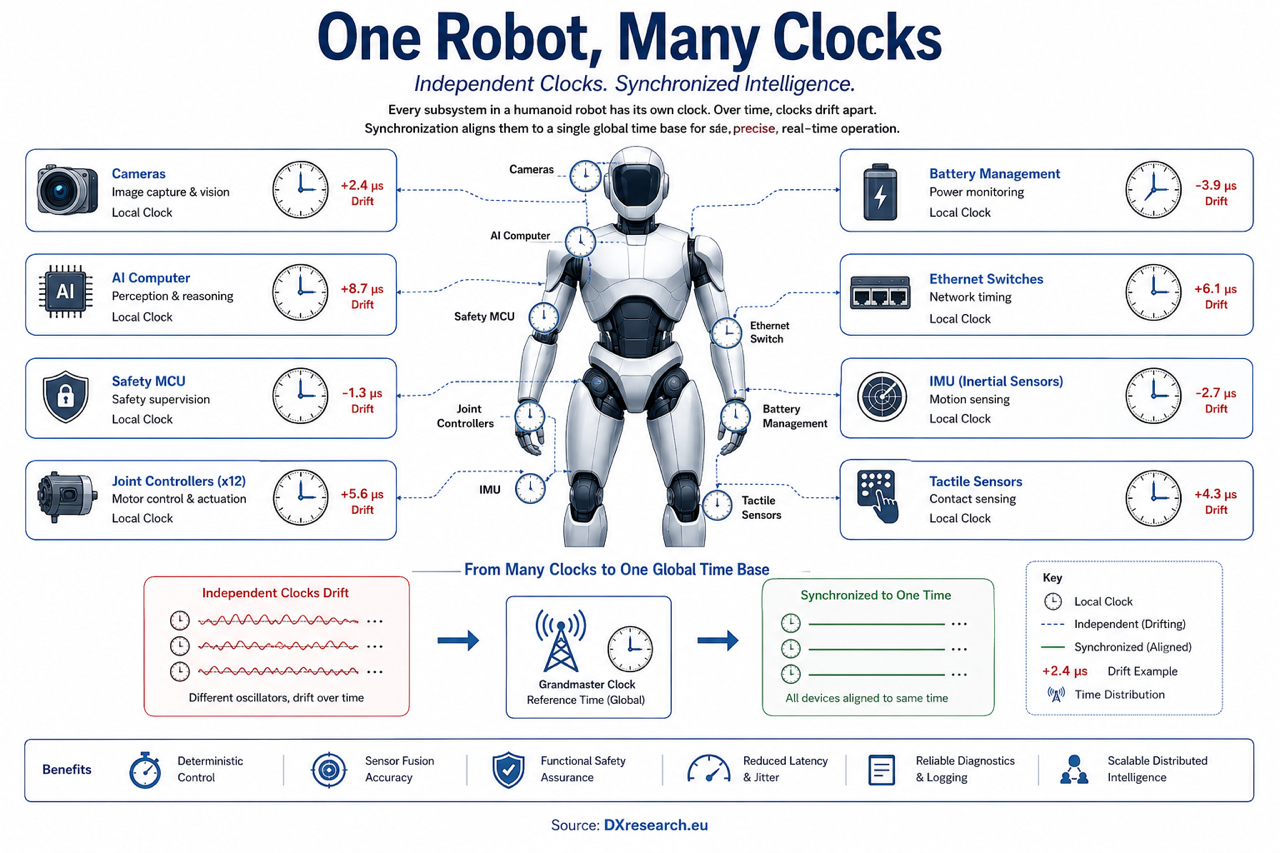
Why Synchronization Is the Invisible Foundation of Physical AI
“Humans rarely notice time itself. They notice when it is lost. Humanoid robots are no different. Intelligence depends not only on computation, but on…

“Humans rarely notice time itself. They notice when it is lost. Humanoid robots are no different. Intelligence depends not only on computation, but on…
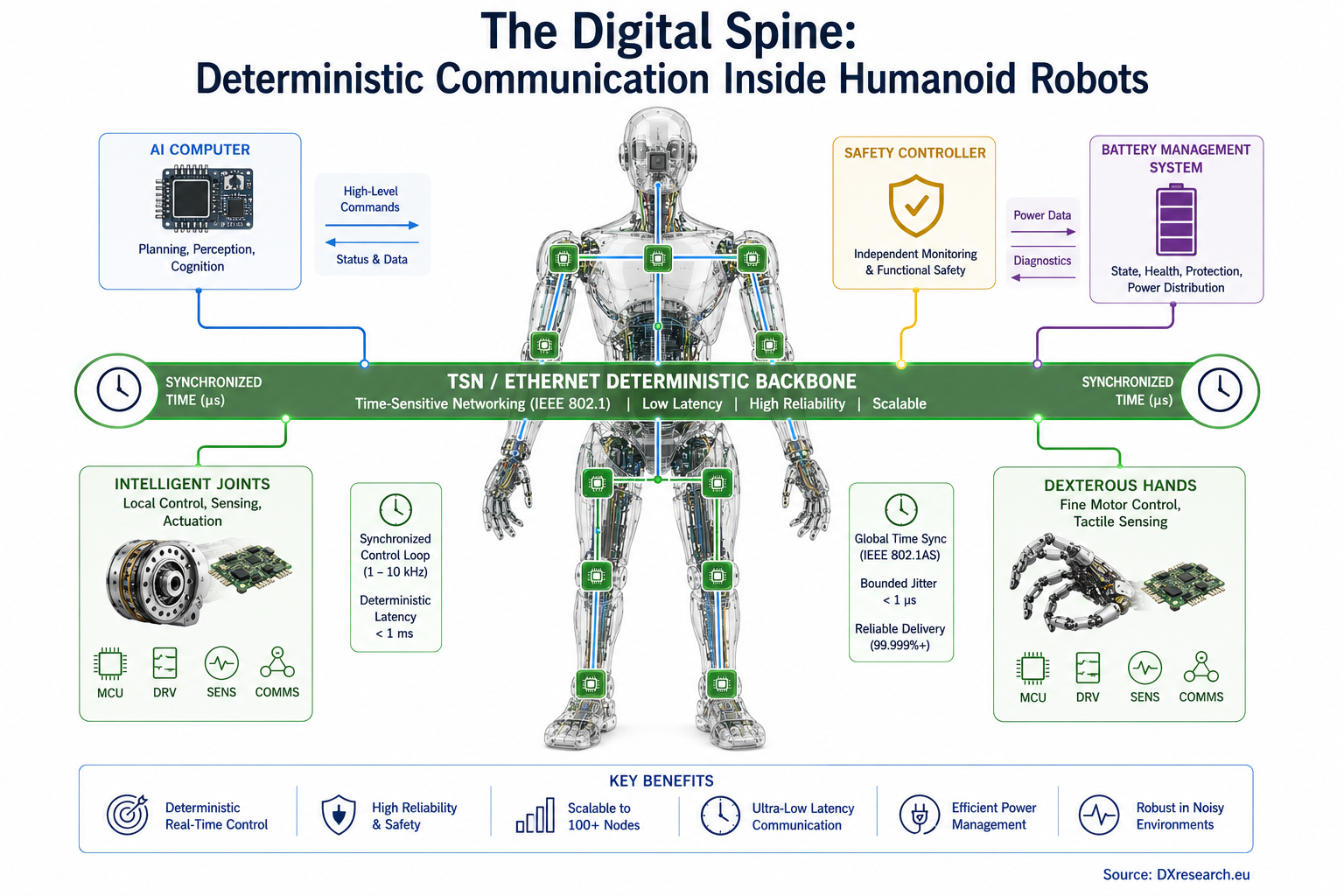
The Electronic Nervous System Distributed Intelligence Inside the Humanoid Robot “The human nervous system succeeds not because one brain performs every task, but because…
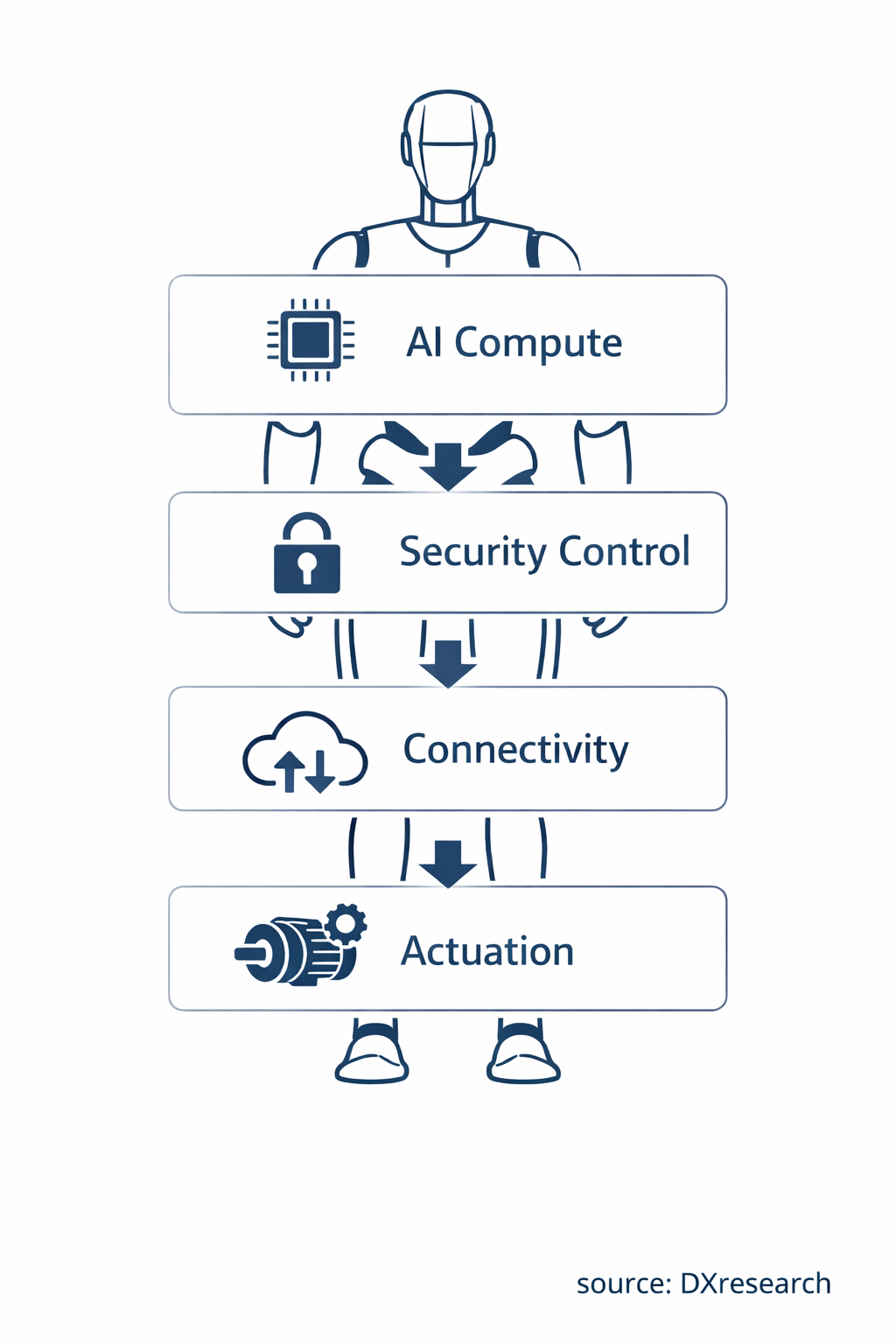
Software Defined Humanoids Scale Through Semiconductor Intelligence Humanoid robots are evolving into software-defined platforms shaped by sensing, compute, and power efficiency. The real shift…
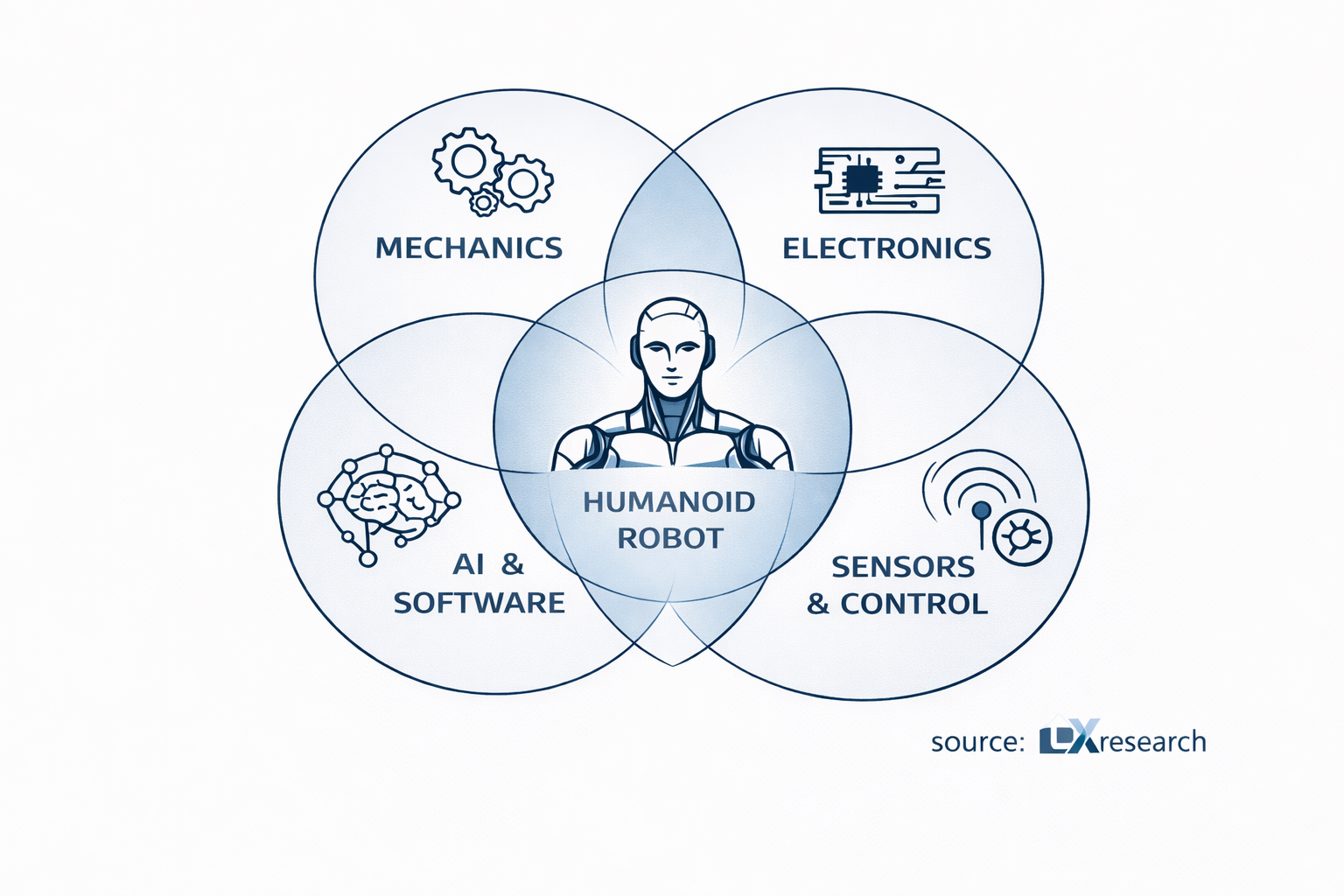
Where Humanoid Robots Are Truly Engineered 🤖 The performance of humanoid robots emerges from disciplined integration across mechanics, electronics, AI, and control systems. Competitive…
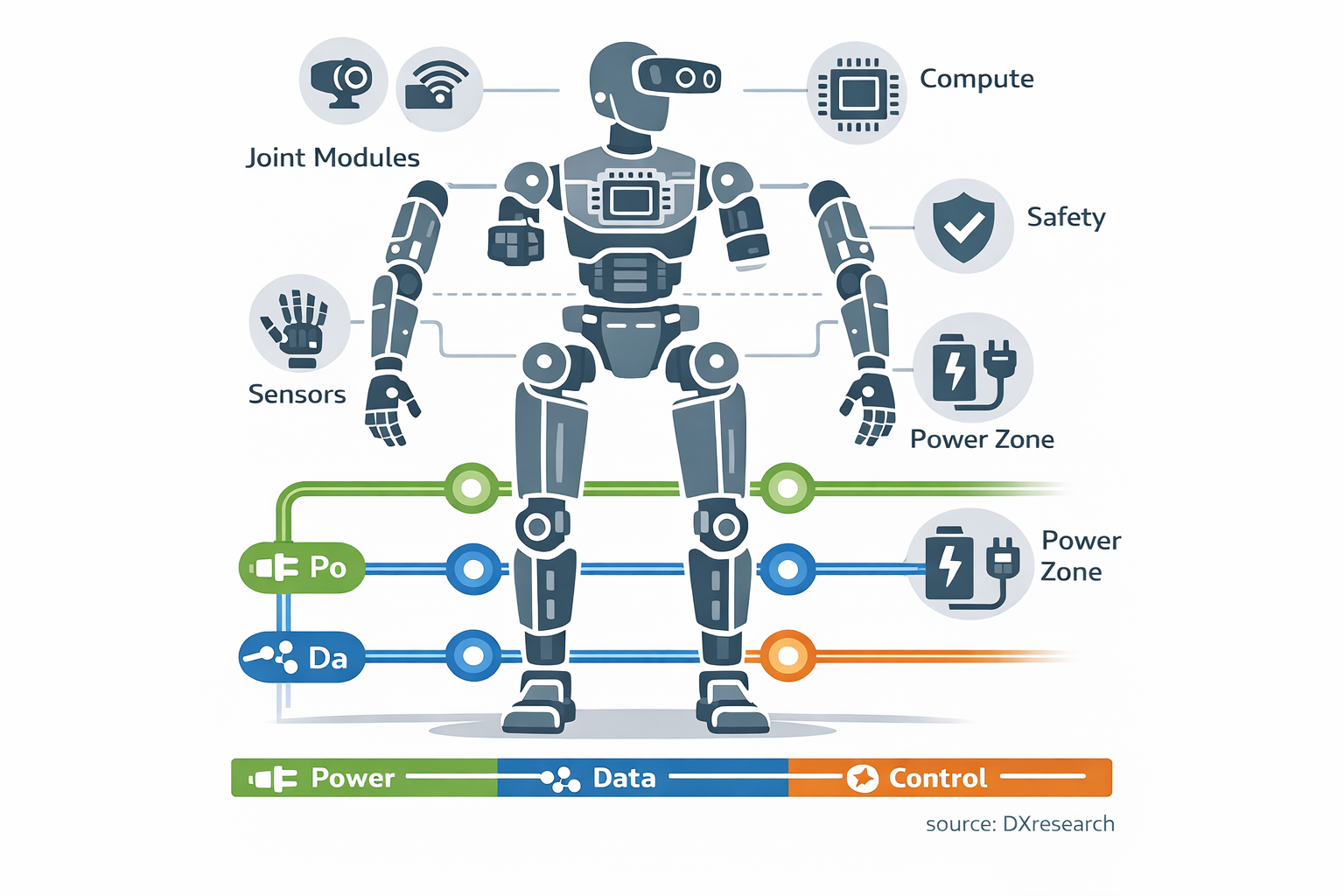
Humanoid robotics is scaling through platforms and semiconductor-defined building blocks 🚀 The path to scalable humanoids points toward modular architectures, where standardized semiconductor building…
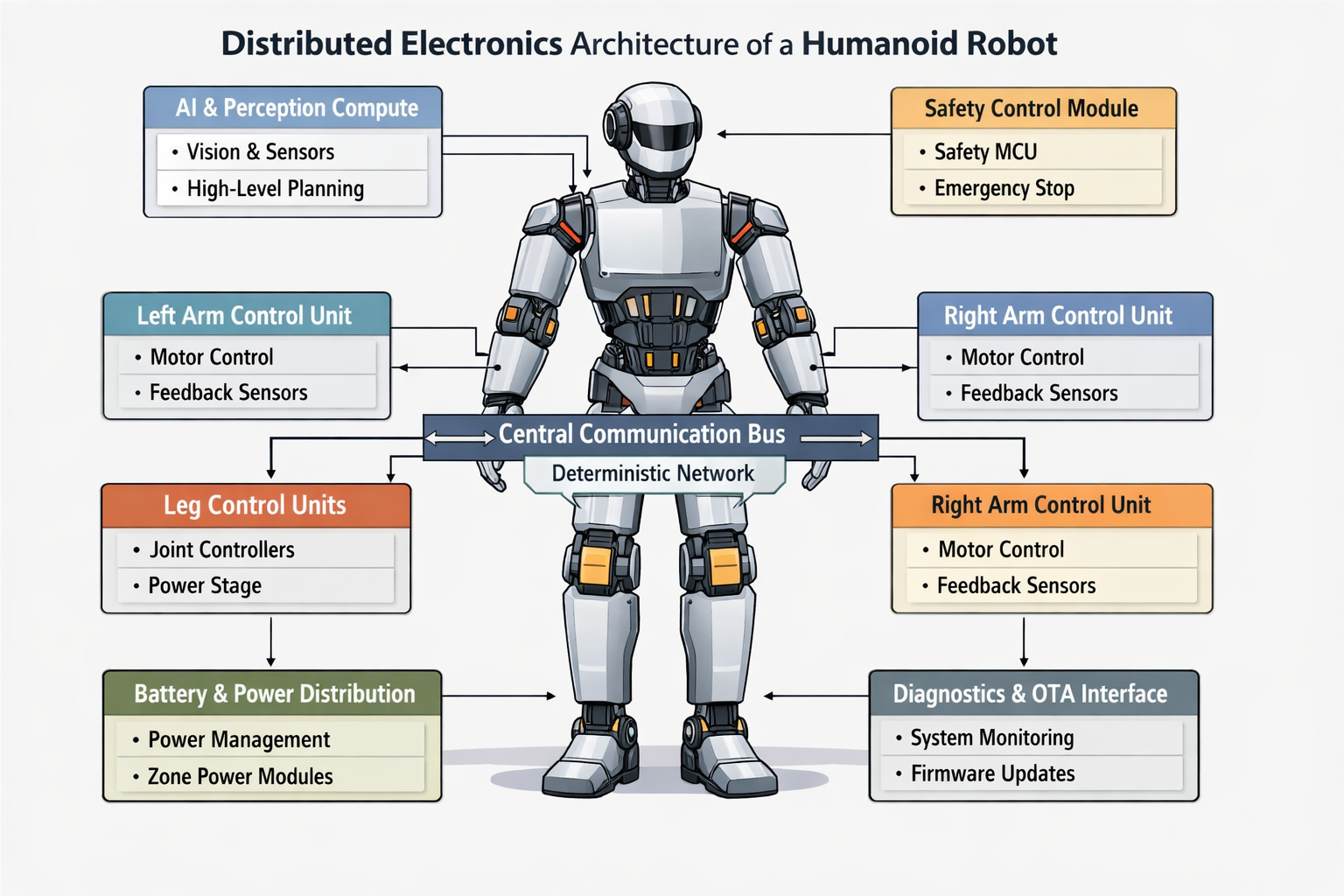
Why system architecture, not intelligence, decides whether humanoids scale Humanoid robots concentrate more actuation, sensing, and compute per kilogram than almost any other engineered…