The strategic standardization map for Physical AI
Humanoid robotics is entering the same industrialization phase once seen in automotive and aviation: innovation alone is no longer enough. Standards such as ISO…
Lyra did not begin as a machine that could move, perceive, or decide, but as a convergence point for a set of engineering assumptions…
Robotics learning is scaling faster than robotics talent 📊 Market Access to robotics education has expanded rapidly through open courses from leading institutions. Platforms…
A practitioner’s view from physical AI Working at Infineon Technologies and focusing on physical AI, I see humanoid robotics moving into a more defined…
Robotics is not a single global market. It is a set of regionally differentiated ecosystems, each with distinct strengths, cluster structures, and strategic trajectories.…
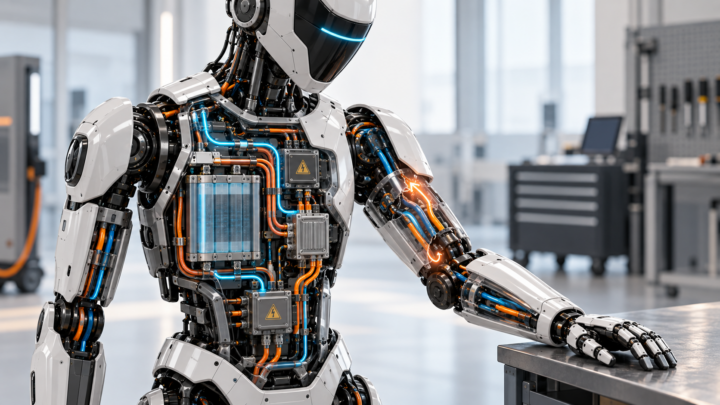
Why system architecture, not intelligence, decides whether humanoids scale Humanoid robots concentrate more actuation, sensing, and compute per kilogram than almost any other engineered…
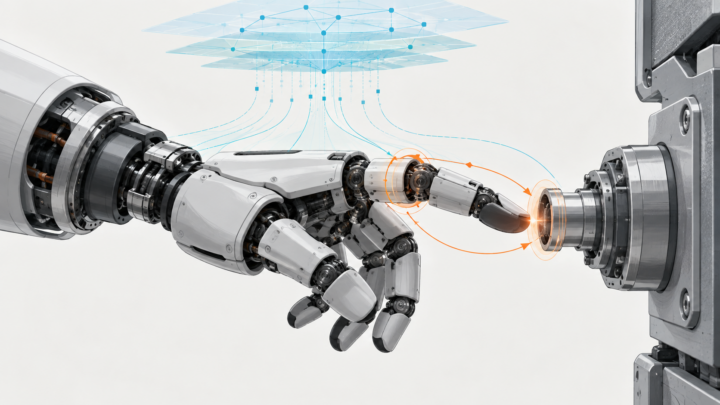
Torque sensing has transitioned from a niche capability to a foundational system primitive for physical-AI robots operating in unstructured, contact-rich environments. By exposing interaction…
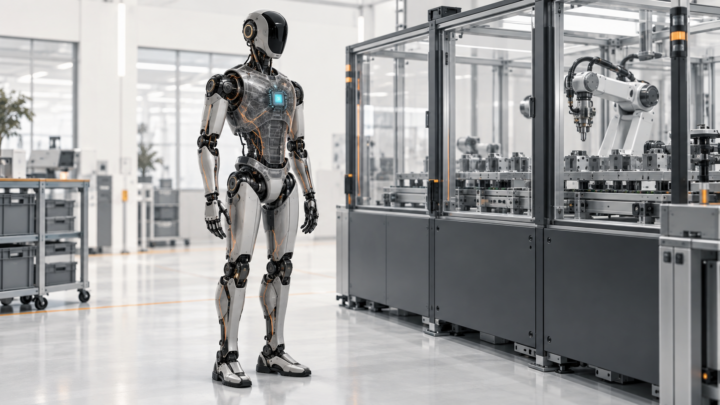
A humanoid Physical AI system is not defined by its shape, but by the tight coupling of perception, intelligence, control, actuation, energy, and safety…
Physical AI refers to embodied systems that sense, decide, and act in the real world using a combination of learning-based intelligence and deterministic physical…
The transition from classical robotics to Physical AI represents a structural change in how intelligence, control, and uncertainty are handled inside robotic systems.…