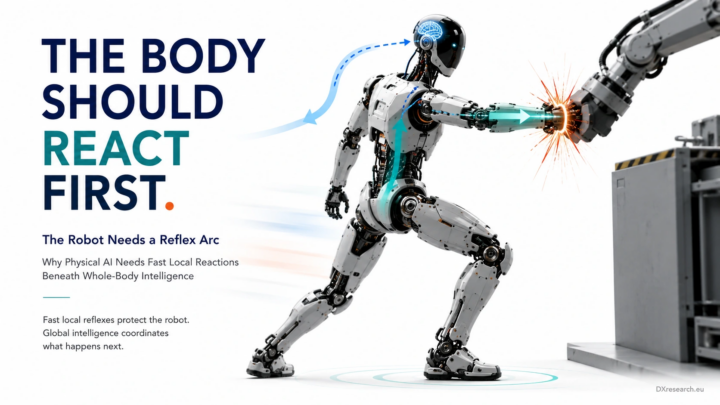
The Reflex Arc
Fast local reflex loops let humanoids mitigate physical disturbances immediately while whole-body intelligence coordinates recovery, safety, balance and task continuity.

Fast local reflex loops let humanoids mitigate physical disturbances immediately while whole-body intelligence coordinates recovery, safety, balance and task continuity.

A robot needs a real-time battery power envelope before motion, because remaining energy alone cannot guarantee the next maneuver safely.
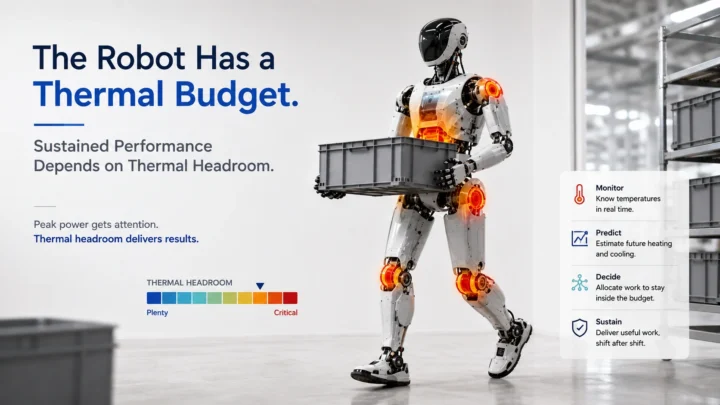
Peak specifications describe an instant; thermal headroom determines what the robot can keep doing.

Humanoid robotics needs an integrated demonstration proving that intelligence, motion, power, safety and trust can operate together at industrial scale.
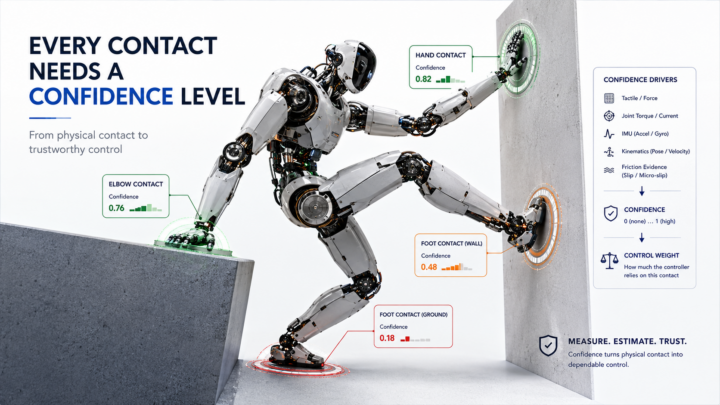
Reliable humanoid control qualifies every physical contact using synchronized sensor evidence before allocating force, balance authority, or recovery responsibility safely.
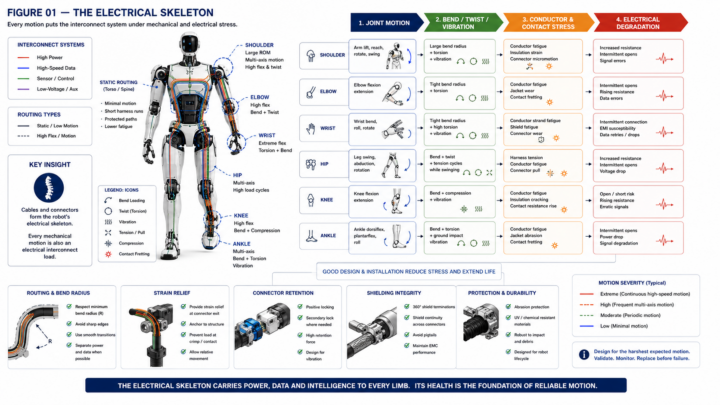
Humanoid cables and connectors must remain trustworthy through repeated bending, twisting, vibration and wear across millions of demanding body movements.
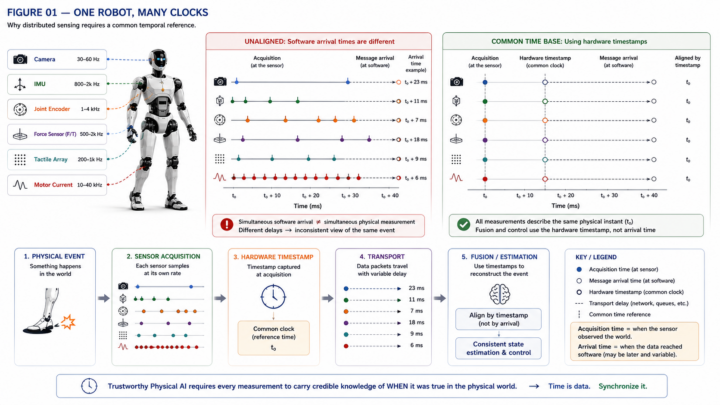
Humanoid control needs synchronized timestamps so distributed sensors, actuators, estimators and safety logic describe the same physical moment reliably together.
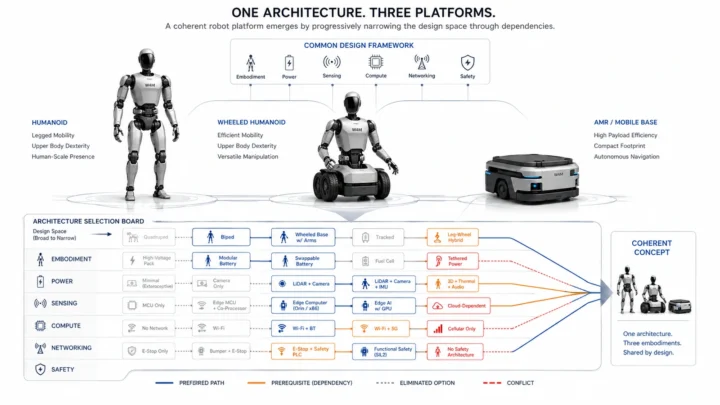
Dependency-aware morphological design progressively narrows robot architectures, exposing prerequisites and conflicts before detailed sizing locks expensive subsystem decisions into hardware.
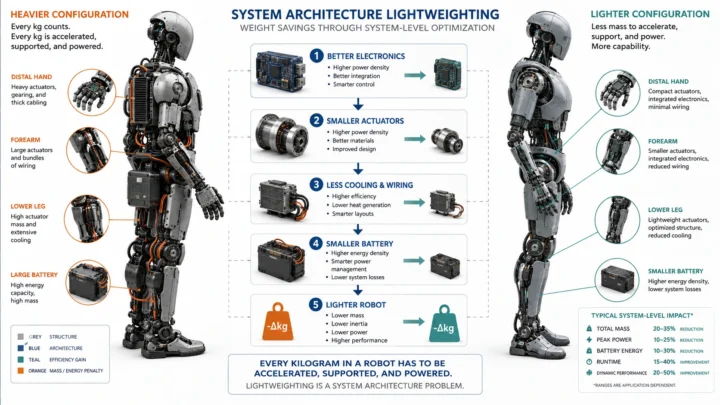
Robot mass cascades through torque, energy, materials, cooling, wiring and batteries, making lightweighting a system architecture problem for scalable robotics.
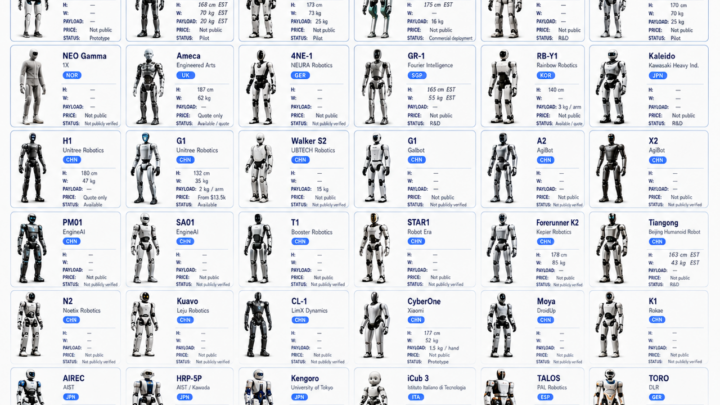
Apptronik Apollo launch — 173 cm, 73 kg, 25 kg payload. Agility Robotics Digit — 16 kg carrying capacity and four-hour battery claim; height is retained…