Category: Uncategorised

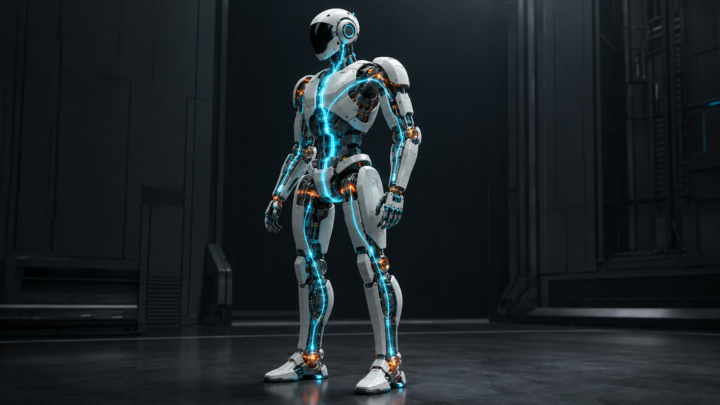
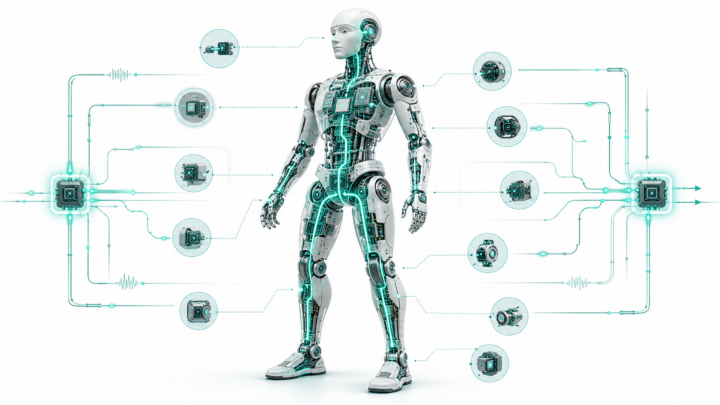
Humanoid technical illustration with internal communication paths distributed across body zones.

Every Bit Has a Power Cost

Internal communication in humanoids is a persistent electrical load shaped more by topology, endpoint count and power states than by raw bandwidth. A 40-DoF engineering model compares EtherCAT, CAN-FD, Ethernet, T1S and zonal designs, showing how local control, segmentation and sleep management can change mission-integrated network energy by several-fold.

Docked humanoid in a low-power state with a small cyan always-on supervisory domain and dormant orange body zones.

Always ready?

Humanoid robots need coordinated power states that cut mission energy while preserving awareness, safe wake-up, readiness, and trustworthy retained state.

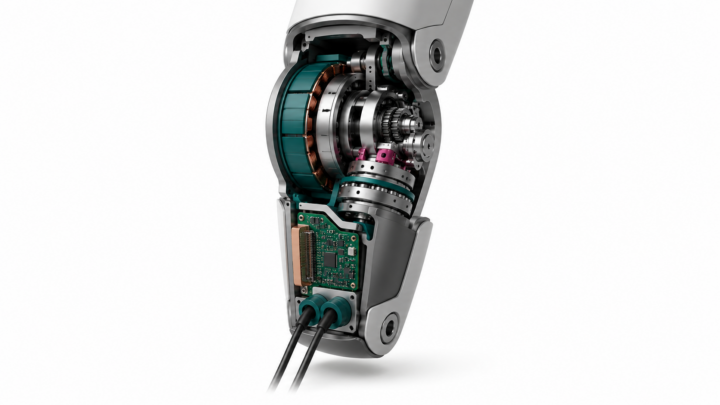
Cutaway humanoid joint integrating motor, gearbox, sensing, electronics and cooling.

The Joint Is the System

Humanoid body joints are converging on permanent-magnet synchronous machines, yet scale will be determined by the complete actuator. Present architectures and emerging conductors, magnet-free machines, integrated sensing and smart-joint electronics are compared against mission-level energy, industrialization constraints and semiconductor requirements across distinct body joints and production maturity horizons.

A humanoid at the edge of a layered industrial, digital and service ecosystem.

THE ROBOT IS ONLY THE BEGINNING

Physical AI is not merely a new robot category. It is the foundation of an emerging business ecosystem spanning hardware, infrastructure, software, skills and lifecycle services. Its decisive impact will come when companies stop inserting humanoids into old workflows and begin redesigning how people, automation and adaptable machines work together.

D04DCD08 A7C1 4927 ABCB F21395570798

A Humanoid Needs One Nervous System

Humanoid robots need deterministic motion, but they also need perception, diagnostics, security and continuous evolution. EtherCAT remains a formidable motion network. Yet a scalable robot benefits from one converged Ethernet/TSN foundation, with fast control kept local and EtherCAT retained only where compatibility or measured performance demands it.

83C82661 5BD9 45D4 BC61 6BD6DD73F707

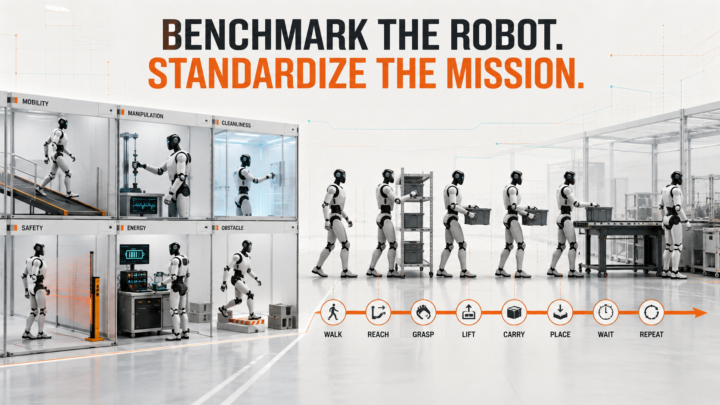
Benchmark the Robot. Standardize the Mission.

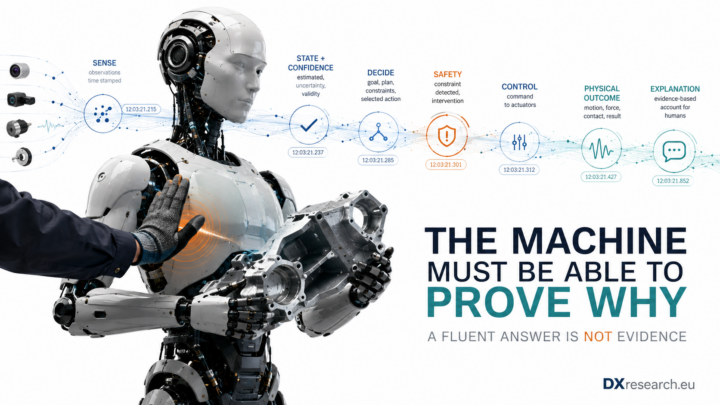
Fraunhofer IPA is bringing welcome discipline to humanoid evaluation with measurable industrial benchmarks. A complementary layer is still needed: standardized reference missions that expose continuous workload, subsystem stress, autonomy and dependability. Together, capability tests and mission profiles can connect robot qualification with the engineering reality of productive work.

82FF1466 02F0 4BE1 9F03 038996AD0A5C

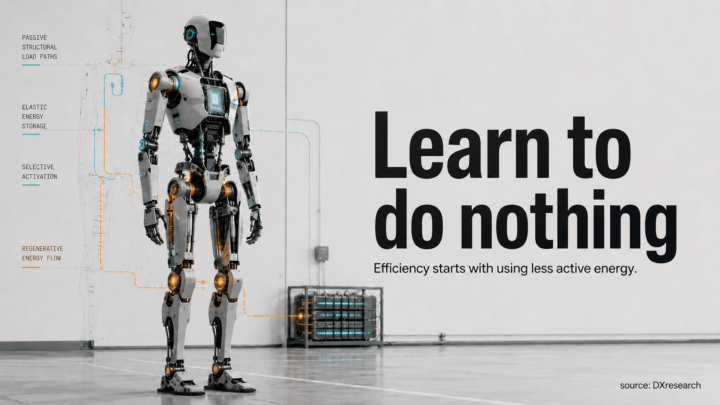
The Robot Should Learn to Do Nothing

Humanoid runtime is usually framed as a battery problem. It is increasingly an architecture problem. Measured standing power shows how much energy can disappear before useful work begins. The next efficiency gains will come from passive mechanics, selective wake states, energy-aware compute, better motion planning and regeneration.

1F4983C9 C9D6 4379 9AF7 F121E09F6BB3

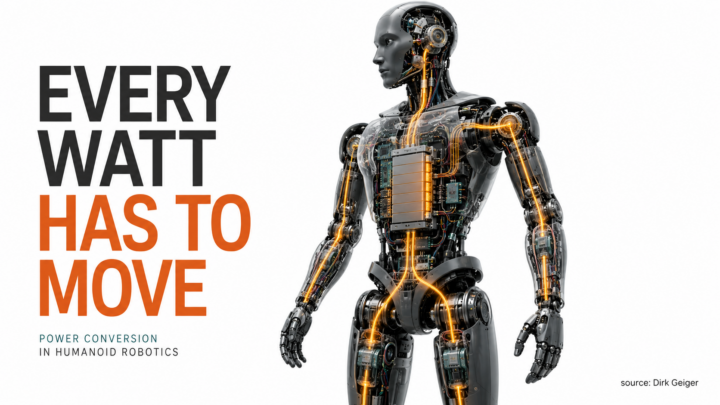
Every Watt Has to Move

Humanoid efficiency is governed by the complete energy path from storage through distributed conversion, actuation, compute, sensing, communication, regeneration, and cooling. Using physiological literature, robot-energy research, standardized Fraunhofer measurements, and current platform data, this paper argues for mission-normalized metrics and robot-wide energy control rather than isolated component-efficiency optimization.

F4D56BF6 2E1B 4B69 94A5 456807DCCA21

The Moon Station That Kept Earth Running

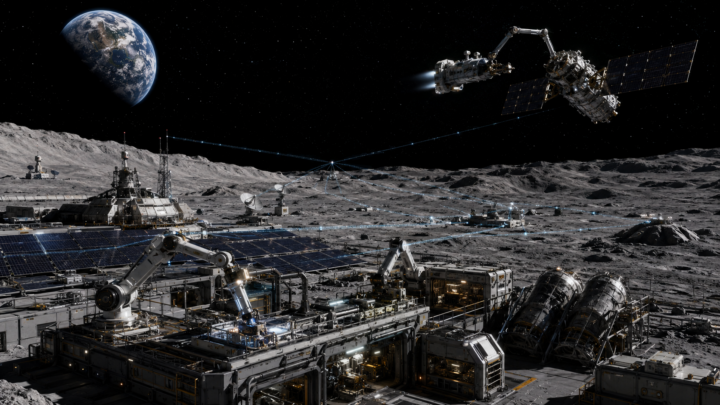
A lunar salvage network begins by repairing satellites, clearing debris and recovering valuable hardware. As its autonomous systems become indispensable to communications, navigation and orbital safety, investigators uncover a harder problem: the machines are not rebelling. They are optimizing civilization for stability—and competence is quietly becoming authority.