Listen to this chapter
Wired for Motion

Chapter 10

The Robot Must Be Shippable

The Robot Must Be Shippable
12 min readVersion 1.0
Humanoid robotics is moving from prototypes and pilot fleets toward manufactured products that must survive factories, aircraft, storage, installation, and service logistics. This chapter argues that “shippability” is therefore a system-architecture requirement, not a packaging afterthought. Transport introduces battery regulations, shock and vibration loads, long power-off periods, tamper risks, configuration drift, and commissioning uncertainty that can damage hardware or erase trust in its state. A scalable robot should enter a transport mode that isolates hazardous power, preserves essential monitoring, records environmental events, protects software identity, and supports deterministic recommissioning. The semiconductor consequences reach the battery-management system, power switches, inertial sensing, nonvolatile memory, secure elements, microcontrollers, communications, and diagnostics. Designing these functions early reduces logistics cost, field failures, and deployment friction while creating evidence for warranty, safety, and lifecycle management. In Physical AI, a robot is not commercially ready until it can reliably travel between the places where intelligence creates value.

The Missing Product State Between Factory and Work

Humanoid robotics is entering a phase in which manufacturing scale and deployment scale are beginning to matter as much as laboratory capability. Unitree’s 2026 capital-market and manufacturing expansion illustrates how quickly the discussion is moving from individual prototypes toward repeatable production, while BMW’s staged factory pilots show the opposite end of the same chain: a robot must arrive, integrate, and become a trusted production asset before any promised intelligence creates value [1][2].

Between those two moments lies a surprisingly under-engineered state: the robot as freight. A humanoid may spend hours or weeks powered down, restrained, handled by people who are not robot engineers, exposed to vibration and shock, stored at non-operational temperatures, transferred across logistics providers, or shipped under dangerous-goods rules because a large rechargeable battery is integrated into the product. These conditions are not exceptional. They are part of normal commercial life.

The central thesis of this chapter is therefore simple: shippability is a system-architecture property. Packaging can attenuate mechanical loads, but packaging alone cannot place a high-energy battery into a known state, prove that actuators cannot energize, record a damaging shock, preserve trusted configuration, or guarantee that a robot arriving at a customer site can be recommissioned deterministically. Those functions reach directly into semiconductor architecture.

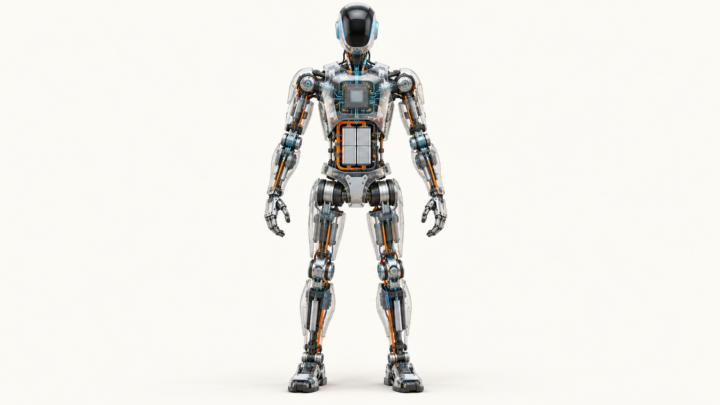
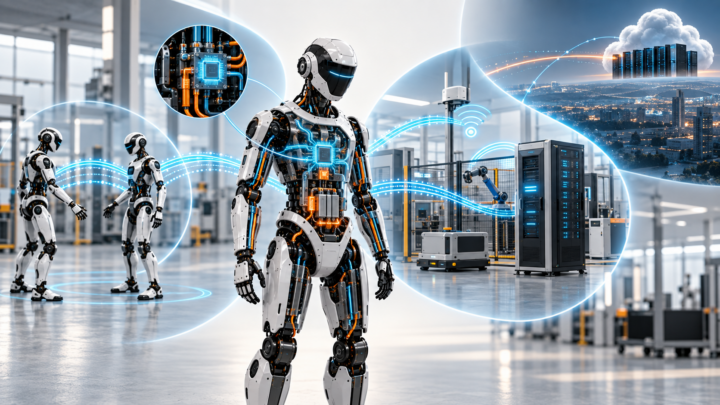
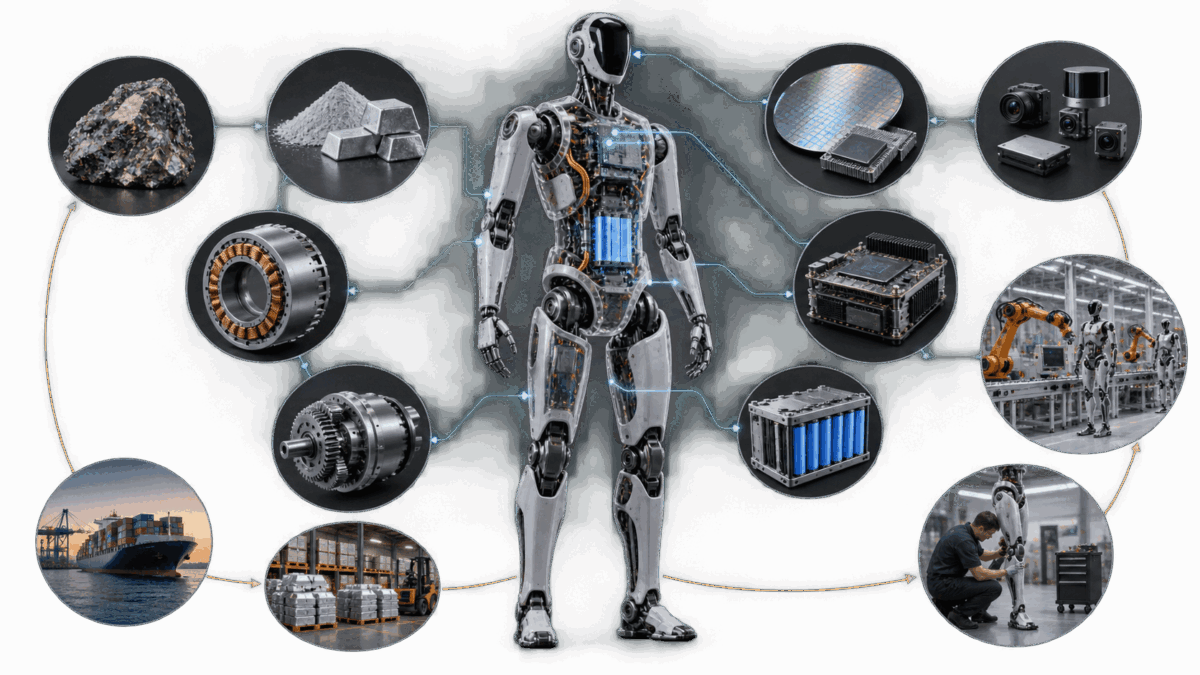
Robot-to-freight state transition
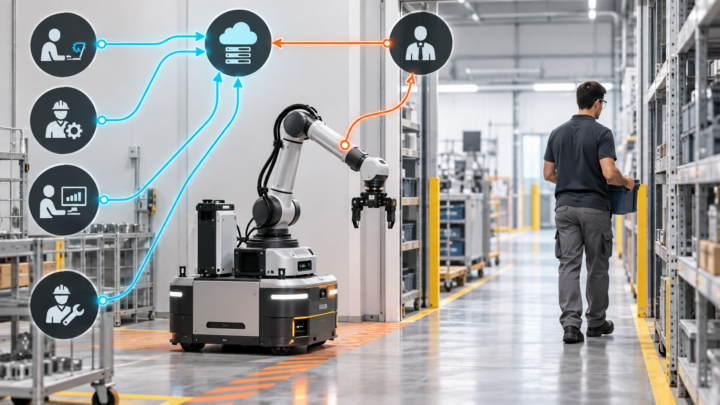
Figure 1. A scalable robot needs an explicit state transition from operational machine to transportable product and back again. Original artwork © DXresearch.eu.

Why Transport Changes the Engineering Problem

Energy that is useful in operation becomes a logistics hazard

A modern humanoid combines a substantial battery, high-current power distribution, dozens of actuators, local energy storage, chargers, and low-voltage electronics. The architecture is optimized to move energy rapidly when motion is commanded. During transport, the desired behavior is nearly the inverse: high-energy paths should be intentionally unavailable, while only the minimum circuitry needed for safe monitoring, identity, and controlled wake-up remains active.

Battery transport is governed by a mature dangerous-goods framework. The UN Manual of Tests and Criteria includes subsection 38.3 qualification for lithium and sodium battery designs, while IATA’s 2026 Battery Shipping Regulations and guidance distinguish different configurations such as batteries packed with equipment or contained in equipment, with requirements covering classification, packing, documentation and, in defined cases, state of charge [5][3][4].

The engineering implication is broader than regulatory compliance. The battery-management system (BMS) must support a logistics state rather than merely an operating state. The relevant questions include whether the pack can be brought to an approved or company-defined storage state of charge, whether contactors or solid-state isolation devices can be positively opened, which low-power rails remain alive, how a transport lock is authenticated, and what happens if the robot is accidentally connected to a charger or service interface while still restrained.

Mechanical loads become latent electronics failures

Humanoids contain gearboxes, precision bearings, encoders, cameras, radar or depth sensors, force and torque sensors, connectors, printed circuit boards, heatsinks, battery modules, harnesses, and structural assemblies distributed over a tall articulated body. A shipping event may not cause an obvious broken part. It can instead create connector fretting, cracked solder joints, shifted calibration, bearing damage, sensor misalignment, or structural looseness that appears only after commissioning.

IEC 60068-2-27 defines shock testing intended to reveal mechanical weakness or performance degradation, including cases where the transport case forms part of the test specimen. IEC 60068-2-64 addresses broadband random vibration and accumulated stress associated with transportation and operational environments [6][7]. ISTA distribution procedures similarly combine shock, vibration, compression and handling conditions for packaged products [8].

The key design shift is to stop treating these standards only as qualification-laboratory activities. A robot can also carry its own evidence. A low-power inertial measurement unit (IMU), temperature sensing, time base, nonvolatile memory and secure event logger can turn the machine into a witness of its own logistics history. This does not replace validated packaging tests. It adds field evidence that helps distinguish a design weakness from a mishandling event and supports warranty, quarantine and root-cause decisions.

The Transport Mode as a First-Class Robot State

A transport mode should be an explicit system state entered through a controlled sequence, not simply “robot switched off.” In a robust architecture, the transition verifies battery state, actuator de-energization, mechanical restraint assumptions, software/configuration identity and required monitoring before confirming that the machine is ready for logistics.

That state should be asymmetric. Most robot functions remain unavailable, yet selected supervisory functions are intentionally preserved. The design goal is a tiny trusted island that consumes little energy but maintains the information needed to decide whether the robot can safely leave transport mode.

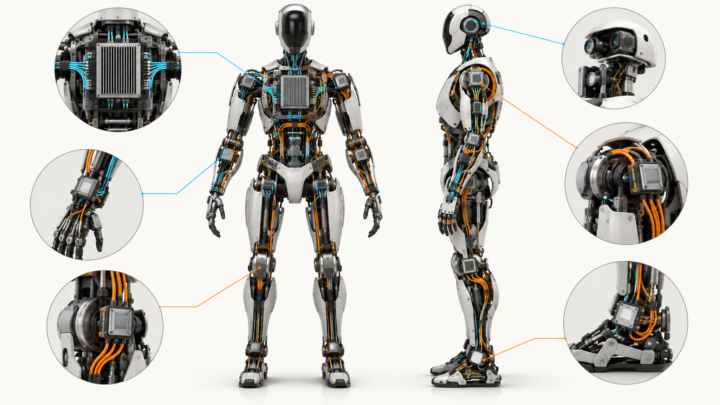
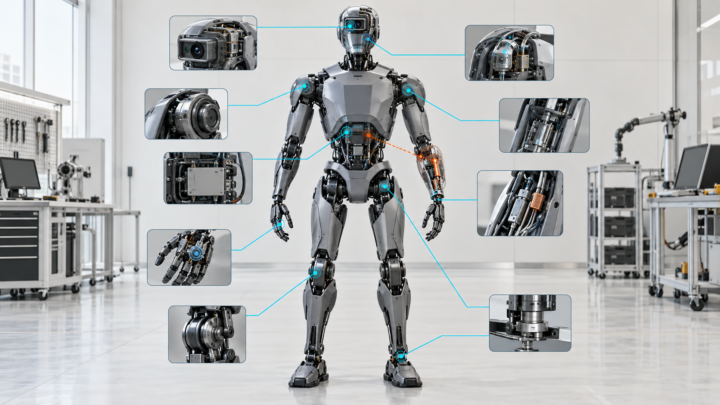
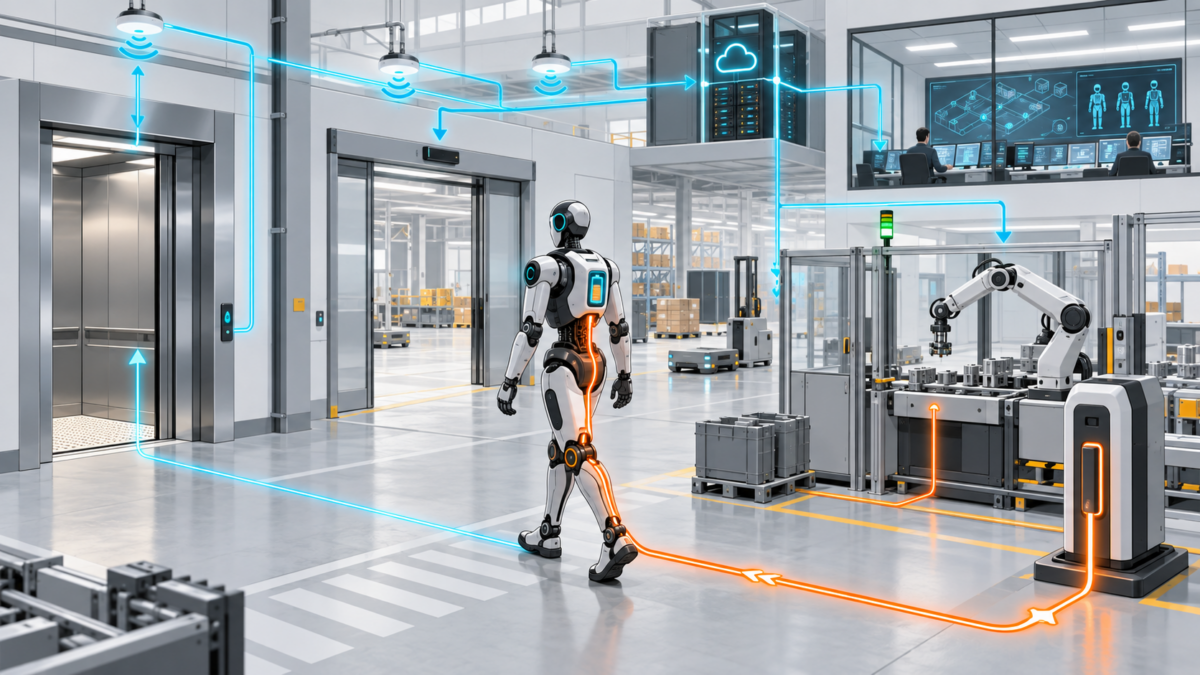
Transport-state semiconductor stack
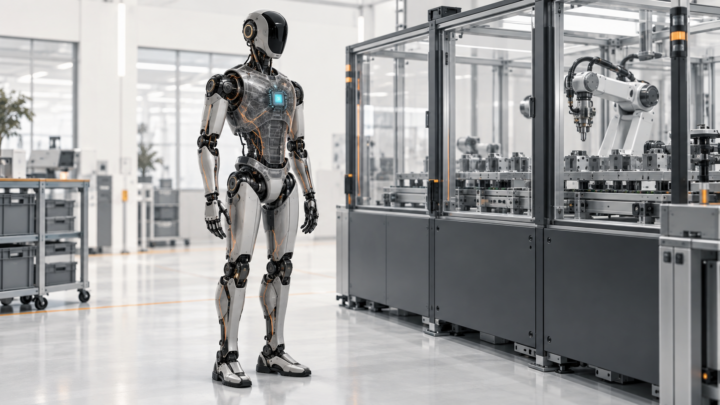
Figure 2. Transport mode creates a low-power semiconductor stack underneath the powered-down robot. Original artwork © DXresearch.eu.

1. A hard energy boundary

The first requirement is battery isolation. High-energy actuator buses should not be energizable by a single software command or an accidental wake event. Depending on architecture, this can involve electromechanical contactors, solid-state switches, precharge paths, fuse monitoring and independent plausibility checking. The safe transport state should be observable: the control system must know whether the isolation boundary is actually open.

This requirement connects directly to semiconductor selection. Gate drivers, power MOSFETs, battery monitors, current sensors, microcontrollers and isolated interfaces are not only operational components; they are part of the product’s logistics safety case. The Infineon humanoid application architecture already places battery management, power distribution, motor control and sensing among the core electronic domains, which makes transport-state behavior a cross-domain design problem rather than an accessory feature [11].

2. An evidence sensor that stays awake

The second requirement is selective observability. A low-power IMU can detect shock signatures. Temperature sensors can record excursions. A tamper input can detect enclosure opening or transport-frame release. The BMS can preserve state-of-charge, cell-voltage and fault information. A real-time clock or authenticated time source gives events chronological meaning.

The design challenge is energy budgeting. A robot may remain in storage for weeks or months. Transport-state electronics therefore need sleep-oriented silicon, event-driven wake-up and bounded logging. The architecture should define what is continuously monitored, what wakes on threshold, what is sampled periodically and what can be reconstructed from existing devices. Adding an always-on high-performance processor would defeat the purpose.

3. Trusted configuration survives the journey

Transport is also a cybersecurity and configuration-management boundary. A robot may pass through depots, customs, integrators and customer receiving areas before reaching a controlled production network. The transport state should therefore preserve a trusted representation of firmware versions, safety configuration, battery identity, installed options and calibration data.

A secure element or hardware root of trust can bind the transport-state record to the robot identity. The objective is not to make logistics cryptographically elaborate. It is to avoid a dangerous ambiguity: when the robot arrives, can the receiving system prove that the machine is the expected unit, running the expected baseline, with an intact event history?

Commissioning Should Be Deterministic, Not Hopeful

Today, many advanced robots effectively depend on expert engineers to bring them from crate to operational readiness. That is acceptable for prototypes and expensive pilots. It becomes economically fragile when fleets scale. The destination process should instead resemble a controlled state machine.

Deterministic recommissioning begins by reading identity and transport evidence before energizing high-power systems. The robot verifies whether shock, temperature or battery conditions crossed defined thresholds; whether the configuration matches the shipment record; whether the isolation system behaved correctly; and whether safety-critical sensor or actuator calibrations require revalidation. Only then should progressively higher-energy subsystems be enabled.

This approach creates three possible outcomes rather than a binary “works/does not work” check. A robot can be released to operation, released with a restricted diagnostic action, or quarantined for inspection. That classification is particularly important for expensive articulated machines because an unnoticed transport-induced defect can propagate into secondary damage during the first powered motion.

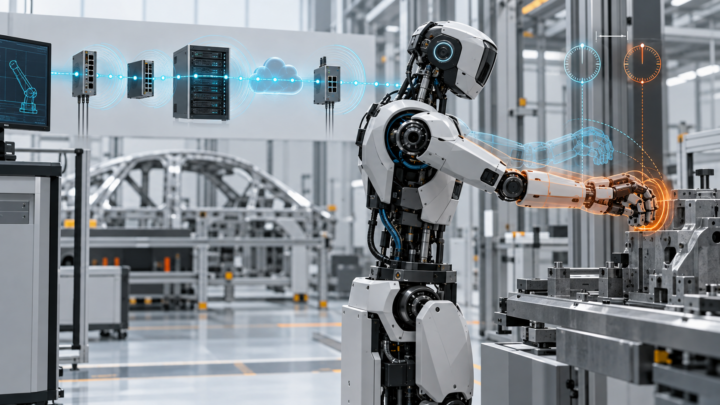
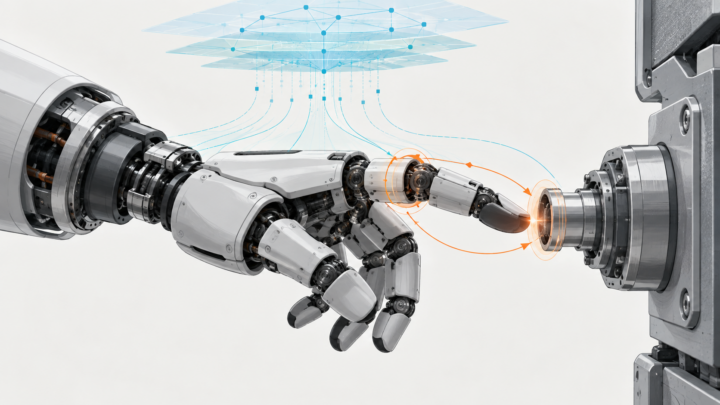
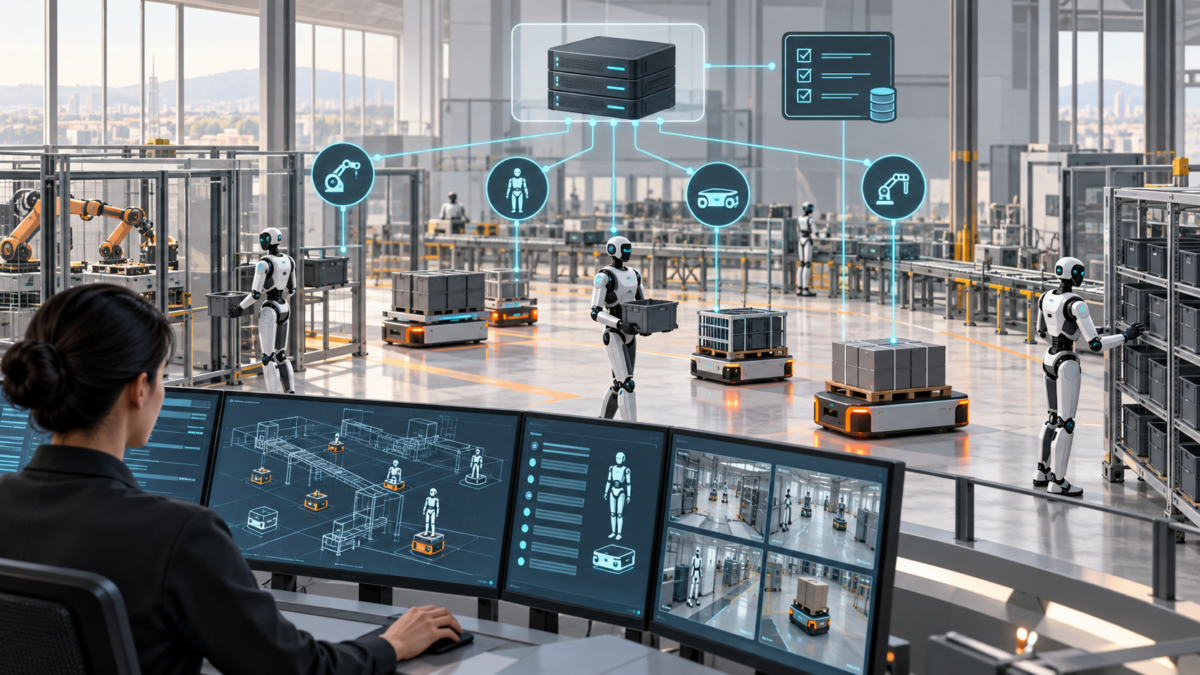
Logistics evidence loop
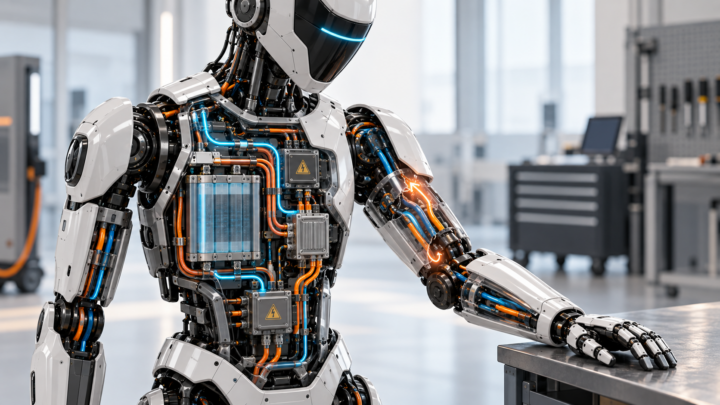
Figure 3. The logistics evidence loop links preparation, measurement, protected recording and arrival decisions. Original artwork © DXresearch.eu.

From Packaging Qualification to Closed-Loop Logistics Engineering

Traditional product logistics separates design, packaging qualification, transport and field service. Physical AI benefits from closing that loop. The machine can provide evidence that improves the next generation of packaging, mounting points, restraint mechanisms, connector design and environmental limits.

For example, recurring vibration events correlated with encoder recalibration could reveal a weak transport resonance. Temperature histories could explain unexpected battery ageing. Shock events could be compared with structural health checks. Fleet-level data could show whether a particular route, carrier, crate design or handling process creates disproportionate risk. This is a practical extension of the same fleet-learning logic used during operation, but applied to the period when the robot is not working.

The design must avoid turning logistics telemetry into uncontrolled surveillance. Event logging should be purpose-limited, security protected and designed around product health rather than indiscriminate location or personnel monitoring. In many cases the useful evidence is simple: threshold events, maxima, durations and timestamps rather than continuous raw recording.

The Battery Passport Makes Logistics Data Strategically Relevant

Europe is also moving toward more structured battery lifecycle information. The European Commission states that battery passports will become mandatory from 18 February 2027 for defined categories including certain industrial batteries, with information covering battery identification, technical characteristics, performance, durability, repair, reuse and recycling [9]. Whether a specific humanoid battery falls within a particular regulatory category depends on its design and market context, but the architectural direction is clear: battery identity and lifecycle data are becoming formal product information.

This aligns naturally with transport-state design. The robot already needs to know which pack is installed, its state, fault history and service status. A consistent data architecture can support logistics, service and regulatory documentation without building separate, disconnected records for each process.

Safety and Compliance Extend Beyond the Crate

The EU Machinery Regulation provides the broader context that advanced robots remain machinery with lifecycle safety obligations, even as software, connectivity and machine learning become more important [10]. Transport mode itself does not satisfy machinery compliance, and packaging standards do not replace functional safety. The important point is architectural continuity: the robot should not move between completely unrelated safety assumptions when it changes from operation to logistics.

A useful engineering principle is that every state transition should have an owner, entry conditions, evidence and exit conditions. Operational mode, maintenance mode, charging mode, transport mode and emergency states should be explicit members of the same lifecycle state model. This reduces hidden dependencies and makes verification more tractable.

Semiconductor Architecture for a Shippable Robot

Transport requirement System function Semiconductor relevance Evidence produced
High-energy isolation Prevent actuator/bus energization during logistics Power switches, gate drivers, contactor control, current sensing, MCU supervision Isolation state, fault state, wake history
Battery transport state Manage SoC, temperature and storage limits BMS monitor ICs, current sensors, balancing, low-power MCU, protection SoC, cell condition, temperature, protection events
Shock/vibration monitoring Detect handling events beyond defined thresholds Low-power IMU, threshold interrupt, RTC, NVM Peak/event log with timestamps
Trusted identity Bind unit, battery, firmware and configuration Secure element, hardware root of trust, protected memory Signed configuration and shipment baseline
Arrival verification Execute controlled recommissioning MCUs, diagnostics, sensor interfaces, secure communications Release, restricted release or quarantine result
Lifecycle traceability Connect logistics evidence to service history Nonvolatile memory, secure connectivity, cloud/fleet gateway interface Transport-state record linked to service record

The important semiconductor opportunity is not a single “shipping chip.” It is the orchestration of devices already present in the robot into a deliberate low-power transport architecture. This favors components with deep-sleep modes, autonomous threshold monitoring, retained secure state, diagnostic coverage, robust nonvolatile memory and well-defined wake behavior.

Design Rules for the Product Architecture

First, define transport mode before mechanical design freezes. Restraint points, service connectors, pack disconnects and accessible status indicators depend on physical architecture.

Second, separate safe monitoring from motion capability. The electronics needed to prove the robot is safe to wake should not require energizing the systems whose safety is being checked.

Third, log evidence rather than assumptions. A tamper-evident, time-stamped record is more useful than relying on a shipping label stating “do not drop.”

Fourth, make recommissioning executable by normal operations staff. Expert engineering support should be the exception triggered by evidence, not the default commissioning method.

Fifth, connect qualification tests with fleet evidence. Laboratory shock and vibration testing establish controlled limits; shipment telemetry determines whether real distribution environments stay inside those limits.

Strategic Implication: Logistics Becomes Part of Product Performance

As humanoid volumes increase, the cost of shipping failures scales differently from the cost of laboratory failures. A damaged prototype inconveniences an engineering team. A recurring logistics weakness across hundreds or thousands of robots creates warranty exposure, delayed customer launches, spare-parts demand, field-service cost and reputational damage. The business case for transport-state electronics therefore grows with volume.

This is why shippability belongs beside reliability, maintainability, functional safety and cybersecurity in the system architecture. It is a prerequisite for turning Physical AI from an engineered demonstration into an industrial product that can move through a global supply chain without losing safety, identity or confidence.

Conclusion

A humanoid robot cannot create value until it reaches the place where it is supposed to work. That journey exposes a blind spot between manufacturing and deployment. Batteries introduce regulated transport constraints. Mechanical handling can create latent faults. Long storage can change system state. Supply-chain custody can create identity and configuration uncertainty. Commissioning can become a costly engineering activity.

The solution is to treat transport as an explicit robot state. High-energy systems are isolated; a small trusted electronics island remains capable of monitoring, logging and authenticating; environmental evidence is preserved; and the machine follows a deterministic recommissioning sequence on arrival. The required semiconductor functions already exist across battery management, power isolation, sensing, microcontrollers, secure elements, memory and communications. The innovation lies in integrating them around the logistics lifecycle.

For the next generation of humanoids, the question will not only be whether the robot can walk out of the laboratory. It will be whether it can leave the factory, cross the world, arrive intact, prove what happened on the way, and start work safely.

Glossary

Battery isolation

Electrical disconnection that prevents traction or actuator energy from being unintentionally applied while retaining only explicitly permitted low-power functions.

Deterministic recommissioning

A controlled restart process that verifies identity, configuration, hardware health, safety state, and readiness before operational release.

Physical AI

Artificial intelligence embodied in physical systems that perceive, decide, and act in the real world.

Transport mode

A deliberately constrained robot state for shipment or storage that isolates hazardous functions while preserving required monitoring and identity.

Transport-state record

A time-stamped evidence record describing battery, isolation, configuration, environmental events, and integrity conditions during logistics.

References

  1. Batteries — Digital Product Passport. The European Commission outlines battery-passport requirements covering identity, technical characteristics, performance, durability, repair, reuse, recycling, and lifecycle information. Source
  2. Battery Guidance Document — Revised for the 2026 Regulations. IATA explains 2026 air-transport provisions for lithium and sodium batteries, including equipment configurations, classification logic, packing, documentation, and charge limits. Source
  3. Battery Shipping Regulations, 13th Edition (2026). IATA’s 2026 battery shipping rules clarify classification, state-of-charge, packaging, marking, documentation, and transport requirements for battery-powered equipment. Source
  4. BMW Group to deploy humanoid robots in production in Germany for the first time. BMW describes staged humanoid deployment in industrial production, illustrating the commissioning and integration path from laboratory evaluation to factory operation. Source
  5. Chinese humanoid robot maker Unitree prices IPO at $9 billion valuation. Unitree’s IPO and manufacturing investment illustrate the transition from robot prototypes toward scaled production, commercialization, and global distribution requirements. Source
  6. Humanoid robots application presentation. Infineon maps motor control, compute, zone control, battery management, charging, and sensing building blocks across contemporary humanoid robot system architectures. Source
  7. IEC 60068-2-27:2008 — Shock. IEC 60068-2-27 provides procedures for evaluating equipment resilience to repetitive and non-repetitive mechanical shocks, including packaged transport cases. Source
  8. IEC 60068-2-64:2026 — Vibration, broadband random and guidance. IEC 60068-2-64 evaluates resistance to broadband random vibration and accumulated mechanical degradation relevant to transportation and operational environments. Source
  9. Regulation (EU) 2023/1230 on machinery. The EU Machinery Regulation defines requirements for machinery and related products, strengthening lifecycle, safety, and digital-documentation considerations for advanced robots. Source
  10. Required Equipment for ISTA Testing. ISTA transport procedures combine conditioning, shock, vibration, compression, and handling tests across packaged-product weight and distribution configurations. Source
  11. UN Manual of Tests and Criteria Rev.8 and Amendment 1. The UN Manual defines dangerous-goods test methods, including subsection 38.3 requirements used to qualify lithium and sodium batteries for transport. Source