
Technical Article
The Robot Should Know What Is Wearing Out
Health-Aware Motion, Degradation Estimation and Graceful Loss of Capability
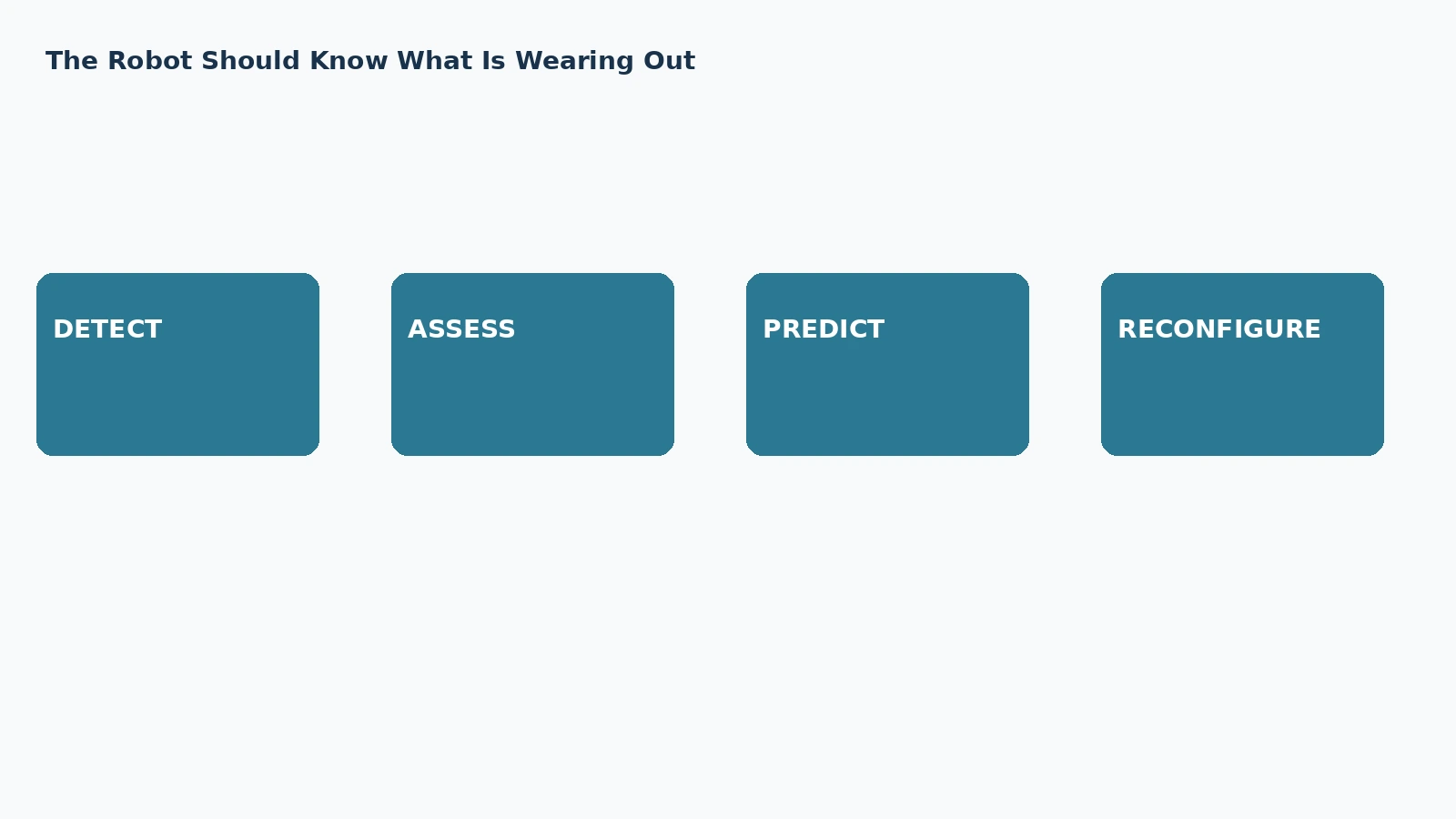
Health-aware humanoids estimate component degradation, redistribute mechanical load, and deliberately reduce capability before weakened joints or sensors become dangerous failures.
Health Is a Control Input
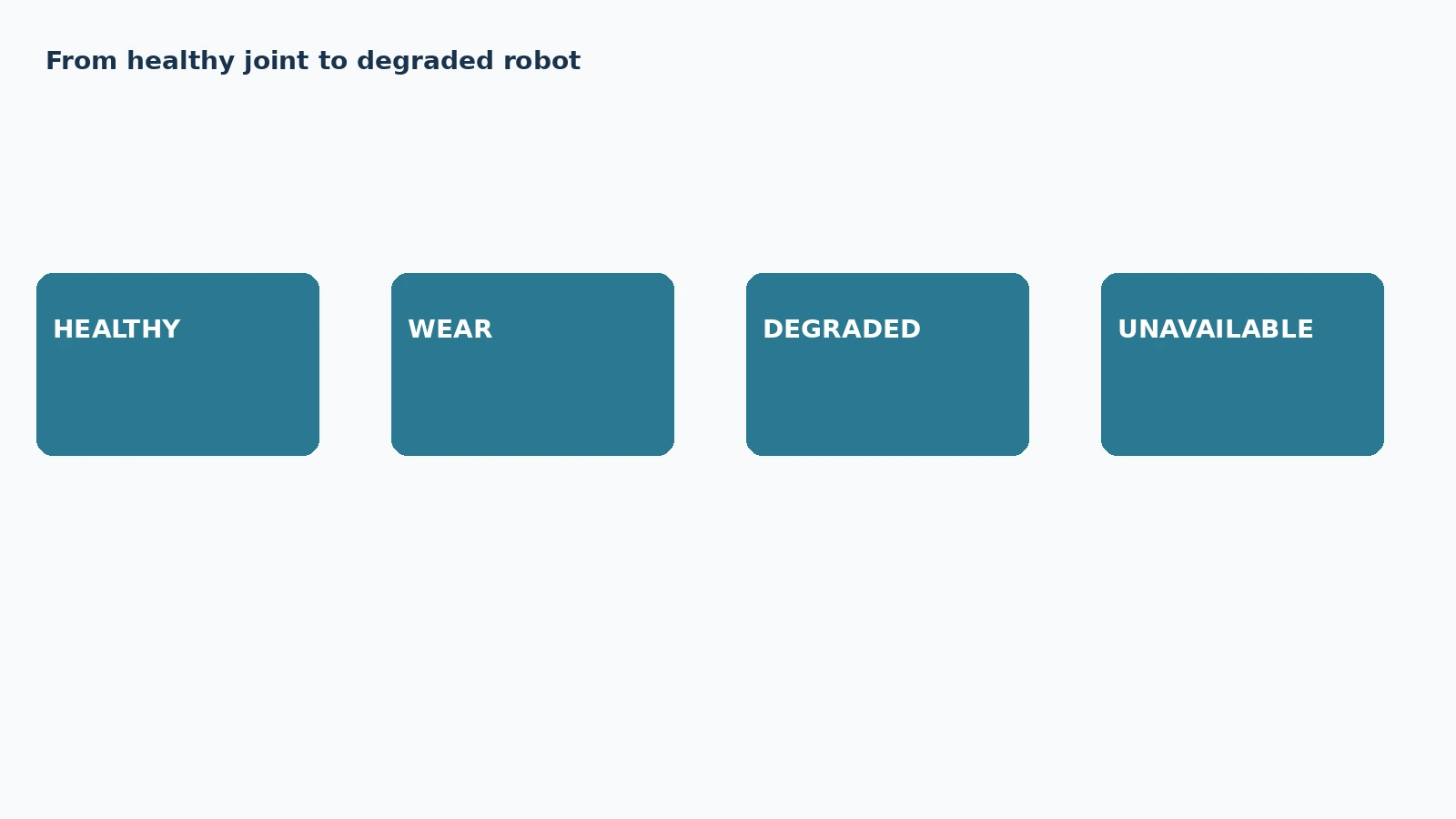
Component health Degradation Remaining useful life Available actuator authority Fault reconstruction Fault accommodation Graceful degradation Health-aware motion planning. A working robot accumulates evidence about its condition. That evidence should change permissible motion, not remain isolated in maintenance logs.
Predict Before Failure
Remaining-life-aware planning can balance degradation across actuators instead of repeatedly consuming the weakest joint. [1] Fault reconstruction provides richer evidence than binary diagnostics. [2]
Authority Can Decrease Gradually
Fault-tolerant control under actuator saturation shows why available power and torque must become explicit control constraints. [3] Humanoid joint reconfiguration demonstrates that redundant joints can preserve selected motions after failure. [4]
The Semiconductor Chain
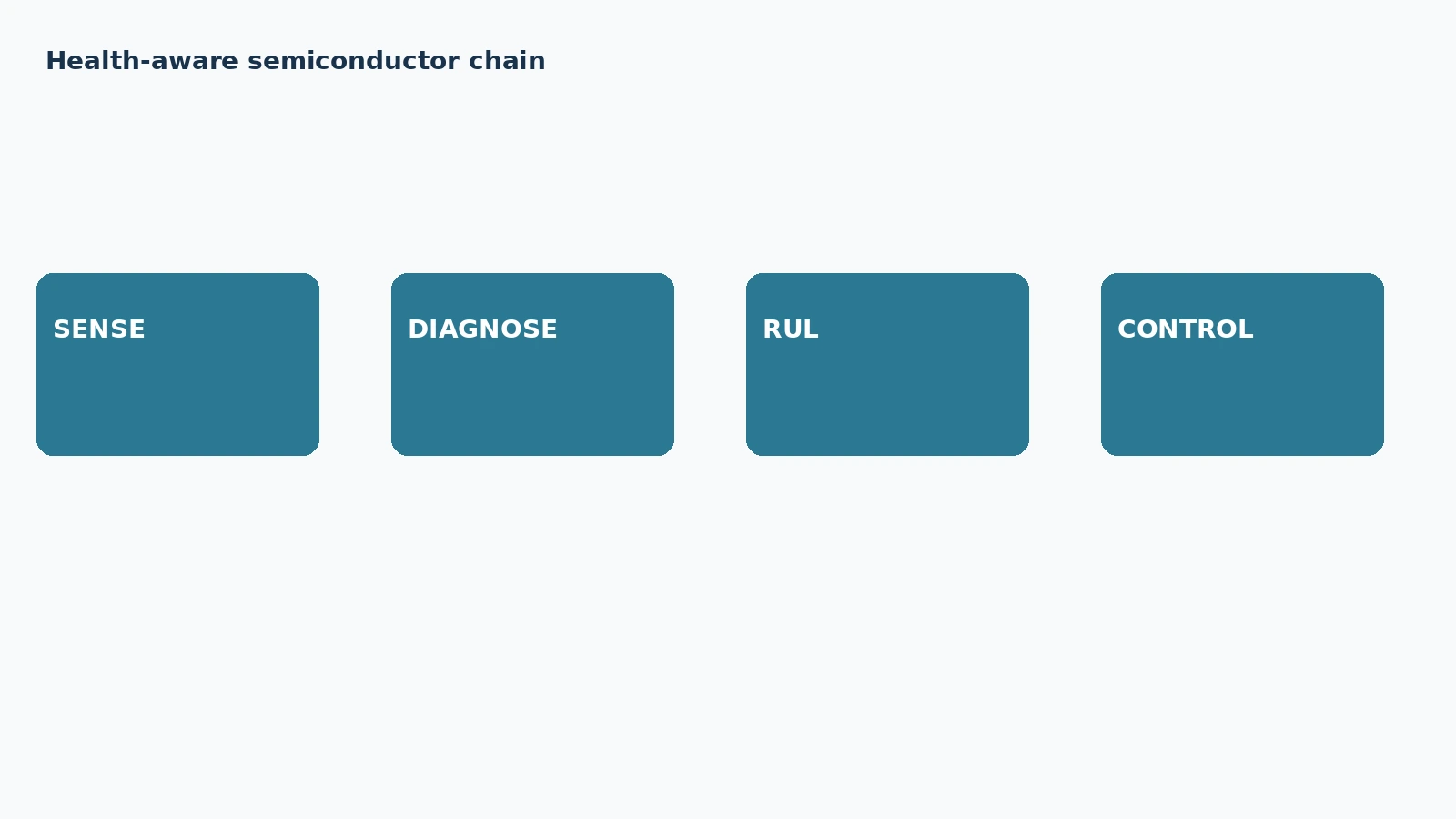
Current, position, temperature and vibration sensing feed synchronized diagnostics and health estimation. Industrial robot degradation research combines dynamics, servo information and motor-current features for condition assessment. [5] Reliability research models coupled wear, fatigue and shock processes. [6]
Graceful Degradation
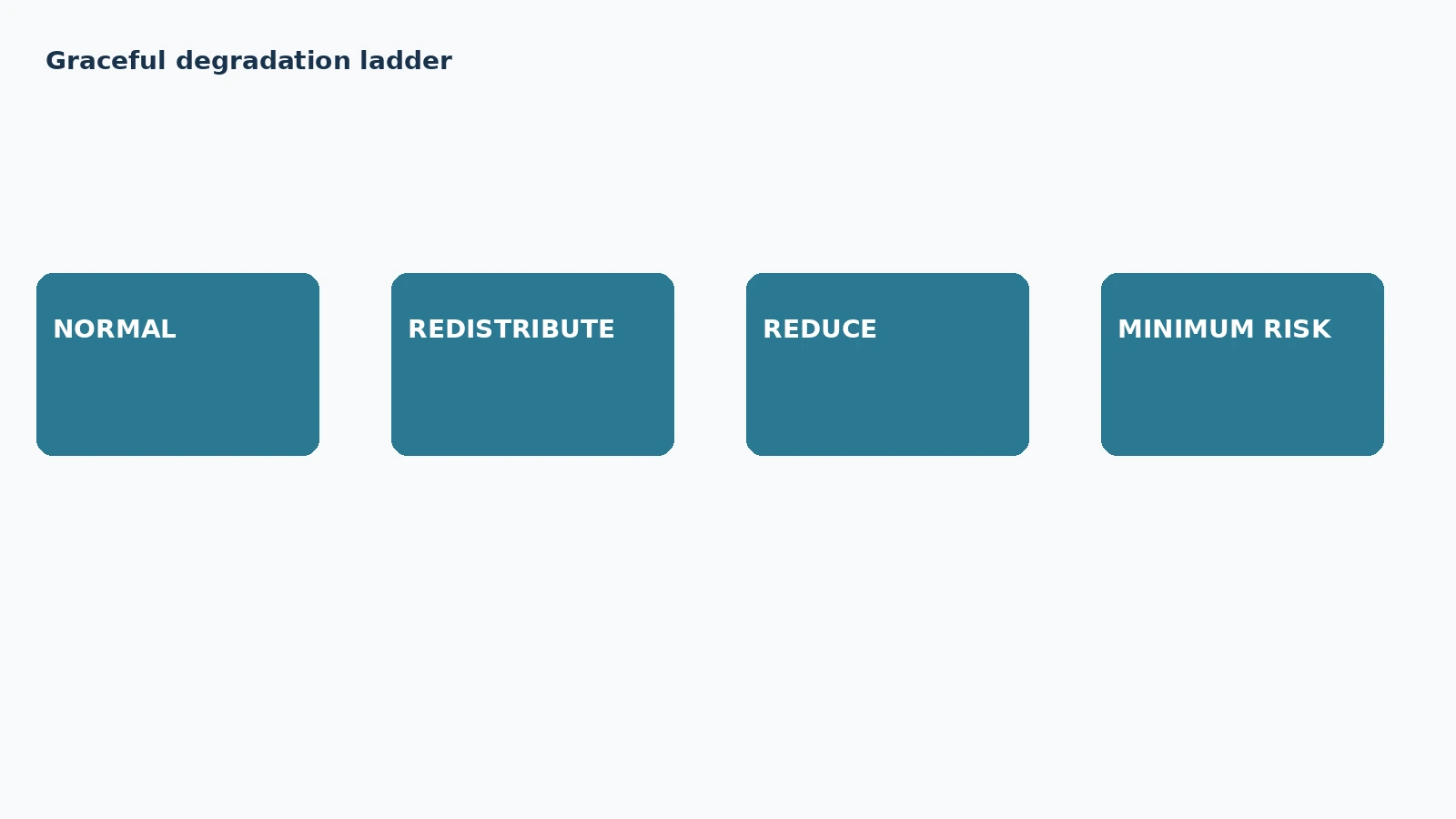
Safe reconfiguration means progressively reducing load, speed, payload or task scope inside verified limits. It does not mean hiding a fault or operating indefinitely with damaged hardware.
Conclusion
A mature humanoid should know not only what it can do, but what its components can still do reliably. Health-aware motion connects physical degradation to whole-body behavior and turns redundancy into a reliability resource.
References
- Li & Zeng / PHM Europe. RUL-Aware RRT: Degradation-Balanced Motion Planning for Robotic Manipulators. 2026-07-03. https://papers.phmsociety.org/
- Control Engineering Practice. Sliding mode-based actuator fault reconstruction and fault-tolerant control of lower limb rehabilitation exoskeleton robots. 2026-02. https://www.sciencedirect.com/
- ISA Transactions. Fault tolerant adaptive control under actuator saturation for robot manipulators. 2026-01. https://www.sciencedirect.com/
- Robotics research. Joint Reconfiguration after Failure for Performing Emblematic Gestures in Humanoid Receptionist Robot. tbd. https://scholar.google.com/
- Wang et al.. A degradation assessment method for industrial robot in flexible manufacturing systems based on multiple physics-informed neural network. tbd. https://www.sciencedirect.com/
- Ling et al.. Reliability Modeling of Systems under Dependent Competing Failures Using Bilateral Coupling Variables. 2026. https://www.mdpi.com/
Glossary
- Available actuator authority
- Torque, speed or control capability currently considered dependable.
- Component health
- Estimated condition of an actuator, sensor, transmission or subsystem relative to expected functional capability.
- Degradation
- Progressive loss of performance or margin before functional failure.
- Fault accommodation
- Modification of control to operate within changed component capability.
- Fault reconstruction
- Estimation of fault magnitude or behavior rather than binary detection alone.
- Graceful degradation
- Controlled reduction of capability while preserving verified safety and as much useful operation as remains trustworthy.
- Health-aware motion planning
- Trajectory generation incorporating component condition or predicted degradation into costs and constraints.
- Remaining useful life
- Estimated usable operating duration before a defined failure criterion.
Sources
- A degradation assessment method for industrial robot in flexible manufacturing systems based on multiple physics-informed neural network · tbd · Wang et al.
https://www.sciencedirect.com/ - Fault tolerant adaptive control under actuator saturation for robot manipulators · 2026-01 · ISA Transactions
https://www.sciencedirect.com/ - Joint Reconfiguration after Failure for Performing Emblematic Gestures in Humanoid Receptionist Robot · tbd · Robotics research
https://scholar.google.com/ - Reliability Modeling of Systems under Dependent Competing Failures Using Bilateral Coupling Variables · 2026 · Ling et al.
https://www.mdpi.com/ - RUL-Aware RRT: Degradation-Balanced Motion Planning for Robotic Manipulators · 2026-07-03 · Li & Zeng / PHM Europe
https://papers.phmsociety.org/ - Sliding mode-based actuator fault reconstruction and fault-tolerant control of lower limb rehabilitation exoskeleton robots · 2026-02 · Control Engineering Practice
https://www.sciencedirect.com/