
The standards race has already started
Physical AI is not waiting for a single global rulebook. Humanoid robots, mobile manipulators and autonomous mobile robots already inherit decades of engineering standards covering machinery, industrial robots, electronics, software, batteries and cybersecurity. The complication is that learned behaviour, changing operating environments, whole-body locomotion and physical contact introduce new questions that these frameworks do not completely resolve.
For product developers, this is not an abstract standards debate. The standards selected now influence architecture, sensing redundancy, drive safety functions, communications, logging, qualification effort and ultimately product cost. Equally, the standards still being drafted may determine which capabilities robot manufacturers must demonstrate to customers, insurers, integrators and authorities.
The key distinction is between three different instruments: published technical standards, emerging committee projects, and binding regional regulation. A working group is not a product certification requirement. A voluntary guidance document is not equivalent to legislation. And adoption of a standard in one application does not automatically mean it applies to every humanoid.
Consider a humanoid arriving at a warehouse loading station. Its navigation system predicts an open route, a worker unexpectedly steps sideways, and the robot shifts a heavy parcel to recover balance. The movement may be reasonable for the motion planner and still expose the worker to an unacceptable contact force. The design team needs evidence about perception, stopping distance, joint torque, balance recovery and the operator’s procedures. Each question points toward a different standards family.
This fragmentation has a commercial consequence. A robot builder entering several regions must explain the same technical design through different conformity, procurement and operating expectations. The early winners in standardization may be the organizations that make those explanations repeatable and testable.
A working robot inherits multiple standards families
A robot operating in a factory starts with risk assessment. ISO 12100 establishes systematic hazard identification and risk reduction. ISO 10218-1 and -2:2025 address industrial robots and robot applications. Safety-related control functions may draw on ISO 13849, IEC 62061 or IEC 61508 according to product scope and intended architecture. A mobile robot in material handling may also fall within ISO 3691-4 or ANSI/A3 R15.08, while collaborative contact introduces considerations addressed by ISO/TS 15066.

Service and personal-care robots bring additional models. ISO 13482 addresses personal care robot safety. ISO 31101 focuses on safety management by organizations operating service robots, a useful reminder that a manufacturer’s product-level safety case does not settle how a robot should be supervised, maintained and deployed in a specific venue.
Security and AI management form another layer. IEC 62443 is a key reference family for industrial cybersecurity. ISO/IEC 42001 provides an AI management system, ISO/IEC 23894 addresses AI risk management, and ISO/IEC 5338 covers AI lifecycle processes. These documents address different questions: governance is not the same as a safety-rated control loop, and cybersecurity compliance does not prove safe motion.
There are important caveats. ISO 26262 and ISO 21448 originate in road vehicles and can transfer safety engineering practices, but do not by themselves certify a humanoid. Likewise, time-sensitive Ethernet, IEC 61784-3 safety communications and IEC 61800-5-2 safe drive functions offer practical building blocks without determining the safety of an entire autonomous robot.
Applicability begins with intended use. A robot installed behind guarded factory equipment, a mobile manipulator sharing aisles with workers and a service robot in a public lobby create different hazard exposures. The equipment category, operating environment and integration boundary determine which safety documents provide the most relevant requirements. A voluntary standard can also become commercially decisive when customers build it into purchase specifications.
The electronics chain makes the distinction tangible. A joint inverter may support safe torque off under IEC 61800-5-2; a higher-level controller may monitor speed and torque under a machinery safety architecture; the robot must additionally establish what happens when power removal compromises balance. Validation therefore needs to connect individual safety functions to whole-body physical consequences.
Established standards: an engineering baseline
The following is a selected applicability register, not a claim that every document is mandatory for every robot. A product risk assessment determines which requirements apply.
| Standard or family | Domain | Status | Use for Physical AI |
|---|---|---|---|
| ISO 12100 | Machinery risk assessment | Published / established | Machinery hazards and risk reduction |
| ISO 10218-1/-2:2025 | Industrial robots and robot applications | Published | Robot and integration safety |
| ISO 13849-1/-2; IEC 62061 | Safety-related controls | Published / established | Safety functions and verification |
| IEC 61508; IEC 61800-5-2 | Functional and drive safety | Published / established | Fault handling and safety functions of motion systems |
| ISO 3691-4 | Driverless industrial trucks | Published | AGV and applicable AMR safety |
| ISO/TS 15066; ISO 13482 | Collaborative and personal-care robots | Published | Contact and service-robot safety, subject to scope |
| IEC 62443; ISO/IEC 42001; ISO/IEC 23894 | Industrial cybersecurity and AI management | Published | Cybersecurity, AI governance and risk processes |
| ISO/IEC 5259; ISO/IEC 5338 | Data quality and AI lifecycle | Published series / standard | Learning-data governance and AI lifecycle |
| IEC 61784-3; IEEE 802.1 TSN | Functional-safety communication and network timing | Published | Communication integrity and time-sensitive services |
International committees are moving into humanoid-specific questions
ISO/TC 299 has emerged as one of the clearest places to watch. Its published committee structure includes WG 12 on dynamically stable industrial mobile robots, WG 13 on safety requirements for industrial and service robotics, WG 8 on biomechanical data and physical human–robot interaction, WG 9 on electrical interfaces for industrial robot end-effectors, WG 10 on mobile robot interoperability and communication, WG 11 on measuring industrial robot energy consumption, and WG 6 on modularity for service robots. WG 16 addresses humanoid robot datasets.
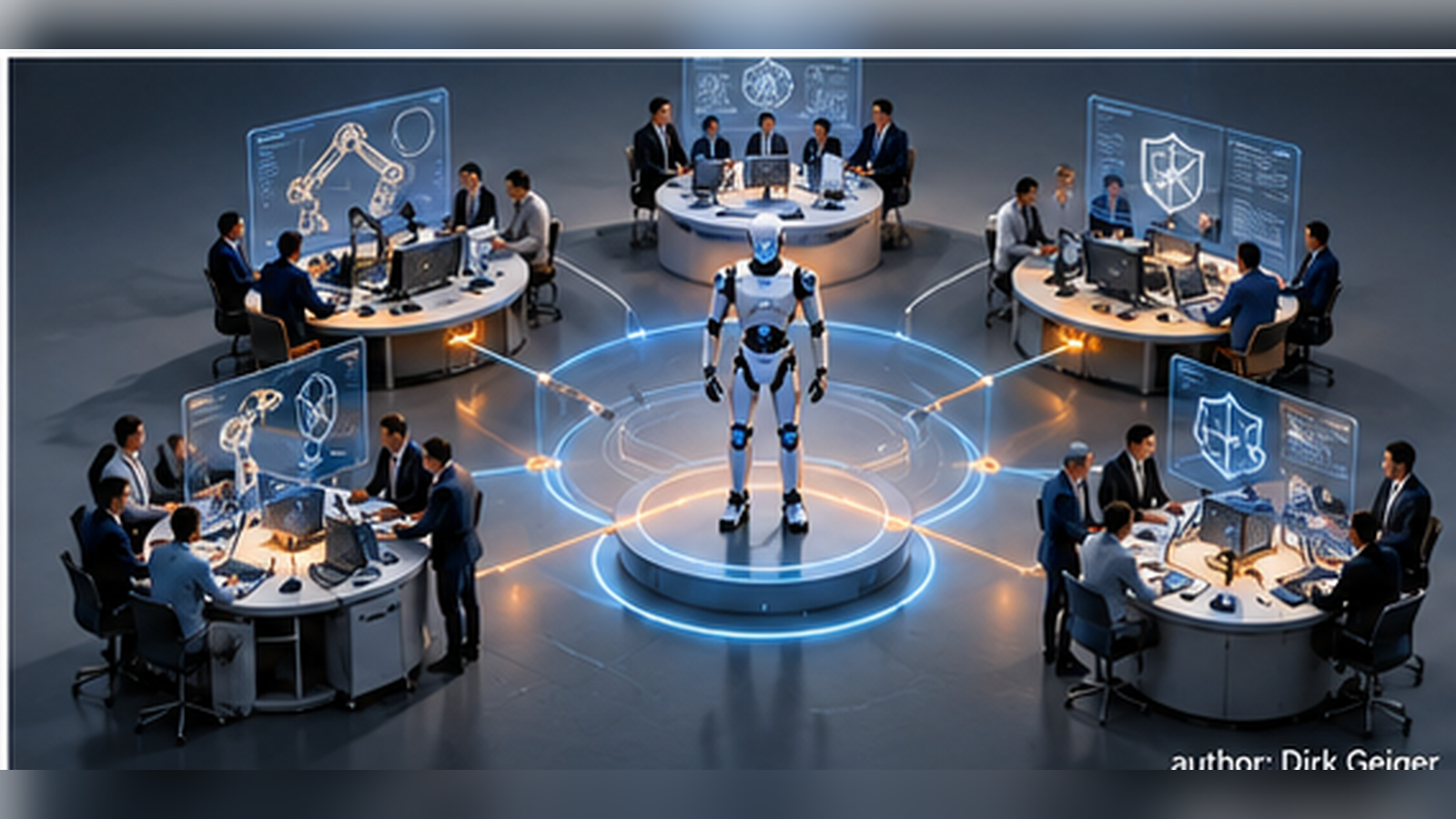
This split of responsibilities says something important. Safety of balancing locomotion, physical contact, module interoperability, energy measurement and datasets are distinct technical problems. A single definition of “humanoid-safe” would be too crude to govern all of them. Standards developers are therefore building pieces of an assurance and interface ecosystem rather than offering one all-purpose humanoid certificate.
IEEE projects add another thread. IEEE P3870, approved as a development project in September 2026, describes a reference framework and general requirements for intelligent control systems in humanoid robots for digital production and services. IEEE P3704 and P3927 are developing evaluation approaches for embodied intelligence and industrial embodied intelligence. Their future influence depends on publication, uptake and how concretely their assessment criteria connect to deployed robot architectures.
AI-driven safety functions are receiving separate attention. The ISO/IEC 22440 series under development addresses AI systems in functional-safety contexts. This is particularly consequential where perception and learned decisions affect hazardous physical motion. It should be monitored as an emerging project, not represented as a completed compliance scheme.
The newest questions concern the boundary between repeatable component behavior and learned system behavior. Dataset work can improve the comparability of perception and manipulation assessments, yet dataset conformance alone cannot establish safe operation at an unfamiliar loading dock. Similarly, electrical interface standardization can simplify modular end-effectors, while the integrator remains responsible for validating how a newly attached tool changes mass, reach, forces and failure modes.
Working-group involvement matters before a final specification exists. Once committees agree on measurement vocabulary, test fixtures or interface assumptions, developers begin designing toward those concepts. A supplier that participates early can make practical implementation constraints visible: limited power headroom in an arm, sensor synchronization across joints, environmental robustness or the need to retain a safe local controller during a network disruption.
Upcoming standards and organized work
| Committee or project | Technical subject | Status at research date |
|---|---|---|
| ISO/TC 299 WG 12 / WG 13 | Dynamically stable robots and broad robot safety | Active working groups |
| ISO/TC 299 WG 8 / WG 9 | Biomechanics and electrical end-effector interfaces | Active working groups |
| ISO/TC 299 WG 10 / WG 16 | Mobile interoperability and humanoid datasets | Active working groups |
| ISO/IEC TS 22440-1 | Functional safety and AI systems | Committee draft under development |
| IEEE P3870 | Humanoid intelligent-control framework | IEEE project under development |
| IEEE P3704 / P3927 | Embodied intelligence capability and industrial assessment | IEEE projects under development |
| ASTM F45 robotics subcommittees | Grasping, legged systems, detection and interoperability | Ongoing test-method work |
China is building a dedicated humanoid standards vocabulary
China is notable for the scale and specificity of its humanoid standardization programme. The reported 2026 initiative to develop a large set of key standards through 2028 sits alongside more concrete national publications. The GB/T 48317-2026 series, published in September 2026 for implementation in April 2027, includes general requirements, environmental perception, decision-making and planning, motion control and task-oriented manipulation. GB/T 48316-2026 addresses a humanoid simulation testing platform.

This capability-based decomposition is strategically meaningful. Rather than describing only how a machine avoids harm, the series provides a vocabulary for what the robot does and how those functions can be evaluated. The immediate impact may be more consistent descriptions of customer expectations, test results and procurement criteria across a rapidly growing supplier ecosystem.
However, publication should not be confused with verified implementation by robot OEMs, and the GB/T designation alone does not make a standard mandatory. The details of electrical interfaces, hardware test requirements and conformity routes must be evaluated from the full authoritative standards texts. For suppliers, an important next question is whether common capability tests converge into common sensor, drive, power or controller design constraints.
China’s humanoid effort merits particular attention because its emerging vocabulary follows the robot’s functional chain: sensing, deciding, controlling movement and executing tasks. A common capability taxonomy can influence OEM requests for quotation, testing services and even how investors compare competing machines. The implementation dates and detailed conformance criteria still matter more than the headline number of planned standards.
For multinational developers, the critical issue is whether test methodology becomes internationally portable. A grasping test defined by payload and repeatability is easier to reproduce than one dependent on local fixtures or undocumented environmental assumptions. Monitoring the English translations, normative references and actual lab adoption will reveal how much engineering reuse is practical.
Europe is combining machinery safety and AI conformity
Europe is taking a different route, combining product safety and AI regulation. The EU Machinery Regulation 2023/1230 applies from January 2027. The EU AI Act creates a separate framework for AI systems, with obligations depending on system classification and applicable provisions. The two regimes must be interpreted together for particular uses, rather than assuming every robot falls into the same category.
CEN-CENELEC JTC 21 is developing European AI standards for aspects such as governance, risk management, cybersecurity and documentation. In October 2026, EN 18286:2026 was cited as a harmonised AI quality-management standard under the AI Act for covered requirements. Harmonisation for a specific legal requirement must not be mistaken for blanket conformity of the whole robot.
European industry also supplies operational interoperability solutions. VDA 5050 version 3.0, announced by VDA and VDMA in April 2026, expands a common fleet communication interface to better accommodate free-navigation mobile robots. This illustrates how specifications can achieve direct integration value without defining autonomous behaviour or the complete safety case.
A manufacturer will need to connect three lines of evidence: the physical safety of the machine, the behavior of software and AI components, and the operating conditions under which the product is used. The boundary becomes especially sensitive after a model update or a change of end-effector. Configuration management and regression testing become ongoing commercial requirements, because the robot delivered to a site may no longer have the same behavioral envelope six months later.
This makes lifecycle records strategically important. A machine identifier, installed hardware, software version, AI model version, calibration state and relevant test results together establish which configuration was assessed. Electronic devices that reliably protect those records support a clearer conformity argument without claiming that any single component makes a system compliant.
The United States emphasizes test methods and industry frameworks
The United States has a dense industry-led ecosystem rather than a single humanoid-specific regulatory code. ANSI/A3 R15.06-2025 covers industrial robot safety; the ANSI/A3 R15.08 series addresses industrial mobile robots across manufacturer, integrator and user responsibilities. ASTM F45 develops robotics and autonomy test methods, including grasping and manipulation, legged systems, object detection and protection, and interoperability.
NIST’s AI Risk Management Framework supplies a voluntary governance and risk framework for AI development and use. It is important for trustworthiness discussions but cannot replace mechanical risk analysis, physical performance testing or safety-related controller validation. The emerging IEEE embodied-intelligence assessment projects complement this approach by seeking more comparable capability measurements.
For international manufacturers, US-developed test protocols may be valuable well beyond the US. Repeatable metrics for locomotion, manipulation and sensing can reduce ambiguity in customer acceptance even where they are not legally required.
Benchmarking also shapes how customers evaluate autonomy claims. Controlled obstacle tests, traversability tests, manipulator repeatability and contact measurements can convert impressive demonstrations into reproducible evidence. For procurement teams, reported performance is useful only with stated conditions: floor surface, payload, battery state, speed, operator intervention and statistical confidence.
The standards ecosystem remains distributed across ANSI, ASTM, IEEE and public-sector research. That distribution supports specialization, although integrators must still assemble a coherent system-level safety case. It also creates opportunities for shared test datasets and independent laboratories to connect capability claims with deployment risks.
Japan and Korea require distinct monitoring strategies
Japan has contributed an operational safety perspective, illustrated by ISO 31101 on safety management for organizations operating service robots. This is an important complement to component and product standards, since deployment context determines safe routes, supervision, maintenance, intervention procedures and acceptable interaction with people.
For Korea, the public evidence reviewed for this article was insufficient to confirm a comparable new national humanoid series, including exact project identifiers and publication dates. That does not mean such initiatives do not exist. KATS, Korean Standards Association resources and national mirror committees for ISO/TC 299 and ISO/IEC SC 42 are the relevant channels for further verification.
The comparative lesson is to avoid oversimplified regional labels. China’s published capability standards, Europe’s regulatory integration, US performance testing and Japan’s operator-safety contributions coexist with international committees in which organizations from multiple countries participate.
Operational safety deserves special attention when robots move between sites. A hospital corridor and a logistics aisle may use similar machines while presenting different pedestrian behavior, maintenance routines and staff training needs. The operator’s management system becomes part of the effective safety envelope alongside hardware and software.
For South Korea, a grounded watchlist should follow official KATS and KS project records, national participation in ISO/TC 299 and ISO/IEC SC 42, and any published humanoid test-method programme. Specific new Korean document numbers should be added only after confirmation in the national catalogue.
Regional standards at a glance
| Region | Standards and initiatives | Evidence status | Strategic relevance |
|---|---|---|---|
| China | GB/T 48317 series; GB/T 48316; national humanoid roadmap | Published 2026 standards; broader programme evolving | Capability tests, simulation, common humanoid terminology |
| Europe | Machinery Regulation EU 2023/1230; AI Act; CEN-CENELEC JTC 21 | Regulation with phased application; standards developing | Conformity, AI governance and product safety |
| United States | ANSI/A3 R15.06, R15.08; ASTM F45; NIST AI RMF | Published and evolving industry frameworks | Safety, measurable performance, AI risk management |
| Japan | ISO 31101 Japanese-led operational safety; JIS/ISO participation | Published international framework; national projects require checking | Service robot operation and deployment safety |
| South Korea | KATS/KS robotics standards and national committee participation | Humanoid-specific project catalogue not fully verified | Conformity and local requirements require targeted verification |
The most useful architecture lessons may come from neighboring sectors
Automotive provides safety goals, fault analysis, traceable requirements and software lifecycle discipline. Aviation contributes system assurance and development evidence. Medical robotics adds structured risk management around interaction with humans. Industrial drives offer safe torque off and other standardized motion safety functions. Industrial networking brings deterministic communication and safety protocols, while battery standards address electrical, thermal and mechanical hazards.
Physical AI needs these foundations, but copying a single neighboring industry produces blind spots. A balancing humanoid may fall when power is removed; a protective stop that is safe for a fixed industrial arm may not be safe for a robot carrying a person-adjacent load. An AI model update can change the distribution of behaviour even when hardware has not changed. Safety therefore has to be defined as a coordinated property of the robot, its task, environment and operating mode.
The industry increasingly needs scenario-based validation, bounded operating envelopes, runtime monitoring, evidence capture and safe degradation. These ideas are compatible with mature functional safety disciplines but demand new system-level engineering methods.
Automotive provides an instructive analogy. Engineers can decompose a hazard into controllable fault paths, establish diagnostic coverage and preserve evidence through a product lifecycle. Humanoids introduce additional state variables, particularly balance, contact, load transfer and interaction with people. A stationary automotive-style safe state may be physically dangerous for a walking robot carrying weight.
Medical robotics contributes another discipline: the consequence of contact depends on who is exposed and why the contact occurs. Aerospace offers traceability and rigorous change control. Industrial networking contributes bounded communication behavior and fault detection. The useful design is a selective combination calibrated to the robot’s actual risk, performance and cost constraints.
Six gaps that matter for the next generation
First, there is no universal mechanism for demonstrating the safety of learned behaviour outside a bounded operational context. Second, dynamically stable robots need hazard responses that maintain balance and manage contact, rather than merely disabling motion. Third, modular limbs, hands and interchangeable tools need interface and requalification concepts that remain valid after configuration changes.
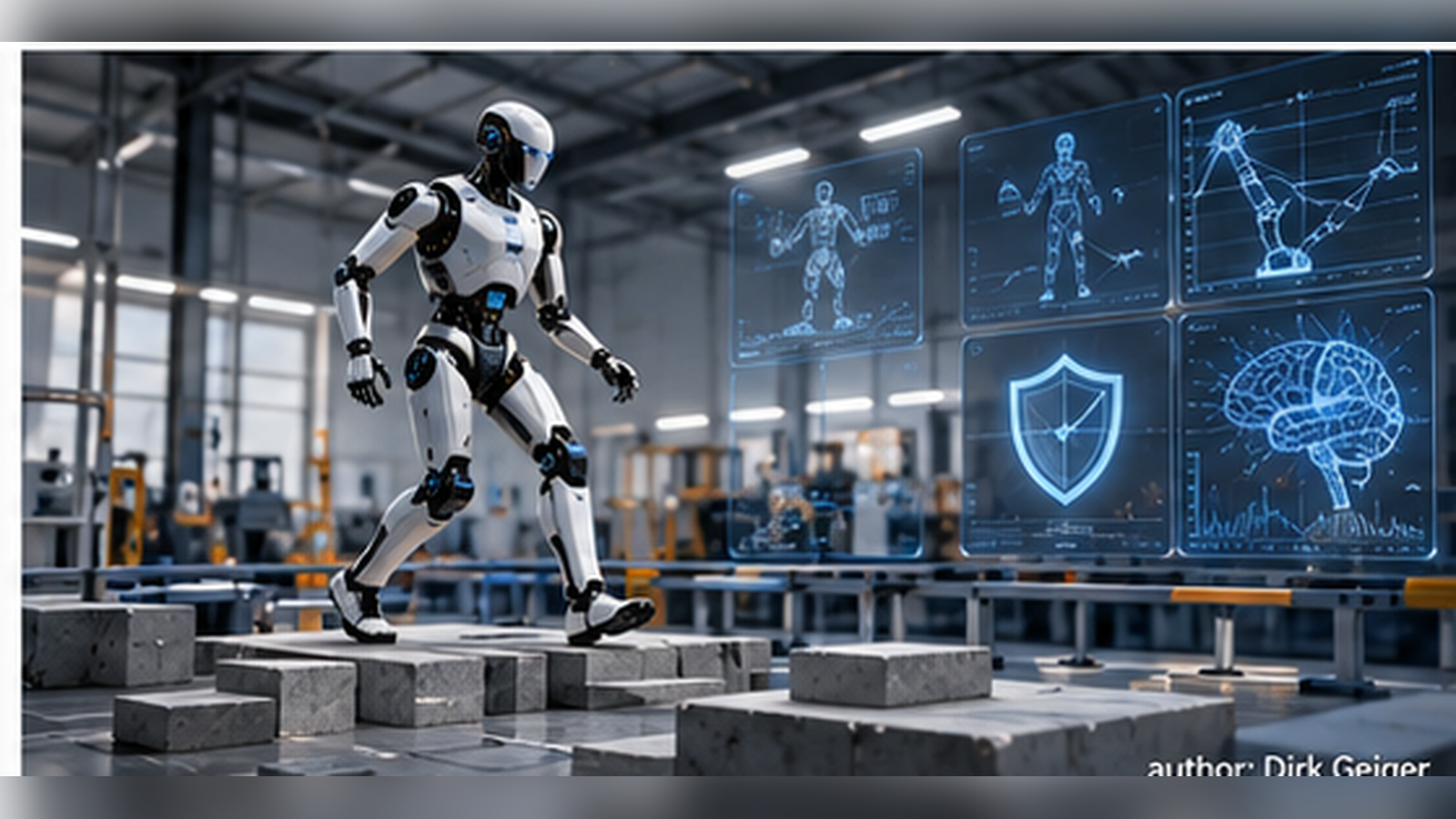
Fourth, energy management needs to become a safety discussion as well as an efficiency discussion: loss of distribution power during locomotion may be hazardous. Fifth, robotics performance metrics need comparable environments, duty cycles and uncertainty reporting, particularly when simulation evidence is used. Sixth, autonomous robots need secure, privacy-conscious event records that can reconstruct what the system perceived and commanded before a dangerous event.
Each gap has partial solutions in existing standards or active working groups. The gap is the absence of one integrated, generally adopted assurance method for physical AI systems.
Imagine an autonomy update that improves object recognition but alters how an arm approaches a shelf. Standard evaluation needs to describe the evidence required for release, the operating limits after release and the conditions that trigger a fallback. A useful event record would preserve the sensor context, commanded trajectory, physical response, software identity and intervention history while respecting security and privacy requirements.
The absence of an integrated global architecture specification also creates a subtle obstacle for modular hardware. Two grippers may have compatible connectors while presenting different power peaks, inertia, tactile sensing, emergency behavior and software assumptions. Physical interchangeability becomes commercially valuable only when the host robot can identify, bound and validate those differences.
The most critical missing standards
Imagine two humanoids, each certified against familiar electrical and machinery requirements. Both lift the same box. One can recover balance after an unexpected push; the other cannot. Their labels may look equally reassuring while their operational risk differs profoundly. The missing common language is a way to specify and validate physical autonomy in context.
The highest-priority gap concerns assurance of learned actions. Robot behavior changes with model updates, sensor conditions, objects and environments. An assurance framework needs to define the operational design domain, monitored limits, evidence for updates, fail-operational or risk-reduced responses, and responsibility when a learned policy leaves its validated envelope. ISO/IEC TS 22440 is an important initiative, but a universal cross-platform method is not yet established.
A second gap concerns dynamic safety. A legged robot may need controlled motion to avoid falling; cutting torque indiscriminately can introduce its own hazard. Standards need practical performance criteria for constrained balance recovery, contact-force management, whole-body state estimation and the behavior of safe supervisory controllers.
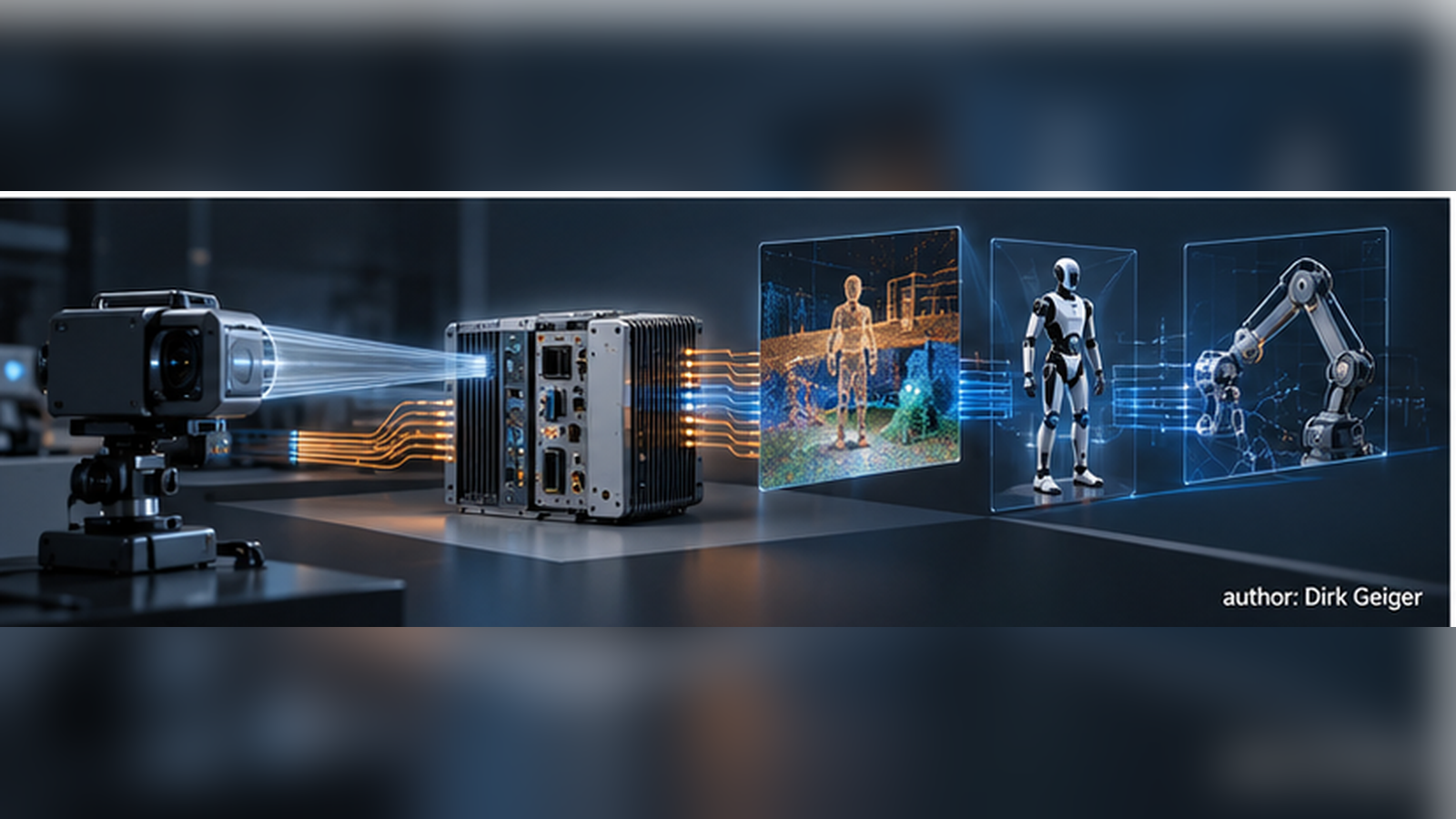
Third, the industry needs interoperable modular interfaces for limbs, end-effectors, sensors and power systems, including electrical characteristics, diagnostics, identification, configuration integrity and requalification after a module change. Fourth, common physical capability benchmarks must describe payload, surface conditions, recovery, uncertainty and task completion under comparable test protocols. Fifth, event recording and lifecycle assurance should link sensed context, AI decisions, safety interventions, command execution and software/model identity so incidents can be investigated and changes evaluated.
These topics are partly addressed by existing standards and working groups. The central gap is the absence of an accepted, integrated assurance and interoperability framework spanning diverse robot embodiments. The most durable requirements will specify observable outcomes and evidence, leaving room for rapid advances in hardware and AI algorithms.
Priority gaps and likely initial actors
| Gap | What needs to be common | Likely drivers |
|---|---|---|
| Learned-behavior assurance | Operational limits, evidence and model-change procedures | Safety bodies, OEMs, regulators |
| Dynamic whole-body safety | Balance-recovery and contact test methods | OEMs, test laboratories, ISO/TC 299 |
| Modular subsystem interfaces | Electrical, logical and diagnostic contracts | OEMs, component suppliers, consortia |
| Robot capability benchmarking | Comparable tasks, environments and metrics | ASTM, IEEE, research laboratories |
| Operational event traceability | Trusted records of observations, decisions and actions | Operators, insurers, OEMs |
Can standards keep up with Physical AI?
Robot development runs on several clocks. AI models and training workflows can change quickly; an actuator, battery or controller may stay in production for years; international consensus normally requires extended committee review. A detailed standard for today's AI architecture could be overtaken before publication. That does not make standardization irrelevant. It changes what deserves standardization, when and by whom.
Market adoption is already creating practical conventions. NVIDIA Isaac and GR00T influence training and simulation workflows; ROS 2 and LeRobot provide widely accessible robot software and data interfaces within their respective ecosystems. Large OEMs can impose their own power, actuator and communication requirements throughout supplier networks. An operator running several brands of mobile robot has a different incentive: common fleet interoperability. VDA 5050 shows how customer demand can motivate an industry specification before universal implementation exists.
These are forms of de facto or quasi-standardization, but they have different levels of openness. A dominant SDK may lower developer costs while raising dependence on one platform. An OEM interface can accelerate a supply chain without being useful to competitors. An open consortium interface may support independent implementations, yet adoption and conformance still require work. Market share alone cannot establish technical adequacy or safety.
Formal standards supply a distinct function. They codify risk-management and test requirements, make performance evidence comparable, and support independent assurance. Standards for the consequences of physical action should remain stable even as the learning system changes. A safe robot can adopt a new model while retaining a validated contract for allowable forces, time bounds, fault responses and update controls.
Three mechanisms will operate in parallel
| Mechanism | What it can establish quickly | Limitation |
|---|---|---|
| AI platforms and open source | Data formats, APIs, simulation and training workflows | Fragmented ecosystems, lock-in and variable assurance |
| OEMs and industry consortia | Reference architectures, purchasing specifications, shared interfaces | Regional or customer-specific fragmentation |
| Formal standards and regulation | Risk controls, test principles, demonstrable conformity | Consensus timelines can lag implementation cycles |
AI could also shorten parts of standards development. It can compare drafts, identify conflicts, extract requirements and generate candidate tests. Independent evidence, transparent deliberation and accountable decisions still determine legitimacy. The largest delay is often agreement about acceptable risk and commercial compromise, not typing a technical document.
Three market outcomes remain possible: concentration around a few AI platforms; fragmented OEM-specific architectures; or a hybrid model in which platforms compete on robot intelligence while common interfaces and assurance requirements support supplier scale. Hybrid convergence appears a reasonable long-term working hypothesis, with substantial fragmentation likely during early market development. It remains a hypothesis until adoption and deployment evidence become available.
The implications reach beyond robotics companies. A component maker must distinguish a provisional OEM preference from a durable ecosystem requirement. Strategic monitoring should therefore connect standards committee projects with production designs, RFQs, software dependencies, installed base, test laboratories and regional policies. Convergence among independent customers is a stronger design signal than a single high-profile announcement.
The market will discover useful implementations faster than committees can settle all details. Consortia can turn successful conventions into shared technical contracts. Formal standards will make the resulting machines easier to trust, compare and deploy at scale. Physical AI needs all three, operating at different speeds.