
The price of access is changing
Humanoid hardware is getting cheaper. Delivering a useful service still carries a substantial price. Across China, the United States and EMEA, customers can choose among demonstration machines, research platforms, staffed event appearances and longer service arrangements. That widening choice is changing how the market develops: customers can experiment with smaller initial commitments, while equipment owners must find enough paid work to justify their investment.
China’s lowest advertised rental prices make the change look dramatic. An October report in Notebookcheck cites offers reaching ¥289 per day, drawing on reporting from CLS about expanding supply and fading performance novelty. The price invites curiosity. Its commercial meaning depends on what arrives at the venue, which robot is supplied and who operates it. A second investigation found much higher prices when journalists checked specific humanoid models and service enquiries.
The strongest evidence covers Chinese hardware and event rentals. Current American and European offers show substantial premiums for local delivery and support, while historical comparisons remain sparse. Public observations spanning 12 October 2025 to 12 October 2026 reveal a market becoming more accessible and more differentiated. Prices remain in their original currencies so exchange-rate movements do not obscure the comparisons. [1], [2]
A daily price carries several different meanings
A purchase price identifies a hardware offer, often before shipping, import clearance, tax, accessories or integration. Local distributors may add support and deployment assistance. The difference between their quotation and a manufacturer’s international listing consequently needs a closer look: configuration, software access and warranty matter alongside the figure on the page.
Leasing spreads an asset commitment across a contracted period. Its economic value depends on the deposit, duration, residual payment, purchase option and repair obligations. A daily equivalent can make a five-year commitment sound immediately affordable. Customers still need the complete payment schedule and end-of-term conditions to understand what that affordability costs.
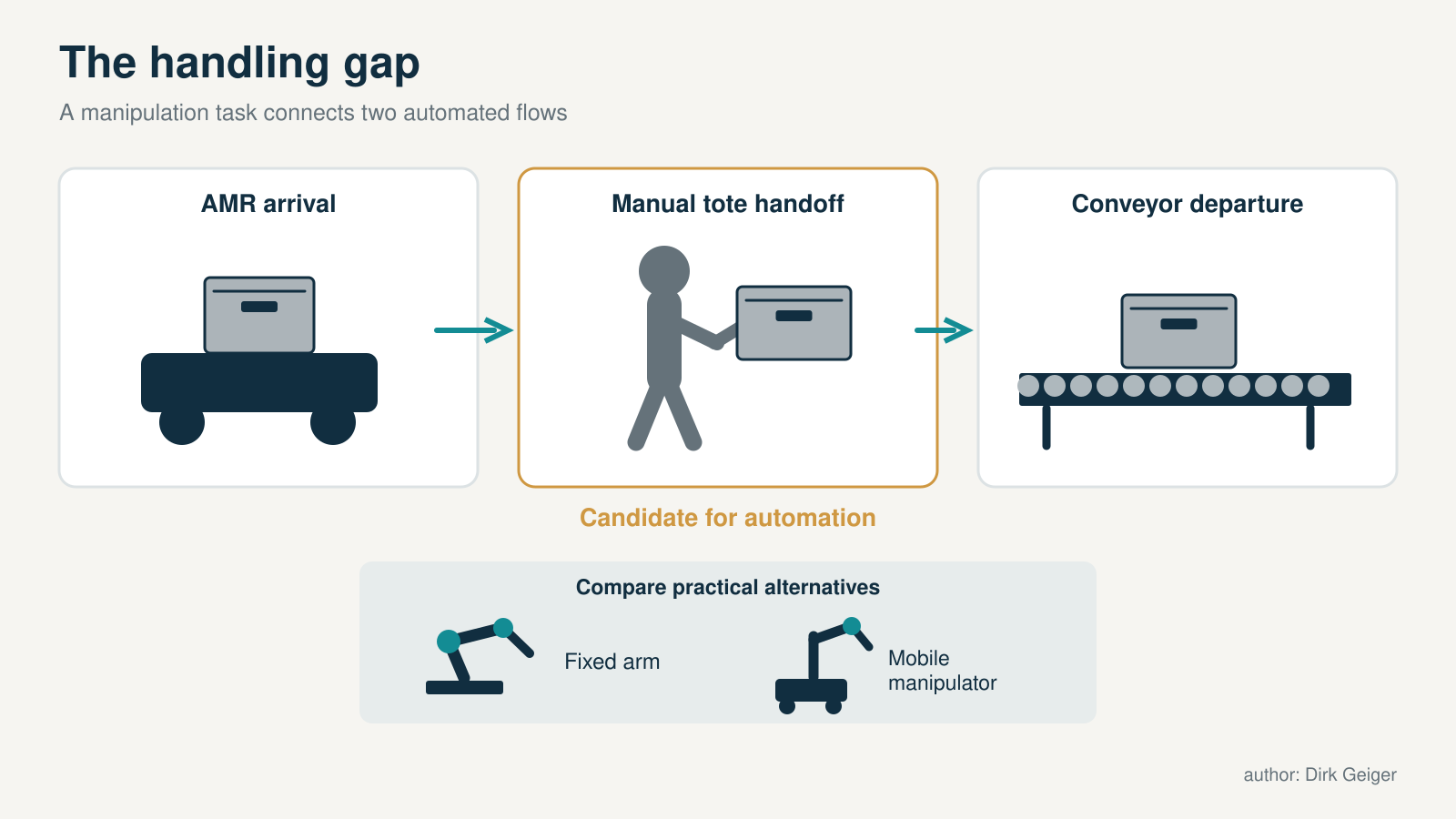
Rental provides temporary access, with minimum periods and service inclusions that vary by provider. Staffed event hire adds preparation, supervision and responsibility for a scheduled appearance. Industrial Robots-as-a-Service, or RaaS, brings a deployment and support relationship into the comparison. Agility Robotics describes purchase and RaaS options, including maintenance and support, without publishing a standard numerical tariff. Each model allocates ownership, operational complexity and risk differently. The four access routes shown below therefore need separate price records and distinct measures of customer value. [7], [13], [14], [16]
China’s headline deserves a second reading
CLS traces Chinese rental prices from exceptional five-digit yuan amounts in early 2025 to ¥2,000–3,000 per day in early 2026, followed by advertisements below ¥1,000. Its ¥289 example is an advertised starting offer. The early-2025 peak supplies historical context, although it falls outside the twelve-month comparison. Using that peak to describe a recent annual decline would overstate what the dates establish.
Jiemian News checked advertisements and made enquiries on 9 October. Some low offers referred to robot dogs or broad starting prices. A four-legged robot and a bipedal humanoid serve different purposes and cannot share a meaningful price benchmark simply because both appear in the same search. The starting-offer illustration captures the remaining question: how much service surrounds the machine?
Journalists also observed Qingtianzu starting prices of ¥3,899 per day for Unitree G1, ¥4,899 for AgiBot Lingxi X2 flagship, ¥8,999 for Unitree H2 and ¥599 for Bumi. These observations establish a wide model-specific range, with professional platform offers above the lowest classified listings. They are offers, with completed transactions still unverified. The evidence supports downward pressure, but a precise change requires matching configuration, place, duration and services. Seasonal demand and promotion can move those prices independently. [2], [3]
Hardware provides the cleanest dated comparison
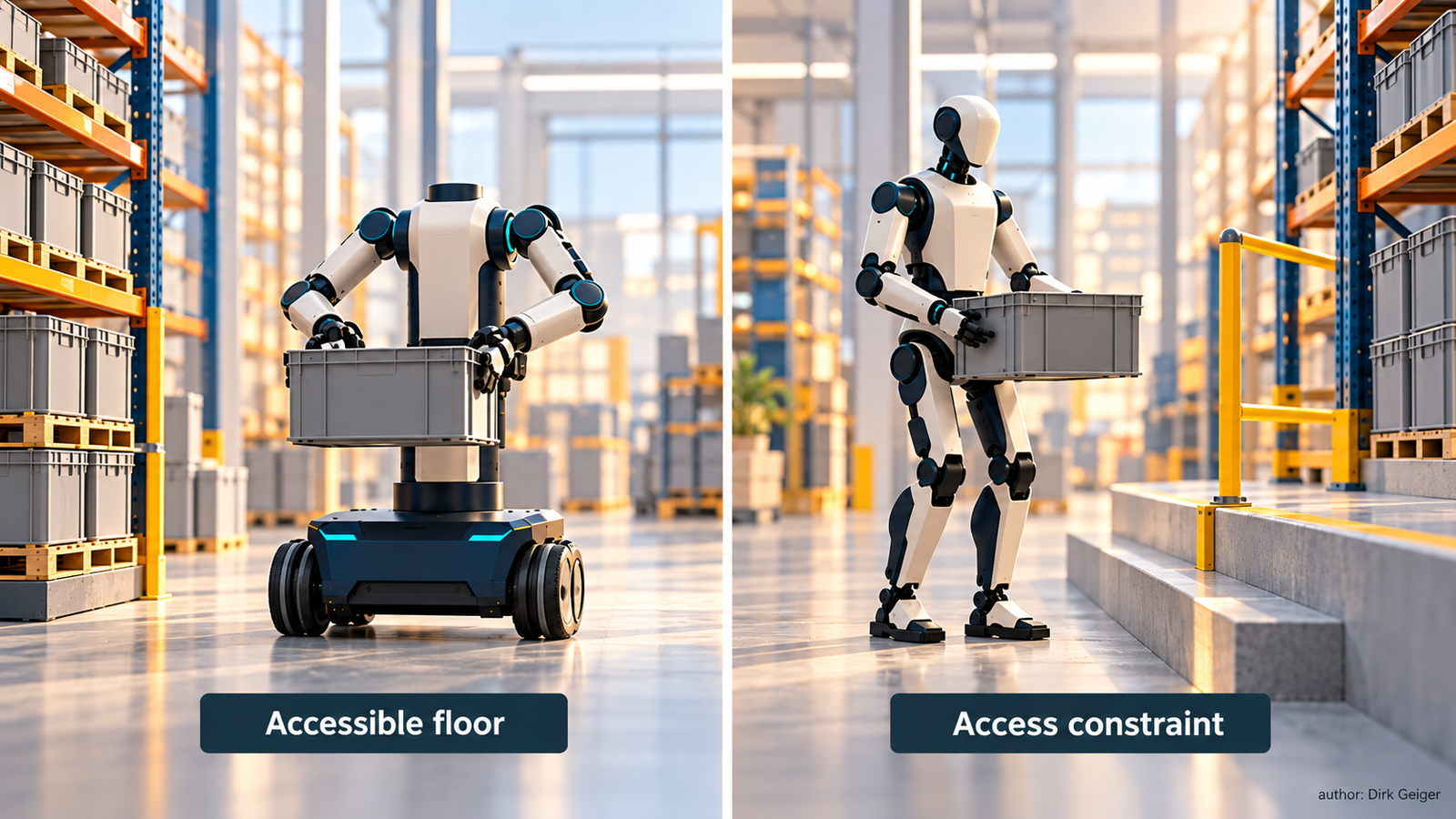
Unitree G1 supplies the clearest dated hardware comparison. An archived official store listing on 16 October 2025 displayed US$16,000 and asked customers to confirm the actual price. The current official listing displays US$13,500. The difference is US$2,500, or 15.6%. The chart preserves those two observations without interpolating a monthly trend or treating them as realised transaction prices.
The current store lists shipping at US$300–1,200 and places customs duties, taxes and import clearance with the buyer. It also states that the base G1 lacks secondary-development support, directing customers who require customisation to the EDU edition. That distinction can determine whether an apparently affordable purchase meets a research team’s needs. Similar external appearance does not guarantee the same software interfaces or development rights.
Chinese domestic reporting offers a separate comparison. In June, the China Business Journal reported G1 retail pricing falling from ¥90,000 to ¥85,000 after retailer enquiries, a calculated 5.6% reduction. Channel and configuration differences prevent merging that movement with the international-store percentage. Meanwhile, the official catalogue lists R1 from US$4,900 and H2 at US$29,900; Chinese reporting identifies a Noetix or Songyan entry robot at ¥9,998. Those different product categories widen access without establishing another same-model price decline. [7], [8], [9]
Platforms organise a fragmented Chinese market
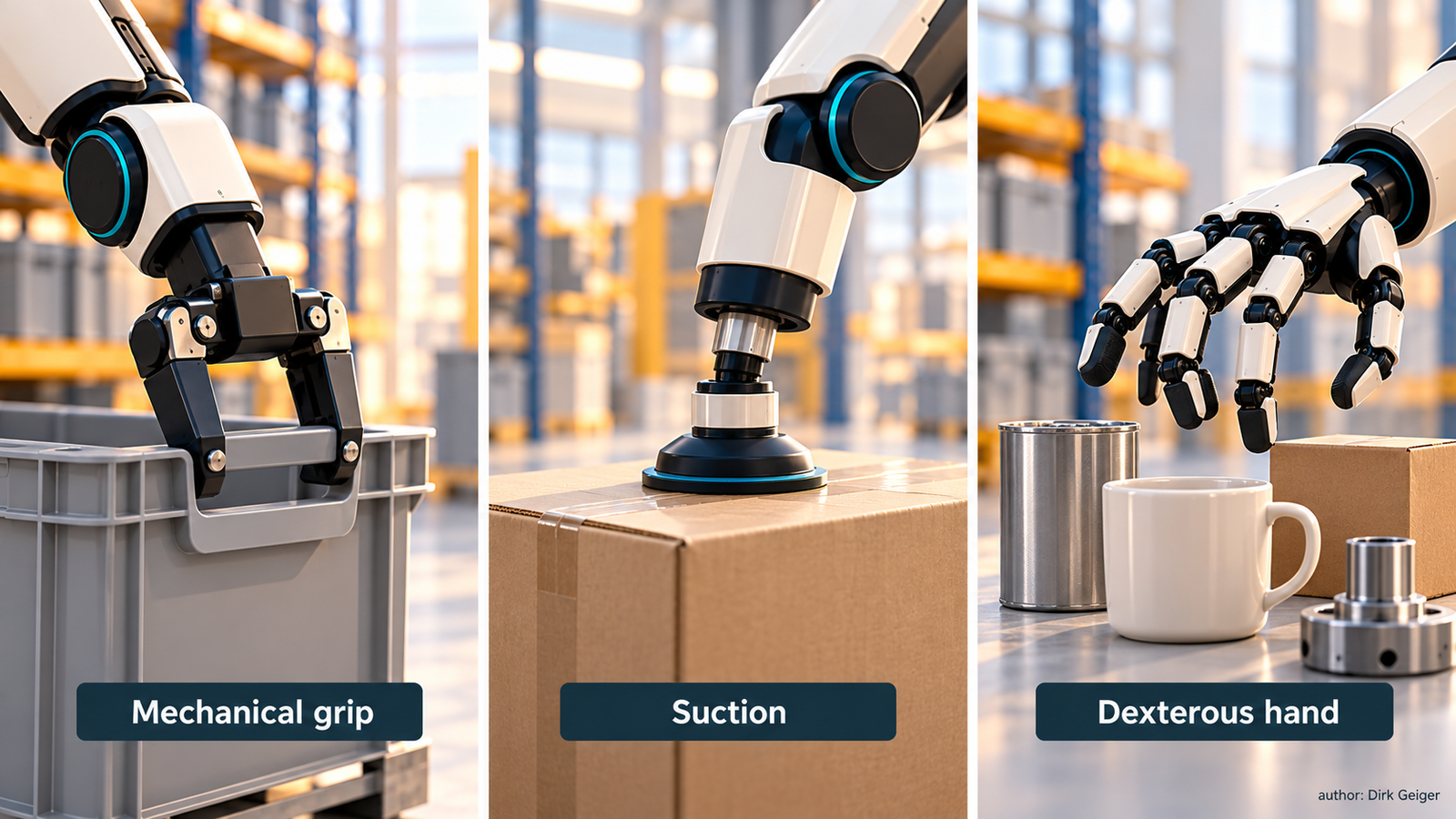
Qingtianzu launched in December 2025 to coordinate manufacturers, rental providers and customers. A Pudong government account describes its ambition to standardise access across locations and cites an introductory Lingxi X2 offer of ¥1,499. An accessible booking route can reduce the effort of finding equipment and arranging fulfilment, especially where customers previously relied on scattered advertisements.
The December introduction and October flagship X2 offer lack enough matching detail for a price-change calculation. They may differ in configuration, duration, promotion and services. Wanji Yizu adds another platform route, advertising performances, reception and longer deployments after a January 2026 launch. Detailed pricing remains an enquiry. March reporting republished by 36Kr also describes JD.com’s self-operated rental business and an engineer-inclusive offer from ¥1,796 per day, using the ambiguous designation “Unitree U1.” That model name needs confirmation.
The same reporting attributes roughly ten monthly orders per robot and an average order value of ¥2,500 to one Qingtianzu partner. It provides a useful glimpse of operating economics, with limited grounds for generalising across fleets. Owners must cover preparation, people, travel, maintenance and idle periods. Promotions and subsidies can improve early utilisation while leaving sustainable margins unresolved. The commercial test is whether repeat demand supports the service once those incentives diminish. [4], [5], [6]
The United States prices local service explicitly
American offers make the service premium visible. Robotics Center lists G1 purchase at US$17,990 and invites enquiries for half-day, daily and monthly rental. That local purchase listing exceeds Unitree’s US$13,500 direct offer, but a matched quotation is needed to establish the difference in support, logistics and configuration.
ZMProbots separates customer-operated rental, starting at US$299 per day for three to thirty days, from staffed events starting at US$1,875 per day for one to three days. It states that delivery, collection and damage cover are included, with final pricing dependent on dates and country. The starting rates differ by about 6.3 times. Because minimum durations differ, that ratio illustrates commercial segmentation and does not isolate operator cost.
The Robot Studio’s dedicated pricing page lists its G1 offering, Benji, at US$700 per hour in Dallas–Fort Worth, with a three-hour minimum and a shorter school minimum. Daily rates reach US$5,500 in specified other Texas cities and US$6,500 out of state, with separate enquiries for the Bay Area and New York. A technician is listed as optional. Geography, travel and package design clearly shape the offer. Older generic rates remain discoverable elsewhere on the provider’s site, reinforcing the need for dated written quotations. Comparable historical evidence is insufficient to calculate an American regional decline. [10], [14], [15]
Europe combines financing with premium event hire
Germany combines financing offers with premium event services. Bot Land advertises G1 purchase from €14,900 plus VAT and leasing or financing from €330 monthly plus VAT. Its product page leaves the duration, upfront contribution, residual payment and eventual ownership unresolved. Development access also needs confirmation against the required configuration.
EF Robotics advertises G1 leasing at €13.83 per day over sixty months. Annualised calendar-day arithmetic gives approximately €421 monthly and around €25,200 across five years, before unspecified charges. Those equivalents reveal the commitment’s scale; a confirmed payment schedule must establish maintenance coverage and end-of-term rights.
Robotic Rental, powered by TONEART, advertises G1 EVENT from €2,400 daily with an operator, adding travel days, hotel and expenses. X-Tech Robotics lists weekly rental from €3,420 for G1 and €4,015 for AgiBot X2, with Booster K1 from €2,230 and AgiBot A2 from €8,180. VAT and distance-dependent delivery and collection are additional. Bipedal GmbH supplies another research or show rental lead, but its product display says €3,570 including VAT while the description says €3,500 plus VAT weekly. That conflict requires clarification. The available offers show varied access models, with insufficient matched historical observations for a European annual price index. [12], [13], [17], [18], [19]
The Gulf and Africa widen the directory, with thinner price history
The Gulf provides a further event-hire channel. Reliable Robotics publishes a bipedal rental category, with pricing subject to enquiry. Its wider catalogue also contains interactive and other robot categories, so the requested form factor needs to be explicit. Otherwise a superficially comparable offer may involve a different machine and application.
Optimus Robots advertises AOBO reception-robot hire at AED2,500 per day, adding applicable taxes and charges for customised programming or software. It is useful evidence of reception services in the region, although the product belongs in an adjacent category to the bipedal platforms used elsewhere in the comparison.
In South Africa, MCM Robotics lists G1 purchase from R236,250 excluding VAT, with airfreight, customs and delivery separately itemised. Its rand prices follow a current exchange-rate calculation, so future changes could reflect currency alongside hardware cost. Singularity South Africa offers humanoid demonstrations, interaction and custom-programming packages through bespoke enquiries, with no public numerical rate established. These leads expand the commercial directory, but historical pricing and broader African coverage remain limited. EMEA consequently needs to be assessed through its submarkets. A German leasing advertisement cannot represent the terms available throughout Europe, the Middle East and Africa. [20], [21], [22], [24]
Household subscriptions and industrial RaaS need separate tests
Household subscriptions introduce a different proposition. On 28 October 2025, 1X announced NEO Early Access purchase at US$20,000 and a subscription at US$499 monthly. Its announcement schedules priority purchases for 2026 and subscriptions later, with initial delivery primarily in the United States and other markets from 2027. Fulfilment to individual customers and present subscription availability were not independently verified.
Dividing US$20,000 by US$499 produces approximately forty months. Choosing between the options requires more than that nominal comparison. Ownership rights, cancellation, service inclusions and delivery timing must align. Household value also depends on useful tasks, reliability and the assistance required to complete unfamiliar work. The announcement establishes a commercial proposition, while practical utility needs operating evidence.
Industrial RaaS brings a different set of tests. Agility Robotics describes purchase and supported service arrangements without a standard public tariff. The relevant economics depend on a defined task, throughput, downtime, support response and acceptance conditions. Household subscriptions, research rentals and industrial contracts each reduce initial capital pressure in different ways. Availability should sit beside price with its own evidence status: announced, orderable, contractually committed or delivered. That distinction helps prevent a future offer from being mistaken for equipment ready to perform today. [11], [16]
A practical directory of access providers
Providers below offer identifiable routes into the access market. Their pages establish advertised services; stock, contractual terms and fulfilment quality still need confirmation. Qingtianzu operates through its named WeChat mini-program. JD’s offering is supported by reporting, without a directly inspected checkout.
Futurobots remains an additional enquiry lead. Its G1 and R1 page contains conflicting minimum periods and placeholder contact details. Confirmation of the contracting entity and delivery capacity is needed before procurement. A complete quotation and deployment specification supply a stronger basis for commercial decisions than a promotional page alone. [23]
| Region | Provider | Access model | Verified route |
|---|---|---|---|
| China | Qingtianzu / 擎天租 | Multi-brand rental | WeChat mini-program; [5] |
| China | Wanji Yizu / 万机易租 | Event and longer rental | [6] |
| China | JD.com self-operated rental | Reported service-backed rental | [4] |
| USA | The Robot Studio / RentBots | Managed events | [15] |
| USA | Robotics Center | Purchase; half-day, day, monthly rental | [10] |
| USA | Agility Robotics | Industrial RaaS | [16] |
| USA initially | 1X Technologies | Announced household subscription | [11] |
| USA / UK / Europe | ZMProbots | Customer-operated and staffed hire | [14] |
| Germany | EF Robotics | 60-month leasing | [13] |
| Germany | Bot Land | Purchase and financing enquiries | [12] |
| Germany / Europe by arrangement | Robotic Rental / TONEART | Operator-supported G1 hire | [17] |
| Germany | X-Tech Robotics | Weekly and longer rental | [18] |
| Germany | Bipedal GmbH | Research and show rental; clarify prices | [19] |
| UAE / GCC | Reliable Robotics | Bipedal event rental; quote | [21] |
| UAE | Optimus Robots | Adjacent reception-robot rental | [24] |
| South Africa | Singularity South Africa | Humanoid event activation; quote | [22] |
Measure utilisation before projecting demand
Rental changes the relationship between market activity and hardware demand. One robot can serve many bookings. More hire orders can reflect new fleet purchases, better utilisation of existing assets or equipment moving between owners. Those mechanisms have different implications for robot manufacturers and component suppliers. Fleet acquisitions, bookings, paid days and realised revenue need separate records.
The economics diagram shows how paid utilisation connects the asset with receipts and operating costs. At an illustrative net receipt of €500 per paid day, twenty days generate €10,000 and forty generate €20,000 before costs. These hypothetical figures demonstrate the sensitivity to paid use; they supply no market average or payback promise. Personnel, travel, maintenance, damage and idle time determine how much remains for asset recovery.
For semiconductor suppliers, fleet economics create a reason to investigate reliability alongside acquisition cost. Robust motor control, battery protection, diagnostics, secure updates and recoverable faults could preserve earning time or reduce service effort. Their customer value needs measurement through downtime, repair labour and operating outcomes. Rental companies’ willingness to specify or pay for those features remains unestablished. The opportunity becomes credible when a technical improvement can be connected to an operational cost that owners actually experience.
The same distinction applies to demand forecasts. A provider adding robots because its existing fleet is consistently booked signals a different opportunity from one discounting idle stock. Both may advertise more bookings, yet their next purchasing decisions could diverge. Fleet expansion becomes a stronger demand indicator when supported by paid utilisation, repeat customers and an identifiable replacement or growth programme. Booking volume alone leaves those mechanisms unresolved. [7], [8], [3], [14], [15]
Three signals will distinguish affordability from sustainable adoption
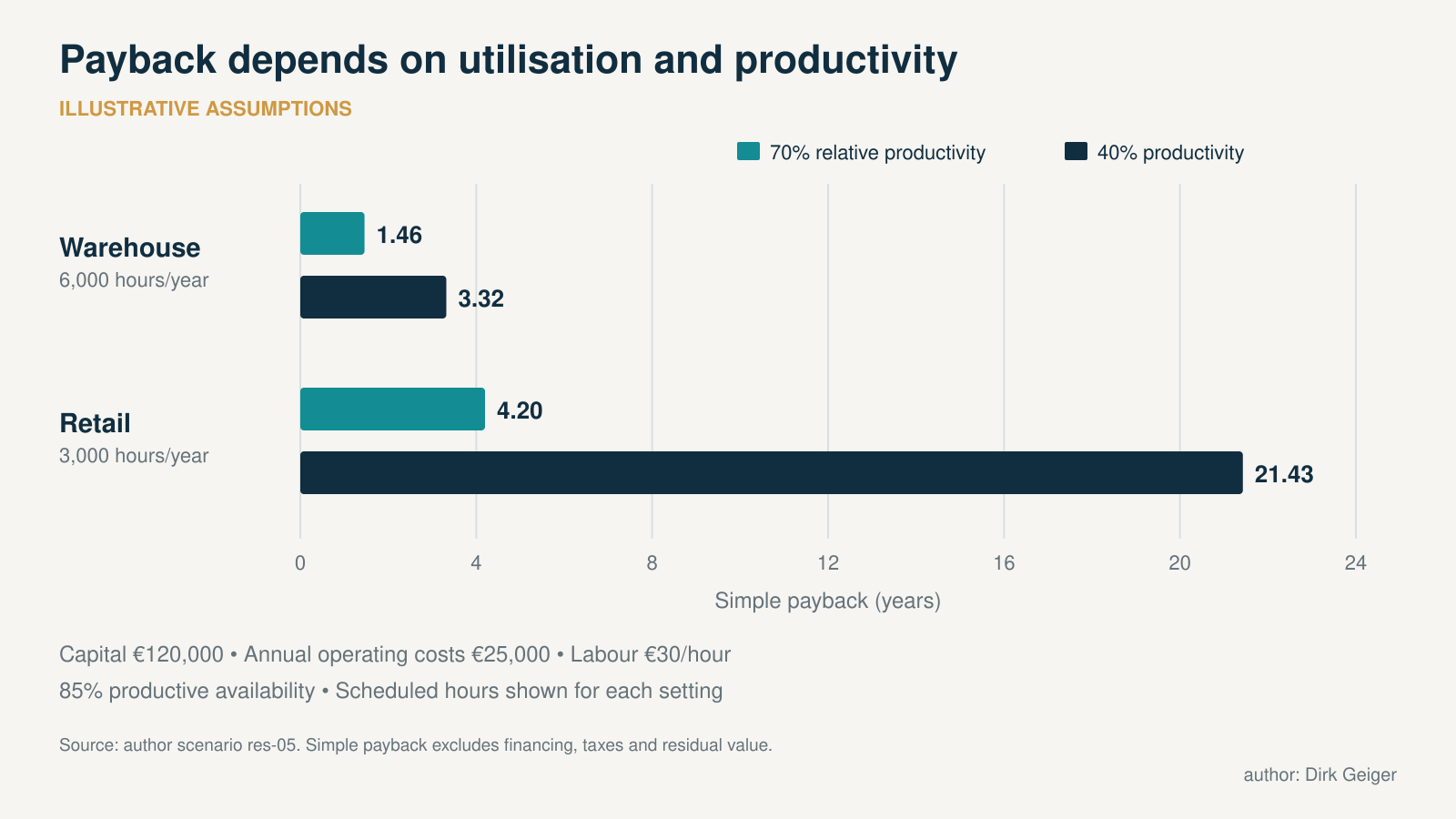
Three signals can reveal whether wider access is becoming sustainable: matched hardware cost, complete delivered-service pricing and paid fleet utilisation. Each answers a different commercial question. Hardware prices influence the cost of starting; service prices reflect the transfer of operational complexity; utilisation determines how frequently an owner earns revenue.
Continued affordability could produce more experimentation with limited repeat use. Events would introduce customers to the technology while demanding tasks still required extensive assistance. Another possibility is specialisation: providers refine narrow applications, reduce preparation effort and build repeatable packages. Commercial value could improve even with stable rental rates. Larger networks might also gain an advantage through reliable delivery, replacement availability and consistent service across locations.
Repeat-customer share, preparation hours, cancellations, repair turnaround and revenue after discounts would help distinguish these paths. Their definitions matter: one booking may span several days or involve multiple robots. A small supplier panel asked for the same quarterly quotation would create better historical evidence. Changes in configuration, minimum commitment and support should be recorded before a price movement is calculated. A longer commitment or reduced service package can otherwise look like a straightforward discount.
A stronger counterargument deserves attention: lower hardware prices may let providers charge less while preserving margins, particularly if setup and supervision also become easier. Falling rental rates would then reflect improving productivity as well as competition. Conversely, discounts driven by idle inventory or subsidies could conceal weak economics. Distinguishing these explanations requires evidence on labour per deployment and net receipts after operating costs. A declining advertised price can accompany either a healthier service business or a more difficult one.
| Signal | What to record | What it can establish |
|---|---|---|
| Matched hardware cost | Configuration, channel, tax, delivery and date | Whether the same acquisition proposition became cheaper |
| Delivered service price | Duration, location, operator and support | Whether comparable customer access became cheaper |
| Fleet utilisation | Paid days, available robots and period | Whether equipment is earning revenue more consistently |
The next price benchmark should be a matched quotation
The next useful benchmark is a matched quotation for three packages: one staffed event day, one customer-operated month and a thirty-six- or sixty-month equipment lease. Each enquiry needs the same configuration and intended application. Research access requires defined interfaces; event hire needs preparation and supervision; industrial evaluation needs a task and acceptance criteria.
Transport, setup, operator hours, damage cover, deposit, tax, software access and repair responsibility belong in the quotation. Longer commitments also need residual value, ownership, early-termination and replacement conditions. Delivery confidence has commercial value: an inexpensive offer with an uncertain date differs from a supported robot available for a scheduled project.
For an event buyer, reliability at a fixed date may justify paying for a complete staffed package. For a development team, access to the correct interfaces and local repairs may outweigh the lowest base price. An industrial operator needs evidence that a specific task runs consistently within its process. Those customer priorities explain why a common robot platform can support several different commercial offers.
Lower prices create space for experimentation, and flexible access makes that experimentation easier to fund. Sustainable adoption will depend on customers returning because the service works. Repeatable tasks, dependable deployment and economically viable fleets are the evidence that would strengthen the market assessment. Hardware price remains visible; the cost and quality of operating the robot will determine how much of the opportunity lasts.