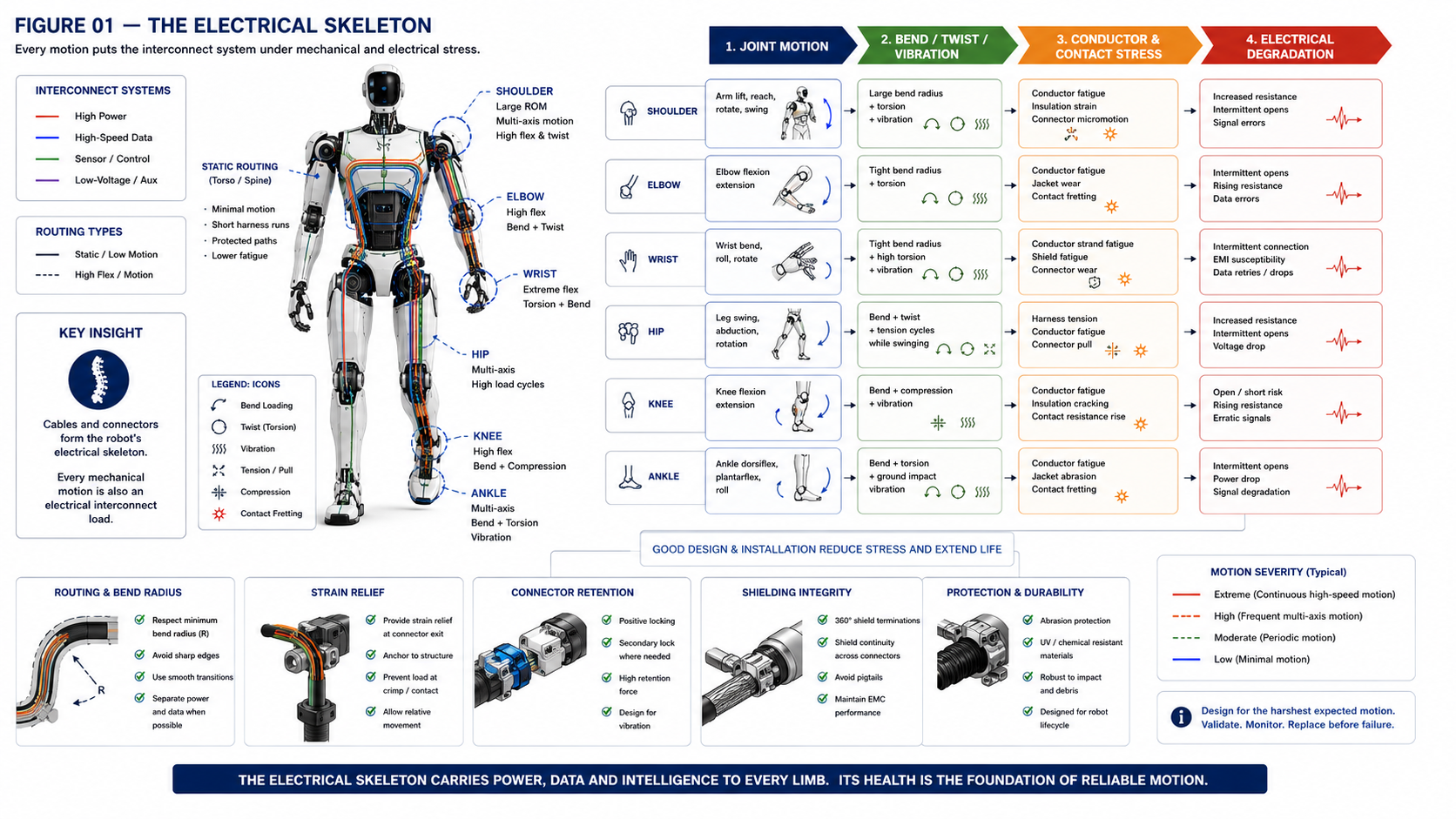
The Hidden Mechanical System
Dynamic flex life Bend radius Torsional loading Contact resistance Shield continuity Signal quality indicator Time-domain reflectometry Interconnect health. Humanoid cables face dynamic bending and compact routing constraints. [1]
Motion Accumulates Electrical Risk
Harness strain histories can support fatigue-life prediction. [2] [3]
Connectors Move Too
Retention, shielding and strain relief are humanoid interconnect constraints. [4] [7]
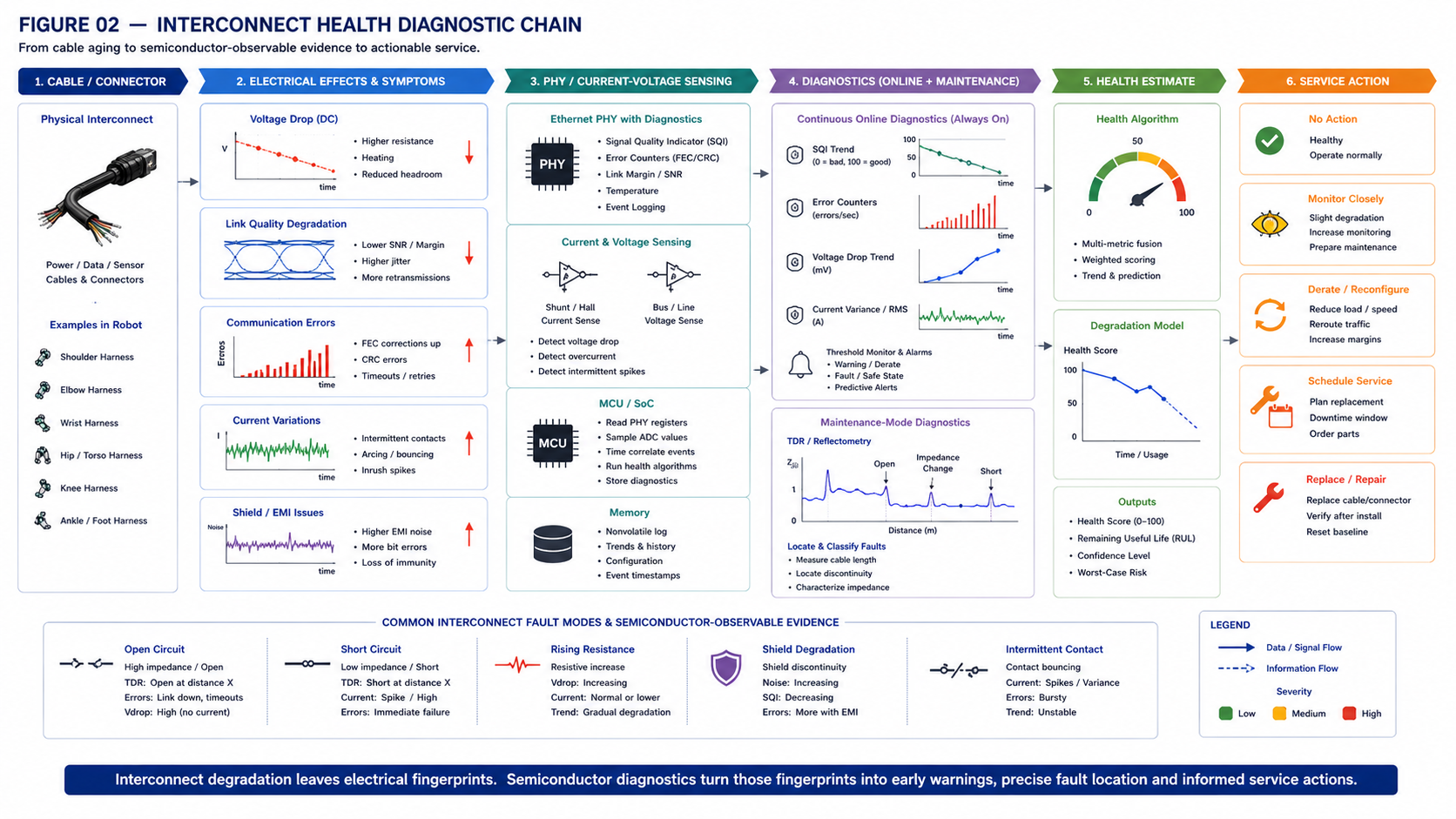
The Semiconductor Diagnostic Chain
Ethernet PHY diagnostics can expose link quality and cable faults through mechanisms including SQI and TDR. [6]
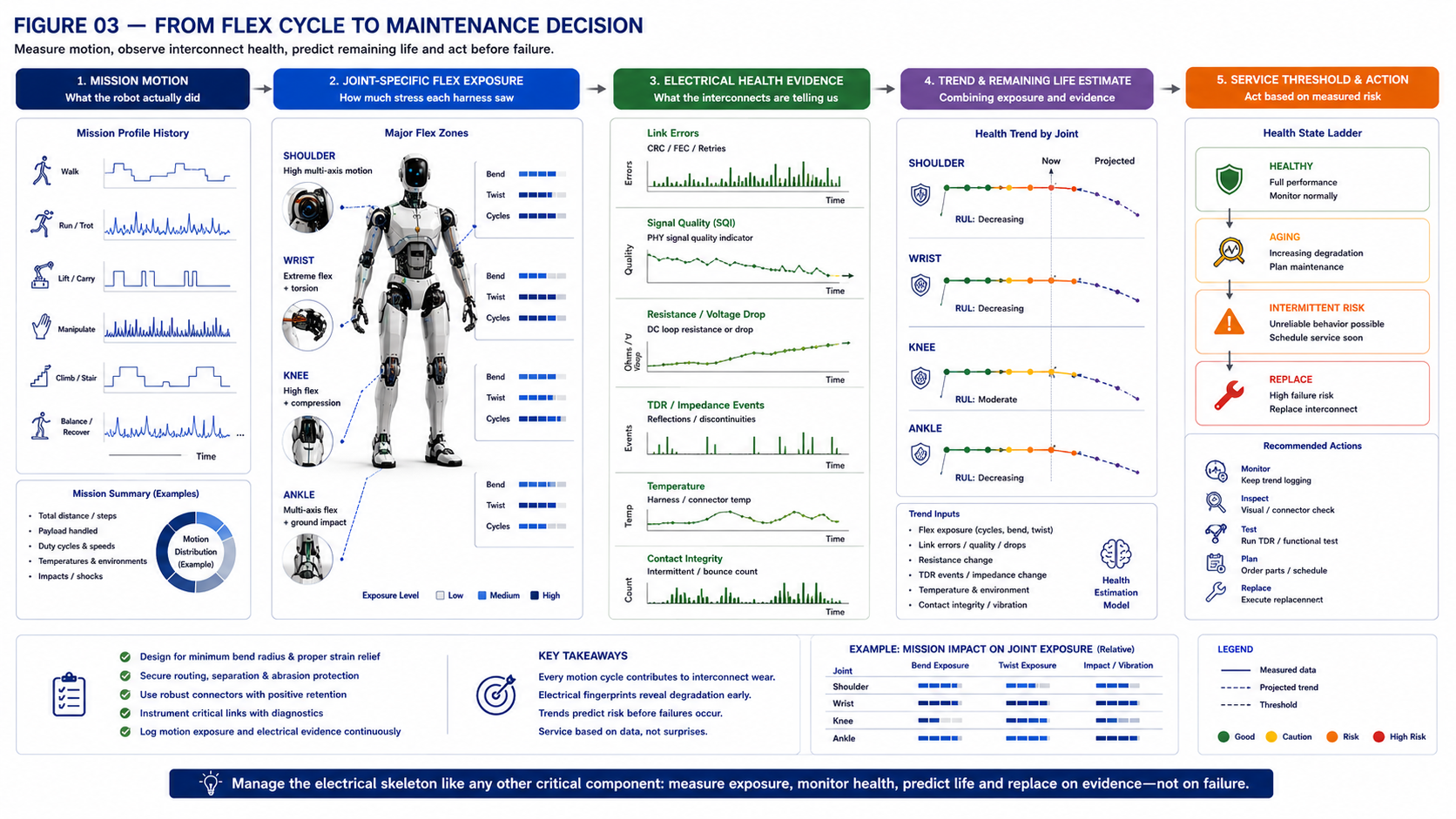
Condition Monitoring
Moving robotic cable systems already use condition monitoring. [5] Combining motion exposure with electrical diagnostics enables health estimation.
Conclusion
A scalable humanoid should know whether its moving electrical pathways remain trustworthy and service them before intermittent degradation becomes functional failure.
References
- Wire & Cable. Research Status of Humanoid Robot Cables. 2026. https://doi.org/10.16105/j.dxdl.1672-6901.20260069
- Journal of Mechanical Science and Technology. Fatigue life prediction of a cable harness in an industrial robot using dynamic simulation. 2008. https://link.springer.com/
- Key Engineering Materials. The Simulation and Fatigue Life Prediction of a Cable Harness in an Industrial Robot. 2011. https://www.scientific.net/
- Molex. Humanoid Robotics Connectors and Interconnect Solutions. tbd. https://www.molex.com/
- igus. i.Sense TR.B condition monitoring for triflex R 3D chains. tbd. https://www.igus.com/
- Texas Instruments. Using Single-Pair Ethernet in Humanoid Robots. tbd. https://www.ti.com/
- Amphenol Communications Solutions. Technologies Driving Reliable Connections in Humanoid Robots. tbd. https://www.amphenol-cs.com/